

Ashikaga Yoshiaki

|
He who increaseth knowledge, increaseth sorrow. This article contains spoilers, meaning it has information and facts concerning Assassin's Creed: Shadows – Tales of Iga. If you do not want to know about these events, it is recommended to read on with caution, or not at all. |

|
Where are the paintings? This article is in need of more images and/or better quality pictures from official media in order to achieve a higher status. You can help the Assassin's Creed Wiki by uploading better images on this page. |
Ashikaga Yoshiaki (足利 義昭, 1537 – 1597), also known by his Shinbakufu alias The Tatsu (龍, lit. "The Dragon")[1] or, alternatively, The Horseman,[2] was the 15th and final shōgun of the Ashikaga shogunate, ruling Japan from 1568 to 1573.[3]
After securing his position with the aid of Oda Nobunaga, Yoshiaki, dissatisfied with Nobunaga's influence over him, eventually turned on his benefactor, only to be defeated and overthrown. In retaliation, the former shōgun formed the secret cabal known as the Shinbakufu with the goal of regaining his title and exacting revenge on Nobunaga.[2]
To sponsor the group's activities, Yoshiaki established an alliance with the Templars, who lent their support to the Shinbakufu in exchange for the three Imperial Regalia of Japan,[2] which were safeguarded by the Kakushiba ikki. Leading a purge of the ikki, Yoshiaki succeeded in recovering all the regalia by 1581,[4][5] but despite Nobunaga's death during the Honnō-ji incident,[6] he ultimately failed to re-establish himself as shōgun when the Shinbakufu began to be hunted down by Fujibayashi Naoe and Yasuke, who revived the Kakushiba ikki.[7]
After the deaths of all of his allies, a defeated Yoshiaki surrendered the regalia he had in his possession to Naoe and Yasuke, and was allowed to live the rest of his days in exile as a monk.[2]
Biography[edit | edit source]
Early life[edit | edit source]
The third son of Ashikaga Yoshiharu, the twelfth Ashikaga shōgun, Yoshiaki was born in 1537 and was not destined for a political career, becoming a monk at Kōfuku-ji in Nara.[8] Following their father's passing, Yoshiaki's older brother Yoshiteru succeeded him as shōgun, but was assassinated in 1565 by Miyoshi Nagayoshi and Matsunaga Hisahide, who placed a puppet shōgun on the throne: Yoshiaki's cousin Yoshihide.[8][9]
With Yoshihide lacking any real power and unable to free himself from his "protectors",[8] Yoshiaki traveled around Japan seeking a benefactor to back his own claim to the shogunate. In 1568, he visited the daimyō Oda Nobunaga, who had just established himself at Gifu Castle, and presented his case. Surprisingly,[9] Nobunaga agreed to support him and the two marched on Kyoto, but Yoshiaki was unaware that Nobunaga was only using the shogunate's usurpation as a pretext for military action.[10] That November, Nobunaga entered Kyoto with his army and installed Yoshiaki as shōgun; Yoshiaki offered him the position of deputy shōgun, but Nobunaga declined.[9]
Leading the Shinbakufu[edit | edit source]
In 1569, Yoshiaki held a meeting between him, Nobunaga, and his ally and retainer Tokugawa Ieyasu in Kyoto. Alongside Ieyasu, his vassal Hattori Hanzō joined the meeting. Discussing their plans, Yoshiaki directly asked Hanzō to divulge the location of the Imperial Regalia in order to protect it himself. Despite Hanzō's hesitance, Yoshiaki learned about it and revealed his alliance with Portuguese Templar Nuno Caro, who thanked the samurai for his information.[11] At this point, after the meeting, Yoshiaki sent his shadow collective, the Shinbakufu, to attack and steal the Regalia from the Assassins' safehouse at Daisen-ryō Kofun.[11]
Taking advantage of the Templars' recent expansion to Japan, Yoshiaki and his fellow Shinbakufu members succeeded in recovering two of the regalia safeguarded by the Kakushiba ikki, decimating the Brotherhood in the process,[4][11] and gave them to the Portuguese Templars, who had their own need of the artifacts. In exchange of their alliance, the Templars would fund the Shinbakufu's operations and help Yoshiaki regain his title and power. However, the Kakushiba ikki's leader Fujibayashi Tsuyu escaped the Shinbakufu's purge; Yoshiaki was less concerned with her identity than the fact that she somehow evaded his spies.[2]
Deposition[edit | edit source]
- "Warmongering fools like Oda Nobunaga betrayed our world. Sacrificed our people. Men like him have undermined the order of the Shogunate for more than a century with their thirst for power. They have plunged us into chaos. Am I not, after all, the legitimate ruler of our lands? I wanted only to take back my rightful place. To return us to order."
- ―Yoshiaki explaining his motives for betraying Nobunaga, 1582.[src]-[m]
Though he attempted to rule, Yoshiaki noticed that his power relied on Nobunaga's aid. By 1572, there was tension between the two, with Nobunaga issuing several admonishments that caused Yoshiaki to take offense. Yoshiaki began plotting against him, trying to convince other daimyō[9] like Takeda Shingen[3] to turn against Nobunaga and "rescue" Yoshiaki in Kyoto.[9]
In 1573, Yoshiaki rebelled, leading an alliance of several great lords, including the Mōri, the Takeda, and the Asakura, against Nobunaga's forces.[8] However, Nobunaga's army soon marched on Kyoto and expelled Yoshiaki. He escaped with his life and took up residence with the Mōri clan in Western Japan, from where he continued attempting to undermine Nobunaga,[9] even raising troops against him for the Ishiyama Hongan-ji War,[3] but he never managed to overthrow his enemy nor to reinstall himself as shōgun.[9]
Following his deposition, Yoshiaki, resentful of Nobunaga, sought to eliminate him and also to use the three Imperial Regalia, which were said to grant the divine right to rule over Japan. To this end, Yoshiaki utilized his secret organization, the Shinbakufu, under the alias of "The Tatsu", to achieve his goals.[2]
Life in exile[edit | edit source]
{Quote|Foreigners are coming. The samurai is proof enough of that. But there are still fools here who refuse to recognize the sea change. We are a string of islands in a vast ocean of ever-shifting powers. We are not strong enough to turn its tide. But if we pivot and ride this tide... we emerge victorious.|Yoshiaki to Naoe and Yasuke, 1582.|Assassin's Creed: Shadows|The Rising Tide}} On 30 September 1581, after discovering the third and final regalia's whereabouts in Iga, a masked Yoshiaki, accompanied by the rest of the Shinbakufu, used Nobunaga's invasion of the region as cover to infiltrate Iga and steal the artifact. Despite opposition from Tsuyu's husband Nagato and their daughter Naoe, who killed one the group's members—Ido Yoshihiro—the Shinbakufu succeeded in seizing the regalia's box after ambushing Nagato and Naoe outside Katano Castle.[5]
As a masked Akechi Mitsuhide was about to execute the mortally wounded Nagato, Wada Koretake intervened and asked that their enemies be left to die in pain. Yoshiaki, having achieved his primary objective, granted Koretake's request and departed with the box, leaving Nagato and Naoe to succumb to their injuries.[5]
Encounters with Naoe and Yasuke[edit | edit source]
By 1582, Yoshiaki had made his way to Yamashiro, where he took a liking to spectating sumo matches at the Iwashimizu Hachiman Shrine. In late June of that year, he met Naoe—who had survived the events in Iga—and Yasuke, and though neither of them recognized him until after he had left, he imposed some philosophical life lessons onto them.[12]
After founding their own incarnation of the Kakushiba ikki,[7] Naoe and Yasuke, seeking revenge against the Shinbakufu for their own personal reasons, hunted the group's members until only Yoshiaki and Mitsuhide remained. Following the latter's defeat at the Battle of Yamazaki, he informed the pair of Yoshiaki's identity as the Shinbakufu's leader in his final moments,[1] leading the pair to confront the former shōgun at the Kurama-dera temple.[2]
Humbly sitting on the ground with his mask and the box containing the regalia stolen from Iga before him, Yoshiaki offered information in exchange for his life. While Yasuke was immediately suspicious of him and claimed they could not trust his word, Yoshiaki pointed out that he had nothing to gain from lying. He answered the pair's questions truthfully and, suspecting that Naoe sought to find her mother Tsuyu, directed her to Sakafuneishi in Yamato. Naoe accepted his offer and reclaimed the box.[2]
However, Yasuke declared that Yoshiaki must answer for Nobunaga's death and his betrayal of Emperor Ōgimachi. Yoshiaki defended his actions and condemned Nobunaga's, then correctly deduced that Yasuke sought information on the Templars and advised him to head to Takahara Village to investigate their activities. With their business concluded, Naoe declared that Yoshiaki no longer posed a threat without the Shinbakufu, and Yasuke added that Nobunaga's name would live on while Yoshiaki's would be forgotten.[2]
Later life[edit | edit source]
Despite Nobunaga's death during the Honnō-ji incident, Mitsuhide's failure to succeed him and his own death only two weeks later meant that Yoshiaki lost all hopes of ever restoring the Ashikaga shogunate. With the support of Toyotomi Hideyoshi, who took over Nobunaga's mantle of unifying Japan, he resumed his monastic life.[8] Towards the end of his life, Yoshiaki made additional efforts to regain his power and began to oppose Hideyoshi, but these efforts did not amount to anything and he died in exile in 1597.[3]
Gallery[edit | edit source]
-
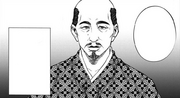 Ashikaga Yoshiaki in Tales of Iga
 -
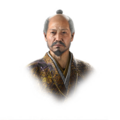 Portrait of Yoshiaki in the Animus' Objective Menu
 -
 Portrait of Yoshiaki as The Horseman
 -
 Ashikaga Yoshiaki meditating


Appearances[edit | edit source]
- Echoes of History – Shadows (first mentioned)
- Assassin's Creed: Shadows (first appearance)
- Assassin's Creed: Shadows – Tales of Iga
References[edit | edit source]
- ↑ 1.0 1.1 Assassin's Creed: Shadows – Topple the Traitor
- ↑ 2.0 2.1 2.2 2.3 2.4 2.5 2.6 2.7 2.8 Assassin's Creed: Shadows – The Man Behind the Mask
- ↑ 3.0 3.1 3.2 3.3
 Ashikaga Yoshiaki on Wikipedia
- ↑ 4.0 4.1 Assassin's Creed: Shadows – The Meaning of the Blade
- ↑ 5.0 5.1 5.2 Assassin's Creed: Shadows – The Onryo Samurai
- ↑ Assassin's Creed: Shadows – Temple of the Horseman
- ↑ 7.0 7.1 Assassin's Creed: Shadows – Lightning and Thunder
- ↑ 8.0 8.1 8.2 8.3 8.4 Assassin's Creed: Shadows – Database: Ashikaga Yoshiaki
- ↑ 9.0 9.1 9.2 9.3 9.4 9.5 9.6 Echoes of History – Shadows – Oda Nobunaga
- ↑ Echoes of History – Shadows – Kyoto: Japan's Imperial City
- ↑ 11.0 11.1 11.2 Assassin's Creed: Shadows – Tales of Iga – Chapter 30
- ↑ Assassin's Creed: Shadows – The Rising Tide


| |||||||||||||||||||||||||||||||||||||||||||
| |||||||||||||||||||||||||||||||