
Yuki-onna (woman)

|
They call me many things: Murderer. Cutthroat. Thief. But you may call me Yuki-onna. This article is about a subject that lacks an official name and is known only by its nickname, title, or alias. |
"Yuki-onna" (died 1582) was the name imposed on a Japanese woman who lived in Kawachi Kaza-ana Cave in Ōmi during the late Sengoku period. Every winter, she led unsuspecting travelers into her cavern home to their deaths. Her actions led many to think that there was the actual yōkai known as the Yuki-onna (雪女, lit. 'snow woman').[1]
Biography[edit | edit source]
Before becoming a recluse, the "Yuki-onna" once fell in love with a man named Hikojiro but became heartbroken when he ended their relationship. In response, she lured him to a final tea session, killed him and took out his heart. This led her to continue the pattern every winter and to kill any innocent wanderers at Kawachi Kaza-ana Cave. Her behavior led to rumors circulating of an yuki-onna living in Suzuka Foothills, which led villagers to travel to the monk-turned-demon hunter Mamushi.[1]
In 1582, done with the rumors, Mamushi met the Kakushiba ikki members Fujibayashi Naoe and Yasuke and asked them to investigate all these yōkai claims. During their investigation in Ōmi, they arrived at the cave and discovered the woman's home inside. Soon, they came across her multitude of victims and confronted her. Engaging her, they bested and promptly killed her and then acquired the katana Violet Night from her personal effects.[1]
Behind the scenes[edit | edit source]
Coincidentally, one of her numerous victims happened to be the Mountain Yamabushi, one of the imposter yamabushi during the mission, "Yamabushi Imposters."
This target may either have led Naoe and Yasuke inside the cave to attack them or have been found feasting on the remains of her victims.[1]
Gallery[edit | edit source]
-
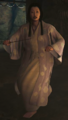 The "Yuki-onna"

Appearances[edit | edit source]
References[edit | edit source]