

Oda Nobunaga
| This article is about the individual. You may be looking for the genetic memory. |

|
He who increaseth knowledge, increaseth sorrow. This article contains spoilers, meaning it has information and facts concerning Assassin's Creed: Shadows – Tales of Iga. If you do not want to know about these events, it is recommended to read on with caution, or not at all. |

|
Patience, brothers. Soon we will reveal the secrets of Assassin's Creed: Shadows. This article has been identified as being out of date. Please update the article to reflect recent releases and then remove this template once done. |
Oda Nobunaga (Japanese: 織田 信長; 1534 – 1582) was a powerful daimyō during the Sengoku period of Japan, and the first of Japan's three great unifiers (三英傑). Inheriting the title of daimyō of Owari after his father Oda Nobuhide died in 1551, Nobunaga's carefree lifestyle as a youth neglecting lessons on statecraft meant he had to quickly reconsolidate the Oda clan's power in the region if he hoped to survive.
After securing his position, he set out to unite the country under his banner. His rule was marked by brutal military campaigns, often bringing significant force against the slightest opposition that refused to recognize his authority, first initiating the Ishiyama Hongan-ji War against the Buddhist Ikkō-ikki before twice invading Iga to start the Tenshō Iga War against the shinobi of Iga ikki.
Although Nobunaga's military conquests were largely successful, his rule came to an abrupt end in 1582, when one of his own generals, Akechi Mitsuhide, turned on him and led an attack against the daimyō at the Honnō-ji temple in Kyoto. Faced with inevitable defeat, Nobunaga committed seppuku, and the mantle of unifying the land was taken over by Toyotomi Hideyoshi.
Biography[edit | edit source]
Early life[edit | edit source]
Oda Nobunaga was born in 1534 into the powerful Oda clan, which governed the Owari Province of Japan. His father, Oda Nobuhide, was the clan's de facto leader and faced constant conflict with their northern and eastern neighbors, the daimyō Saitō Dōsan of Mino Province and Imagawa Yoshimoto of Suruga Province, respectively. In 1549, as part of a peace agreement, Nobunaga married Dōsan's daughter Nōhime, though their marriage was strictly political.[1]
In 1551, shortly before his death, Nobuhide officially designated Nobunaga as his heir and tasked his four karō (家老, "house elder") Hayashi Hidesada, Aoyama Nobumasa, Naitō Shōsuke, and Hirate Masahide with his son's education. Following his father's passing, the sixteen-year-old Nobunaga became the new daimyō of Owari, but his reckless behavior and neglecting of lessons meant he had to reconsolidate the Oda clan's power in the province.[1] After dealing with internal threats from his family,[1] Nobunaga swiftly expanded his control over the entire province.[2]
In 1560, Yoshimoto decided to march on Kyoto and seize control of Japan's central government, passing through and attempting to conquer Owari along the way. Despite the enemy forces outnumbering his own 10 to 1, and his advisors' counsel to withdraw to Kiyosu Castle, Nobunaga managed to repel the invasion, defeating Yoshimoto's army at the Battle of Okehazama after catching them by surprise. This decisive victory removed the threat of the Imagawa clan,[1] and marked the beginning of Nobunaga's rise to prominence.[2]
Rise to power[edit | edit source]
In the aftermath of Imagawa Yoshimoto's defeat, many of his retainers defected to other clans or secured their independence, becoming daimyō in their own right. Among these officers was Tokugawa Ieyasu, who established himself in his home province of Mikawa,[1] and who later allied himself with Nobunaga.[2]
Nobunaga next shifted his focus to conquering Mino Province, after the Saitō clan broke their alliance once Saitō Tatsuoki, Dōsan's grandson, assumed leadership. In 1567, after weakening the Saitō clan through both diplomacy and by bribing Saitō generals, Nobunaga led a siege of the clan's stronghold at Inabayama Castle, successfully capturing it. Having vanquished the Saitō clan and brought Mino under his control, Nobunaga established himself at the castle, which he renamed Gifu Castle.[1]
As Nobunaga's influence continued to rise, he received calls of assistance from Emperor Ōgimachi and Ashikaga Yoshiaki, the claimant to the position of shōgun.[2] Seeing an opportunity to increase his power, Nobunaga accepted Yoshiaki's request for help and marched on Kyoto in November 1568,[1] where he had the emperor appoint Yoshiaki as shōgun.[2] Grateful, Yoshiaki offered him the position of deputy shōgun, but Nobunaga declined.[1]
In 1569, Nobunaga held a meeting in Kyoto between Yoshiaki and his retainer Ieyasu, with his samurai Hattori Hanzō present. Within the meeting, Yoshiaki requested the location of the Imperial Regalia in order to attain power and security. When Hanzō revealed the location, he unknowingly disclosed the presence to Yoshiaki's ally and Templar Nuno Caro, much to his regret.[3]
Nobunaga's successes also caught the attention of the Japanese Assassins, who made contact with the daimyō. Nobunaga was sympathetic to the Assassins' cause and promised them an alliance once he had unified Japan under his rule.[4]
Military conquests[edit | edit source]
In 1570, Nobunaga launched a siege of the Asakura clan's stronghold at Kanagasaki Castle, after Echizen Province's daimyō Asakura Yoshikage ignored a summons to Kyoto from the shōgun. Due to a multi-generational alliance between the Asakura and Azai clans, Ōmi Province's daimyō and Nobunaga's brother-in-law Azai Nagamasa felt obligated to aid the Asakura and attacked Nobunaga's army, forcing them to withdraw. Nobunaga, having considered Nagamasa part of his family, felt personally betrayed and declared war on both the Asakura and Azai clans.[1]
On 30 July 1570, with the aid of Tokugawa Ieyasu's forces, Nobunaga defeated the combined Asakura and Azai army at the Battle of Anegawa.[2][1] The survivors sought refuge with the Tendai Buddhist monks of Mount Hiei,[1] prompting Nobunaga to raze the temple and massacre its inhabitants in 1571,[2] in part due to his concern over the Tendai's growing military power.[1]
In 1573, Nobunaga decisively crushed the power bases of the Azai and Asakura, annexing their domains.[2] After Azai Nagamasa committed seppuku, Nobunaga took in his widow—Nobunaga's sister Oichi—and three daughters, and beheaded Nagamasa's body, subsequently using his skull as an ornament for feasts. He also burned Odani Castle to the ground and killed the entire Azai clan.[5]
That same year, Ashikaga Yoshiaki, feeling his power was greatly limited by Nobunaga, and after the daimyō issued several admonishments that caused Yoshiaki to take offense, rebelled against him.[1] He convinced other daimyō, including Takeda Shingen, to turn against Nobunaga, and eventually formed an alliance between several great lords, including the Mōri, the Takeda, and the Asakura, to fight against Nobunaga's forces.[6] However, their efforts were in vain, as Nobunaga marched on Kyoto and expelled Yoshiaki, ending the Ashikaga shogunate.[2] The shōgun managed to escape and would spend the rest of his life in exile, making various attempts to undermine Nobunaga, to no avail.[1]
On 13 May 1573,[7] Ieyasu's retainers Hattori Hanzō and Honda Tadakatsu, the former of whom was an Assassin, killed Takeda Shingen. Ieyasu's forces then recovered Shingen's Sword of Eden, which soon found its way into Nobunaga's hands. The daimyō began using the blade in his military endeavors and reneged on his promise of an alliance with the Assassins, deciding to pursue his goal of unifying Japan under his banner, independent of the Brotherhood.[4]
In 1575, again with Ieyasu's support, Nobunaga annihilated the Takeda at the Battle of Nagashino. Between 1575 and 1579, he constructed a fortified castle in Azuchi, on the shores of Lake Biwa, which became one of his principal strongholds and attracted his vassals to settle at the base.[2] He also paid to furnish the Imperial Palace at Kyoto and personally granted Emperor Ōgimachi, who was struggling financially, a stipend; acts which increased Nobunaga's own legitimacy as ruler of the country.[8]
In 1579, Nobunaga laid siege to Yakami Castle and defeated its lord, Hatano Hideharu. According to an unproven yet popular anecdote, Nobunaga's general Akechi Mitsuhide sent his own mother to the castle as part of a hostage exchange. However, when Hideharu brazenly requested an audience with Nobunaga, the latter killed him, prompting the Hatano clan to execute Mitsuhide's mother in retaliation. This was the first of many acts that caused Mitsuhide to resent his lord and secretly begin plotting against him.[9][10]
In 1580, after a ten-year military campaign, Nobunaga succeeded in crushing the power of the Ikkō-ikki, a faction of Jōdo Shinshū Buddhist followers.[11] Emperor Ōgimachi sent a court official to help negotiate the surrender of the ikki's leader Kennyo,[1] although some small remnants of the ikki refused to accept defeat and continued their resistance against Nobunaga.[12]
Meeting with the Jesuits[edit | edit source]

On 8 March 1581, after returning from a hunting trip, Nobunaga entered the Honnō-ji temple in Kyoto, where many of his retainers and servants had gathered, alongside the visiting Jesuit priests Alessandro Valignano and Luís Fróis, all of whom bowed before the daimyō. After changing out of his armor, Nobunaga sent Akechi Mitsuhide to gather the Jesuits and their swordbearer, Diogo, for an audience.[13]
During the meeting, Valignano presented a gift in the form of a Portuguese chair and requested free movement of his priests in Japan, to which Nobunaga remarked that the priests were already present in his country. He then not-so-subtly threatened the man, saying that, before he worried for the priests' safety, he should plead for his own head. At that point, the retainers in the room reached for their katanas, something Diogo immediately took notice of. As Nobunaga was intrigued by Diogo's warrior instincts and claimed he had many questions for him, Valignano responded that Diogo could not understand them, only for the latter to surprise everyone in the room by revealing he could perfectly communicate in Japanese.[13]
Demanding a private audience with Diogo, Nobunaga had Valignano and Fróis escorted outside and proceeded to question Diogo about his skin color and place of origin. He then claimed that, although he was on friendly terms with Fróis and saw the Jesuits as fair traders and a bulwark against the Buddhists, he felt he could not trust Valignano. Diogo responded that he had been in the service of worse men than Valignano, though before he could elaborate, Nobunaga's retainer Mori Ranmaru returned with the Jesuits.[13]

Ultimately, Nobunaga decided to grant Valignano's request, on the condition that Diogo be transferred from the Jesuits' service into his own. A disgruntled Valignano accepted the terms, though not before mockingly stating that Diogo was better for little more than bearing one's sandals. Nobunaga claimed that under his rule sandal bearers had become lords, and that he saw potential in Diogo to inspire entire armies.[13]
Invasion of Iga[edit | edit source]
- Nobunaga: "While Iga calls its unifier a tyrant, forty-thousand of our countrymen ride with me. Is that tyranny, Yasuke?"
- Yasuke: "No. No, it is conviction. They trust in their future with you."
- Nobunaga: "Yes. And that belief makes you my samurai."
- —Nobunaga and Yasuke during the conquest of Iga, 1581.[src]-[m]
In late 1581, while at Azuchi Castle, Nobunaga met with Diogo—who had since renamed himself Yasuke—and spoke with him about his new name, his previous service to the Jesuits, and the latter's beliefs. Later, the two went to speak with Tokugawa Ieyasu and oversee the test of teppō firearms acquired from the Portuguese. During the test, Nobunaga became the target of an assassination plot by a group of shinobi, though fortunately Yasuke and the guards were able to deal with the attackers. Nobunaga then called an emergency meeting with all of his generals, inviting Yasuke to attend as well.[14]
After Nobunaga defended Yasuke's presence when Akechi Mitsuhide protested against it, Hashiba Hideyoshi arrived and presented a box to his lord. Opening it, Nobunaga saw the head of Bessho Nagaharu, a rival daimyō, and was informed by Hideyoshi that Harima Province was now under their control. After congratulating Hideyoshi for his victory, Nobunaga began to proudly speak of their past victories over the Ikkō-ikki and the Bessho clan until Ieyasu remarked that the province of Iga remained a problem.[14]
Nobunaga's son Oda Nobukatsu interjected, claiming the Iga ikki had suffered heavy casualties during the attack he had led two years prior, only for Ieyasu to remind him of the humiliating defeat he had suffered and that the emboldened Igans were using their victory to rally support. Nobukatsu bowed his head in shame as his father rebuked him for trying to prove himself and provoking the Igans, whom he otherwise would have left alone.[14]
Concluding that the shinobi who had attempted to assassinate Nobunaga were likely Igan, the group resolved to organize a second invasion of the province as soon as possible. After Ieyasu, Hideyoshi, and Mitsuhide all proposed their strategies, Nobunaga deferred to Yasuke for advice, and the samurai supported Mitsuhide's plan of outflanking the enemy and attacking them where they least expected it. With all generals in accord, Nobunaga announced that they would ride for Iga the next day.[14]
On 30 September 1581, Nobunaga's army reached Iga and marched towards Mibuno Castle. Despite facing heavy resistance from the Iga ikki, the shinobi proved no match for the opposing army, which razed down settlements as they went, sparing no one. Riding with Yasuke, Nobunaga remarked that, while the Igans called him a tyrant, over 40,000 soldiers stood by his side, and asked Yasuke why he believed that was the case. The samurai responded that they believed in his dream of unifying Japan, an answer that satisfied Nobunaga. He then ordered Yasuke to breach Mibuno Castle and find the ikki's leader, Momochi Sandayu.[15]
After Yasuke and the Oda clan forces eliminated the last of the shinobi resistance and occupied the castle,[16] Nobunaga arrived in the inner courtyard and was disappointed to find no sign of Sandayu. Nevertheless, he was about to declare victory until Sandayu revealed himself and challenged him to a duel. The daimyō refused, claiming duels had no place in the "new world" he was trying to build, and elected to have his men simply shoot Sandayu. However, Yasuke intervened and asked that he fight Sandayu so he could give him a warrior's death.[17]
Nobunaga, following several moments of consideration, accepted Yasuke's proposal and departed with his men after telling the samurai to bring him Sandayu's head so he could gift it to his "idiot son". Ultimately, Yasuke prevailed and defeated Sandayu, allowing Iga to come under Nobunaga's control.[17] In early November, Nobunaga visited the province one final time before giving it to Nobukatsu to administer.[18]
Death[edit | edit source]
By 1582, Nobunaga was at the height of his power and, as the most powerful daimyō, had effectively become the de facto ruler of Japan.[19] However, on 21 June, Nobunaga and his entourage came under attack while visiting Honnō-ji in Kyoto. Having sent his generals away, Nobunaga was virtually unprotected but nonetheless resolved to fight with what little forces he had, especially once he learned that the one leading the attack was none other than Akechi Mitsuhide, who had betrayed his lord.[20]
After sending Yasuke, who was also present, to reinforce their troops outside the temple, Nobunaga turned to Mori Ranmaru and instructed him to escort all the women and non-combatants, including a visiting Luís Fróis, to safety. Ranmaru initially refused, not wishing to abandon his lord, but eventually did as he was told and left Nobunaga alone. At that moment, the daimyō was confronted by the Igan kunoichi Fujibayashi Naoe, who had infiltrated the temple to assassinate him.[20]
Drawing his katana, Nobunaga dueled Naoe, during which she accused him of stealing a box from Iga. Eventually being bested by his younger and more agile opponent, Nobunaga was left at Naoe's mercy, only for Yasuke to return to the chamber and pin the intruder to the wall. The daimyō ordered Yasuke to kill Naoe, but he refused after seeing the blade on her wrist and let her go. As Naoe again accused him of stealing a box and leading a group known as the Shinbakufu, a confused Nobunaga denied the accusations and claimed that, whatever Mitsuhide had told her about him, it was all a lie.[20]
Naoe at first refused to believe him and reminded him of all the innocents he had slaughtered during his conquests, but Nobunaga defended his actions, claiming they were necessary to unify Japan and prevent the clans from destroying each other. After remarking that Mitsuhide could never replace him and that someone else would have to continue his quest now, Nobunaga accepted his inevitable death and resolved to commit seppuku to prevent his head from falling into Mitsuhide's hands. Asking Yasuke to assist him, the samurai reluctantly complied and, after thanking Nobunaga for saving him, cut off his head.[20]
Legacy[edit | edit source]
Following Nobunaga's death at Honnō-ji, the mantle of conquering the land eventually fell to Hashiba Hideyoshi, who defeated Mitsuhide's forces at the Battle of Yamazaki on 2 July 1582, only two weeks after his betrayal. Mitsuhide himself was killed by Naoe and Yasuke, who had become unlikely allies following their encounter during the Honnō-ji incident, avenging Nobunaga and allowing Hideyoshi to continue his mission unopposed.[21] However, the Assassins would eventually kill Hideyoshi in 1598 to pave the way for Tokugawa Ieyasu to unify Japan under his rule and establish the Tokugawa shogunate.[4]
During the Honnō-ji incident, the Assassin Yamauchi Taka had managed to find and retrieve Nobunaga's Sword of Eden, which was later given to Liu Yan for transportation to China.[22] Due to the uncertainty surrounding the event, a false rumor would spread among the Assassins that Taka had slain Nobunaga for possession of the Sword. [citation needed]
Behind the scenes[edit | edit source]
Oda Nobunaga is a historical figure and character first introduced in the 2014 digital card game Assassin's Creed: Memories, which depicts his death at the hands of the Assassin Yamauchi Taka in order to retrieve his Sword of Eden. However, the promotional website Who's In Your Blood? for the 2016 Assassin's Creed film does not acknowledge these events. When Nobunaga later appeared in the 2025 video game Assassin's Creed: Shadows, he is shown committing seppuku during the Honnō-ji incident as historically attested instead of dying in combat, suggesting that parts of Memories have been retconned.
Gallery[edit | edit source]
-
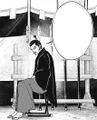 Oda Nobunaga in Tales of Iga
 -
 Nobunaga training in the woods
 -
 Nobunaga during a battle
 -
 Nobunaga in full armor
 -
 Nobunaga using a bow
 -
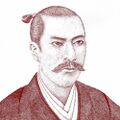 Nobunaga in Who's In Your Blood?
 -
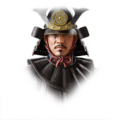 Portrait of Nobunaga in the Animus' objective menu
 -
 Nobunaga as he appears in Assassin's Creed: Shadows
 -
 Nobunaga holding court
 -
 Luís Fróis, Yasuke, and Alessandro Valignano meeting Nobunaga
 -
 Yasuke and Nobunaga
 -
 A helmeted Nobunaga before the Tenshō Iga War
 -
 Yasuke and Nobunaga watching the Iga invasion


Appearances[edit | edit source]
- Assassin's Creed: Memories (first appearance)
- Assassin's Creed film (promotional material only)
- Assassin's Creed Shadows One-Shot (mentioned only) (non-canon)
- Echoes of History – Shadows (mentioned only)
- Assassin's Creed: Shadows
- Featured Events (flashback only)
- Claws of Awaji (mentioned only)
- Assassin's Creed: Shadows – Tales of Iga
- Animus Hub (voice only)
References[edit | edit source]
- ↑ 1.00 1.01 1.02 1.03 1.04 1.05 1.06 1.07 1.08 1.09 1.10 1.11 1.12 1.13 1.14 Echoes of History – Shadows – Episode 5: Oda Nobunaga
- ↑ 2.00 2.01 2.02 2.03 2.04 2.05 2.06 2.07 2.08 2.09 Assassin's Creed: Shadows – Database: Oda Nobunaga
- ↑ Assassin's Creed: Shadows – Tales of Iga – Chapter 30
- ↑ 4.0 4.1 4.2 Assassin's Creed: Memories
- ↑ Assassin's Creed: Shadows – A Prayer for Omi
- ↑ Assassin's Creed: Shadows – Database: Ashikaga Yoshiaki
- ↑
 Takeda Shingen on Wikipedia
- ↑ Echoes of History – Shadows – Episode 7: Kyoto: Japan's Imperial City
- ↑ Assassin's Creed: Shadows – Database: Tamba
- ↑ Assassin's Creed: Shadows – Friend of My Enemy
- ↑ Echoes of History – Shadows – Episode 1: Civil War in Feudal Japan: The Sengoku Period
- ↑ Assassin's Creed: Shadows – The Fatherless Monk
- ↑ 13.0 13.1 13.2 13.3 Assassin's Creed: Shadows – The Lord's Favor
- ↑ 14.0 14.1 14.2 14.3 Assassin's Creed: Shadows – Lords of Azuchi
- ↑ Assassin's Creed: Shadows – Spirit of a Warrior
- ↑ Assassin's Creed: Shadows – Flames of War
- ↑ 17.0 17.1 Assassin's Creed: Shadows – Mibuno Showdown
- ↑ Echoes of History – Shadows – Episode 6: The Tensho Iga War
- ↑ Oda Nobunaga on Wikipedia
- ↑ 20.0 20.1 20.2 20.3 Assassin's Creed: Shadows – Temple of the Horseman
- ↑ Assassin's Creed: Shadows – Topple the Traitor
- ↑ Assassin's Creed: Memories – Oda Nobunaga
| |||||||||||||||||||||||||||||||||||||||||||
| |||||||||||||||||||||||||||||||