

Arquebus: Difference between revisions
imported>Darman36 |
m Text replacement - "’" to "'" |
||
| (7 intermediate revisions by 5 users not shown) | |||
| Line 1: | Line 1: | ||
{{Era|Weapons}}{{WP-REAL}} | {{Era|Weapons}}{{WP-REAL}} | ||
[[File:ACSh Oda clan firing squad.png|thumb|250px|Oda clan warriors armed with arquebuses]] | |||
[[File:ACSh Oda clan firing squad.png|thumb| | An '''arquebus''' is a long-barreled [[firearm]] that was developed in the late 15th century and which saw early use in battles in [[Europe]]<ref name="Renaissance">Arnold, Thomas (2001), The Renaissance at War, Cassell & Co, ISBN 978-0-304-35270-8</ref> and the [[Ottoman Empire]],<ref name="Sultan">Ágoston, Gábor (2008), Guns for the Sultan: Military Power and the Weapons Industry in the Ottoman Empire, Cambridge University Press, ISBN 978-0-521-60391-1</ref> but also managed to reach places as far as [[Japan]] where they were known as '''''teppō''''' (鉄砲).<ref name="EoH Ep 1">''[[Echoes of History]]'' – Shadows – Episode 1: Civil War in Feudal Japan: The Sengoku Period</ref> | ||
An '''arquebus''' is a long-barreled [[firearm]] that was developed in the late 15th century and which saw early use in battles in [[Europe]]<ref name="Renaissance">Arnold, Thomas (2001), The Renaissance at War, Cassell & Co, ISBN 978-0-304-35270-8</ref> and the [[Ottoman Empire]],<ref name="Sultan">Ágoston, Gábor (2008), Guns for the Sultan: Military Power and the Weapons Industry in the Ottoman Empire, Cambridge University Press, ISBN 978-0-521-60391-1</ref> but also managed to reach places as far as [[Japan]].<ref name="EoH Ep 1">''[[Echoes of History]]'' – Shadows – Episode 1: Civil War in Feudal Japan: The Sengoku Period</ref> | |||
From the mid 16th century onward, the [[musket]], which had been invented in the early 1500s and was a heavier weapon, became more common for infantries.<ref name="Renaissance"/> Though originally distinct, later modifications made to the muskets turned the two weapons indistinguishable from each other, and they became known indiscriminately as muskets.<ref name="Firearms">Chase, K. W. (2003). Firearms: A global history to 1700. Cambridge University Press, ISBN 978-0-521-82274-9.</ref> | From the mid-16th century onward, the [[musket]], which had been invented in the early 1500s and was a heavier weapon, became more common for infantries.<ref name="Renaissance"/> Though originally distinct, later modifications made to the muskets turned the two weapons indistinguishable from each other, and they became known indiscriminately as muskets.<ref name="Firearms">Chase, K. W. (2003). Firearms: A global history to 1700. Cambridge University Press, ISBN 978-0-521-82274-9.</ref> | ||
An infantryman armed with an arquebus is called an [[arquebusier]]. | An infantryman armed with an arquebus is called an [[arquebusier]]. | ||
| Line 11: | Line 10: | ||
By 1500, many standing armies in Europe had already created units of arquebusiers, including the [[Papal States]] under the control of [[Rodrigo Borgia]]. A great number of arquebusiers provided security throughout [[Rome]].<ref name="ACB">''[[Assassin's Creed: Brotherhood]]''</ref> A contingent of them was mobilized to aid [[Cesare Borgia]]'s forces during the [[siege of Monteriggioni]], where they were able to seriously wound [[Ezio Auditore da Firenze]] in the shoulder and abdomen, tipping the attack in their favor.<ref name="Vilified">''[[Assassin's Creed: Brotherhood]]'' – [[Vilified]]</ref> | By 1500, many standing armies in Europe had already created units of arquebusiers, including the [[Papal States]] under the control of [[Rodrigo Borgia]]. A great number of arquebusiers provided security throughout [[Rome]].<ref name="ACB">''[[Assassin's Creed: Brotherhood]]''</ref> A contingent of them was mobilized to aid [[Cesare Borgia]]'s forces during the [[siege of Monteriggioni]], where they were able to seriously wound [[Ezio Auditore da Firenze]] in the shoulder and abdomen, tipping the attack in their favor.<ref name="Vilified">''[[Assassin's Creed: Brotherhood]]'' – [[Vilified]]</ref> | ||
[[File:Spare Parts.jpg|thumb|250px|left|Gaspar de la Croix aiming an arquebus]] | |||
In 1502, during a visit by his fellow Templar [[Fiora Cavazza]], the engineer [[Gaspar de la Croix]] tinkered with an arquebus, pausing at times to aim it out of his front window at the passing crowd, before making more adjustments.<ref name="PL Gaspar">''[[Assassin's Creed: Project Legacy]]'' – [[Rome: Chapter 1 – Fiora Cavazza]]: Spare Parts</ref> Around 1503, [[Baltasar de Silva]] organized a division of arquebusiers as an ambush for now Templar-turncoat Fiora Cavazza, luring her into warehouse where the arquebusiers were hidden, though a team of [[Assassins]] was able to shoot down the enemies and rescue her.<ref name="PL Baltasar">''[[Assassin's Creed: Project Legacy]]'' – [[Rome: Chapter 1 – Fiora Cavazza]]: Moving Target</ref> | In 1502, during a visit by his fellow Templar [[Fiora Cavazza]], the engineer [[Gaspar de la Croix]] tinkered with an arquebus, pausing at times to aim it out of his front window at the passing crowd, before making more adjustments.<ref name="PL Gaspar">''[[Assassin's Creed: Project Legacy]]'' – [[Rome: Chapter 1 – Fiora Cavazza]]: Spare Parts</ref> Around 1503, [[Baltasar de Silva]] organized a division of arquebusiers as an ambush for now Templar-turncoat Fiora Cavazza, luring her into warehouse where the arquebusiers were hidden, though a team of [[Assassins]] was able to shoot down the enemies and rescue her.<ref name="PL Baltasar">''[[Assassin's Creed: Project Legacy]]'' – [[Rome: Chapter 1 – Fiora Cavazza]]: Moving Target</ref> | ||
| Line 17: | Line 17: | ||
Arquebusiers continued to be used by the Templar forces around 1511. [[Leandros]] made use of them as protection in a stronghold near [[Masyaf]] while the [[Byzantine Empire|Byzantines]] used them to protect any [[Assassin Dens]] they captured in [[Constantinople]], as well as the rooftops of [[Derinkuyu]].<ref name="ACR">''[[Assassin's Creed: Revelations]]''</ref> | Arquebusiers continued to be used by the Templar forces around 1511. [[Leandros]] made use of them as protection in a stronghold near [[Masyaf]] while the [[Byzantine Empire|Byzantines]] used them to protect any [[Assassin Dens]] they captured in [[Constantinople]], as well as the rooftops of [[Derinkuyu]].<ref name="ACR">''[[Assassin's Creed: Revelations]]''</ref> | ||
In 1543,<ref name="EoH Ep 3">''[[Echoes of History]]'' – Shadows – Episode 3: Portuguese Missionaries in Japan</ref> first contact was made between the [[Portuguese Empire|Portuguese]] and the [[Japan]]ese on Japan's southern shores, bringing, among other things, firearms. The Japanese quickly developed their own versions and soon deployed this new armament into the battlefields. [[Oda Nobunaga]]'s armies were among the first to use the arquebus in Japan<ref name="EoH Ep 1"/> due to his deep trade relations with the Portuguese,<ref name="Explained">{{Youtube|HhMOQowMjM8|Assassin's Creed Shadows Explained - Samurai, Shinobi, and Feudal Japan|Ubisoft|Ubisoft}}</ref> contributing to the higher bodycount of the battles of the [[Sengoku period]], compared to those of previous eras.<ref name="EoH Ep 1"/> [[Yasuke]], a [[samurai]] in Nobunaga's service, used the arquebus alongside his melee weapons.<ref name="IGN 40 Details">{{Cite web|url=https://www.ign.com/articles/assassins-creed-shadows-40-details-you-need-to-know| title= | In 1543,<ref name="EoH Ep 3">''[[Echoes of History]]'' – Shadows – Episode 3: Portuguese Missionaries in Japan</ref> first contact was made between the [[Portuguese Empire|Portuguese]] and the [[Japan]]ese on Japan's southern shores, bringing, among other things, firearms. The Japanese quickly developed their own versions and soon deployed this new armament into the battlefields. [[Oda Nobunaga]]'s armies were among the first to use the arquebus in Japan<ref name="EoH Ep 1"/> due to his deep trade relations with the Portuguese,<ref name="Explained">{{Youtube|HhMOQowMjM8|Assassin's Creed Shadows Explained - Samurai, Shinobi, and Feudal Japan|Ubisoft|Ubisoft}}</ref> contributing to the higher bodycount of the battles of the [[Sengoku period]], compared to those of previous eras.<ref name="EoH Ep 1"/> [[Yasuke]], a [[samurai]] in Nobunaga's service, used the arquebus alongside his melee weapons.<ref name="IGN 40 Details">{{Cite web|url=https://www.ign.com/articles/assassins-creed-shadows-40-details-you-need-to-know| title=Assassin's Creed Shadows: 40 Details You Need To Know| author=Purslow, Matt| work={{Wiki|IGN}}| date=15 May 2024| accessdate=18 May 2024| archiveurl=https://web.archive.org/web/20240515184055/https://www.ign.com/articles/assassins-creed-shadows-40-details-you-need-to-know| archivedate=15 May 2024}}</ref> | ||
==Gallery== | ==Gallery== | ||
<gallery widths="180" position="center" captionalign="center"> | <gallery widths="180" position="center" captionalign="center"> | ||
Arquebusiers development concept.jpg|Concept art of a Borgia arquebusier | |||
Guard-arquebusier-ACB.png|An arquebusier | Guard-arquebusier-ACB.png|An arquebusier | ||
Vilified 11 v.png|Arquebusiers during the Siege of Monteriggioni | Vilified 11 v.png|Arquebusiers during the Siege of Monteriggioni | ||
ACR Ottoman Rifleman.png|Ezio facing an Ottoman rifleman | ACR Ottoman Rifleman.png|Ezio facing an Ottoman rifleman | ||
ACR Byzantine Rifleman.png|Ezio facing a Byzantine rifleman | |||
ACSH DB Commerce and Craft at Sakai.png|A Sengoku-era arquebus | ACSH DB Commerce and Craft at Sakai.png|A Sengoku-era arquebus | ||
ACSH DB Teppo.png|A ''teppō'' | |||
ACSH Bullet.png|A regular ''teppō'' bullet | |||
ACSH Steel Bullet.png|A [[steel]] ''teppō'' bullet | |||
ACSH Concussion Bullet.png|A concussion ''teppō'' bullet | |||
ACSH Shrapnel Bullet.png|A shrapnel ''teppō'' bullet | |||
</gallery> | </gallery> | ||
==Behind the scenes== | ==Behind the scenes== | ||
The arquebus is a weapon that first appeared in the 2010 video game ''[[Assassin's Creed: Brotherhood]]'', where it was only used by enemy soldiers. It did not become a usable weapon until the introduction of Yasuke as a protagonist in the 2025 | The arquebus is a weapon that first appeared in the 2010 video game ''[[Assassin's Creed: Brotherhood]]'', where it was only used by enemy soldiers. It did not become a usable weapon until the introduction of Yasuke as a protagonist in the 2025 game ''[[Assassin's Creed: Shadows]]'',<ref name="IGN 40 Details"/> though it is referred to by the Chinese loanword ''teppō'' (鉄砲 lit. "iron cannon"),<ref>{{WP|Firearms of Japan}}</ref> rather than the more accurate ''tanegashima'' (種子島).<ref>{{WP|Tanegashima (gun)}}</ref> | ||
==Appearances== | ==Appearances== | ||
*''[[Assassin's Creed: | *''[[Assassin's Creed: Project Legacy]]'' {{1st}} | ||
*''[[Assassin's Creed: Brotherhood]]'' | |||
*''[[Assassin's Creed: Revelations]]'' | *''[[Assassin's Creed: Revelations]]'' | ||
*''[[Echoes of History]]'' {{Mo}} | *''[[Echoes of History]]'' {{Mo}} | ||
*''[[Assassin's Creed Roleplaying Game]]'' {{Mo}} | *''[[Assassin's Creed Roleplaying Game]]'' {{Mo}} | ||
*''[[Assassin's Creed: Shadows]]'' | *''[[Assassin's Creed: Shadows]]'' | ||
**''[[Story Drops]]'' | |||
**''[[Claws of Awaji]]'' | |||
==References== | ==References== | ||
{{Reflist}} | {{Reflist}} | ||
{{ACB}} | |||
{{ACR}} | |||
{{ACSH}} | |||
[[Category:Firearms]] | [[Category:Firearms]] | ||
[[Category:Types of firearms]] | [[Category:Types of firearms]] | ||
[[Category:16th century weapons]] | |||
Latest revision as of 00:13, 12 August 2026

An arquebus is a long-barreled firearm that was developed in the late 15th century and which saw early use in battles in Europe[1] and the Ottoman Empire,[2] but also managed to reach places as far as Japan where they were known as teppō (鉄砲).[3]
From the mid-16th century onward, the musket, which had been invented in the early 1500s and was a heavier weapon, became more common for infantries.[1] Though originally distinct, later modifications made to the muskets turned the two weapons indistinguishable from each other, and they became known indiscriminately as muskets.[4]
An infantryman armed with an arquebus is called an arquebusier.
History[edit | edit source]
By 1500, many standing armies in Europe had already created units of arquebusiers, including the Papal States under the control of Rodrigo Borgia. A great number of arquebusiers provided security throughout Rome.[5] A contingent of them was mobilized to aid Cesare Borgia's forces during the siege of Monteriggioni, where they were able to seriously wound Ezio Auditore da Firenze in the shoulder and abdomen, tipping the attack in their favor.[6]

In 1502, during a visit by his fellow Templar Fiora Cavazza, the engineer Gaspar de la Croix tinkered with an arquebus, pausing at times to aim it out of his front window at the passing crowd, before making more adjustments.[7] Around 1503, Baltasar de Silva organized a division of arquebusiers as an ambush for now Templar-turncoat Fiora Cavazza, luring her into warehouse where the arquebusiers were hidden, though a team of Assassins was able to shoot down the enemies and rescue her.[8]
Later that year, a number of French arquebusiers under Charles de la Motte were key factors in a trap set by Charles and Cesare Borgia for the Assassins of Rome. Though the Assassin apprentice team of Francesco Vecellio was able to kill several arquebusiers with bows, this broke their cover and led to them being overwhelmed by the combined Templar forces.[9] Though the Assassin team escaped to the roof of an inn, another contingent of arquebusiers surrounded and fired upon them from nearby buildings, wiping out virtually all of them.[10]
Arquebusiers continued to be used by the Templar forces around 1511. Leandros made use of them as protection in a stronghold near Masyaf while the Byzantines used them to protect any Assassin Dens they captured in Constantinople, as well as the rooftops of Derinkuyu.[11]
In 1543,[12] first contact was made between the Portuguese and the Japanese on Japan's southern shores, bringing, among other things, firearms. The Japanese quickly developed their own versions and soon deployed this new armament into the battlefields. Oda Nobunaga's armies were among the first to use the arquebus in Japan[3] due to his deep trade relations with the Portuguese,[13] contributing to the higher bodycount of the battles of the Sengoku period, compared to those of previous eras.[3] Yasuke, a samurai in Nobunaga's service, used the arquebus alongside his melee weapons.[14]
Gallery[edit | edit source]
-
 Concept art of a Borgia arquebusier
 -
 An arquebusier
 -
 Arquebusiers during the Siege of Monteriggioni
 -
 Ezio facing an Ottoman rifleman
 -
 Ezio facing a Byzantine rifleman
 -
 A Sengoku-era arquebus
 -
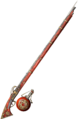 A teppō
 -
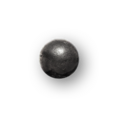 A regular teppō bullet
 -
 A steel teppō bullet
 -
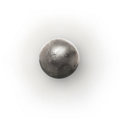 A concussion teppō bullet
 -
 A shrapnel teppō bullet


Behind the scenes[edit | edit source]
The arquebus is a weapon that first appeared in the 2010 video game Assassin's Creed: Brotherhood, where it was only used by enemy soldiers. It did not become a usable weapon until the introduction of Yasuke as a protagonist in the 2025 game Assassin's Creed: Shadows,[14] though it is referred to by the Chinese loanword teppō (鉄砲 lit. "iron cannon"),[15] rather than the more accurate tanegashima (種子島).[16]
Appearances[edit | edit source]
- Assassin's Creed: Project Legacy (first appearance)
- Assassin's Creed: Brotherhood
- Assassin's Creed: Revelations
- Echoes of History (mentioned only)
- Assassin's Creed Roleplaying Game (mentioned only)
- Assassin's Creed: Shadows
References[edit | edit source]
- ↑ 1.0 1.1 Arnold, Thomas (2001), The Renaissance at War, Cassell & Co, ISBN 978-0-304-35270-8
- ↑ Ágoston, Gábor (2008), Guns for the Sultan: Military Power and the Weapons Industry in the Ottoman Empire, Cambridge University Press, ISBN 978-0-521-60391-1
- ↑ 3.0 3.1 3.2 Echoes of History – Shadows – Episode 1: Civil War in Feudal Japan: The Sengoku Period
- ↑ Chase, K. W. (2003). Firearms: A global history to 1700. Cambridge University Press, ISBN 978-0-521-82274-9.
- ↑ Assassin's Creed: Brotherhood
- ↑ Assassin's Creed: Brotherhood – Vilified
- ↑ Assassin's Creed: Project Legacy – Rome: Chapter 1 – Fiora Cavazza: Spare Parts
- ↑ Assassin's Creed: Project Legacy – Rome: Chapter 1 – Fiora Cavazza: Moving Target
- ↑ Assassin's Creed: Project Legacy – Rome: Chapter 3 – Francesco Vecellio: Cover Fire
- ↑ Assassin's Creed: Project Legacy – Rome: Chapter 3 – Francesco Vecellio: Marathon
- ↑ Assassin's Creed: Revelations
- ↑ Echoes of History – Shadows – Episode 3: Portuguese Missionaries in Japan
- ↑
 Assassin's Creed Shadows Explained - Samurai, Shinobi, and Feudal Japan on the Ubisoft YouTube channel
- ↑ 14.0 14.1 Purslow, Matt (15 May 2024). Assassin's Creed Shadows: 40 Details You Need To Know. IGN. Archived from the original on 15 May 2024. Retrieved on 18 May 2024.
- ↑
 Firearms of Japan on Wikipedia
- ↑ Tanegashima (gun) on Wikipedia
| |||||||||||||||||||||||||||||||||||||
| |||||||||||||||||||||||||||||||||||||