

Ukita Naoie: Difference between revisions
mNo edit summary |
mNo edit summary |
||
| Line 21: | Line 21: | ||
<gallery captionalign="center" position="center" widths="180"> | <gallery captionalign="center" position="center" widths="180"> | ||
ACSH Ukita Naoie Portrait.png|Portrait of Naoie in the Animus' objective menu | ACSH Ukita Naoie Portrait.png|Portrait of Naoie in the Animus' objective menu | ||
ACSH The Noble Portrait.png|Portrait of Naoie as The Noble | |||
ACSH Ukita Naoie's death.png|Naoie's death in the ''tenshu'' of Himeji Castle | ACSH Ukita Naoie's death.png|Naoie's death in the ''tenshu'' of Himeji Castle | ||
</gallery> | </gallery> | ||
Revision as of 13:20, 2 August 2026

|
Ezio, my friend! How may I be of service? This article has a lot of room for expansion. Please improve it with additional information in accordance with the Manual of Style |
Ukita Naoie (宇喜多 直家; 1529 – 1582), also known as The Noble, was a Japanese daimyō of the Sengoku period. He was the father of Ukita Hideie, who succeeded him following his death.[1]
Biography
In 1582, Naoie was invited to attend Kuroda Yoshitaka's rengakai (連歌会) at his castle in Himeji.[2] That night, hired rōnin ambushed the event and kidnapped Hideie. The Japanese Assassin Fujibayashi Naoe and the samurai Yasuke uncovered Naoie's role in having orchestrated the attack, with his son's capture an attempt to allay suspicion from his plan to seize more of Yoshitaka's lands in hopes to gain favor with Toyotomi Hideyoshi. The pair confronted Naoie about this within Himeji's tenshu before assassinating him.[3]
Behind the scenes
Historically, Ukita Naoie died a few months before Oda Nobunaga in February 1582 at Okayama Castle rather than a few days after at Himeji Castle.
Gallery
-
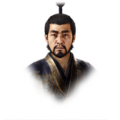 Portrait of Naoie in the Animus' objective menu
 -
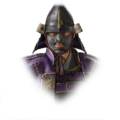 Portrait of Naoie as The Noble
 -
 Naoie's death in the tenshu of Himeji Castle


Appearances
References
- ↑
 Ukita Naoie on Wikipedia
- ↑ Assassin’s Creed: Shadows – The Rengakai
- ↑ Assassin's Creed: Shadows – Spring and Fall