


Order of the Ancients: Difference between revisions
imported>Gener4l Cl4ank4 mNo edit summary |
imported>Gener4l Cl4ank4 No edit summary |
||
| Line 2: | Line 2: | ||
{{Update|''[[Assassin's Creed: Dynasty]]'', ''[[Assassin's Creed: Valhalla]]'', ''[[Assassin's Creed: The Silk Road]]'' and ''[[Assassin's Creed: Mirage]]''}} | {{Update|''[[Assassin's Creed: Dynasty]]'', ''[[Assassin's Creed: Valhalla]]'', ''[[Assassin's Creed: The Silk Road]]'' and ''[[Assassin's Creed: Mirage]]''}} | ||
{{Merge|[[Templars]]|Templars}} | {{Merge|[[Templars]]|Templars}} | ||
{{Quote|We men and women of the Order of the Ancients are the natural arbiters of the world. Let all those who oppose us perish in pain. We are everywhere, and we are eternal.| | {{Quote|We men and women of the Order of the Ancients are the natural arbiters of the world. Let all those who oppose us perish in pain. We are everywhere, and we are eternal.|The motto of the Order of the Ancients.|Assassin's Creed: Valhalla|Walls and Shadows}} | ||
{{Faction Infobox | {{Faction Infobox | ||
|name = Order of the Ancients | |name = Order of the Ancients | ||
| Line 45: | Line 45: | ||
The '''Order of the Ancients''', also known as the '''Order of Ancients''',<ref>''[[Assassin's Creed: Valhalla]]'' – [[To Serve the Light...]]</ref> the '''Snake''',<ref name="The False Oracle">''[[Assassin's Creed: Origins]]'' – [[The False Oracle]]</ref> the '''Masked Ones''', and derisively as the '''Order of Heretics''',<ref name="Walls and Shadows">''[[Assassin's Creed: Valhalla]]'' – [[Walls and Shadows]]</ref> was a secretive religious collective which operated throughout the ancient world. It was founded in 1334 BCE by the [[Egypt]]ian [[Pharaoh]] [[Smenkhkare]], who not only strictly revered the [[Isu|Ancient Ones]], but also upheld a strict supremacist view of them and sought to use the [[Piece of Eden|Pieces of Eden]] in order to politically and religiously shepherd [[human]]ity into recreating Isu societies on [[Earth]] as well as revive the Isu. | The '''Order of the Ancients''', also known as the '''Order of Ancients''',<ref>''[[Assassin's Creed: Valhalla]]'' – [[To Serve the Light...]]</ref> the '''Snake''',<ref name="The False Oracle">''[[Assassin's Creed: Origins]]'' – [[The False Oracle]]</ref> the '''Masked Ones''', and derisively as the '''Order of Heretics''',<ref name="Walls and Shadows">''[[Assassin's Creed: Valhalla]]'' – [[Walls and Shadows]]</ref> was a secretive religious collective which operated throughout the ancient world. It was founded in 1334 BCE by the [[Egypt]]ian [[Pharaoh]] [[Smenkhkare]], who not only strictly revered the [[Isu|Ancient Ones]], but also upheld a strict supremacist view of them and sought to use the [[Piece of Eden|Pieces of Eden]] in order to politically and religiously shepherd [[human]]ity into recreating Isu societies on [[Earth]] as well as revive the Isu. | ||
Throughout their entire history, the Order of the Ancients held dominion over major empires in the known world. The reach of their members extended to military leaders, religious elders, scholars, nobles, ealdormen and philosophers, as well as criminal masterminds. While the Order was virtually unopposed in its dominion over humanity during the first several centuries of its existence, several individuals and groups would eventually rise to fight against its tyranny, most notably the [[Hidden Ones]] in 47 BCE, who would thereafter wage a [[Assassin-Templar War|centuries-long shadow war]] against the Order. | Throughout their entire history, the Order of the Ancients held dominion over major empires in the known world. The reach of their members extended to military leaders, religious elders, scholars, nobles, ealdormen and philosophers, as well as criminal masterminds. While the Order was virtually unopposed in its dominion over humanity during the first several centuries of its existence, several individuals and groups would eventually rise to fight against its tyranny, most notably the [[Assassins|Hidden Ones]] in 47 BCE, who would thereafter wage a [[Assassin-Templar War|centuries-long shadow war]] against the Order. | ||
With the rise of Abrahamic religions and the decline of polythetic religions across [[Europe]] and [[Asia]], the Order began to decline and were eventually mostly wiped out in 878 CE in a campaign orchestrated by the [[Grand Maegester of the Order of the Ancients|Grand Maegester]] of their branch in [[England]], King [[Alfred the Great|Alfred]] of [[Wessex]], who reviled the Order's ideals and beliefs, | With the rise of Abrahamic religions and the decline of polythetic religions across [[Europe]] and [[Asia]], the Order began to decline and were eventually mostly wiped out in 878 CE in a campaign orchestrated by the [[Grand Maegester of the Order of the Ancients|Grand Maegester]] of their branch in [[England]], King [[Alfred the Great|Alfred]] of [[Wessex]], who reviled the Order's ideals and beliefs, considering them to be sacrilegious to the one God preached by [[Christianity]]. With the [[Viking expansion]] into England, Alfred manipulated [[Eivor Varinsdottir]] of the [[Raven Clan]] into unknowingly wiping out the Order in England, fulfilling his dreams to reform the Order into one that was more compatible with his religious principles. This became the basis for the eventual foundation of the [[Templars|Order of the Knights Templar]].<ref name="The Poor Fellow Soldier">''[[Assassin's Creed: Valhalla]]'' – [[The Poor Fellow-Soldier]]</ref> | ||
Despite repeated persecutions, remnants of the Order still existed elsewhere in Europe,<ref name="The Poor Fellow Soldier" /> such as [[Ireland]] and [[France]].<ref name="Impaling the Seax" /> However, they were eventually eliminated, disappeared or were absorbed into the Templar Order. In 2020, given the similarities in theological beliefs, the [[Assassins|Assassin]] [[Shaun Hastings]] theorized that the Order of the Ancients could have been a predecessor organization to the [[Instruments of the First Will]], a seemingly collapsed [[Modern times|modern day]] secluded organization that had sought to restore the Isu as humanity's rulers.<ref name="ACV Shaun's Notes" /> | Despite repeated persecutions, remnants of the Order still existed elsewhere in Europe,<ref name="The Poor Fellow Soldier" /> such as [[Ireland]] and [[France]].<ref name="Impaling the Seax" /> However, they were eventually eliminated, disappeared or were absorbed into the Templar Order. In 2020, given the similarities in theological beliefs, the [[Assassins|Assassin]] [[Shaun Hastings]] theorized that the Order of the Ancients could have been a predecessor organization to the [[Instruments of the First Will]], a seemingly collapsed [[Modern times|modern day]] secluded organization that had sought to restore the Isu as humanity's rulers.<ref name="ACV Shaun's Notes" /> | ||
| Line 56: | Line 56: | ||
{{Quote|The Order of the Ancients. A powerful secret group who have controlled Persia across the reign of countless kings.|Darius on the Order, c. 429 BCE.|Legacy of the First Blade: Hunted|Shadow of a Legend}} | {{Quote|The Order of the Ancients. A powerful secret group who have controlled Persia across the reign of countless kings.|Darius on the Order, c. 429 BCE.|Legacy of the First Blade: Hunted|Shadow of a Legend}} | ||
[[File:ACO Smenkhkare Sarcophagus.jpg|thumb|250px|Smenkhkare's tomb]] | [[File:ACO Smenkhkare Sarcophagus.jpg|thumb|250px|Smenkhkare's tomb]] | ||
The Order of the Ancients was founded by the Pharaoh Smenkhkare around 1334 BCE, with the original aim of identifying and exploiting ancient Isu technologies.<ref>''[[Assassin's Creed: Origins]]'' – [[Notes from Bayek's travels]]: "Tomb of Smenkhkare"</ref> Having discovered the Isu vault [[Eeyoo Sekedoo Aat]], Smenkhkare eventually had his own tomb connected to the vault in order to keep it hidden.<ref name="ACO" /> | The Order of the Ancients was founded by the Pharaoh [[Smenkhkare]] around 1334 BCE, with the original aim of identifying and exploiting ancient Isu technologies.<ref>''[[Assassin's Creed: Origins]]'' – [[Notes from Bayek's travels]]: "Tomb of Smenkhkare"</ref> Having discovered the Isu vault [[Eeyoo Sekedoo Aat]], Smenkhkare eventually had his own tomb connected to the vault in order to keep it hidden.<ref name="ACO" /> | ||
The Order spread across Egypt before expanding into nearby [[Iran|Persia]], where it sought to manipulate and control the [[Achaemenid Empire|Achaemenid Emperors]]. By the 5th century BCE, the Order had grown into a powerful organization that had influenced the reigns of generations of Achaemenid rulers, including [[Darius I of Persia|Darius I]] and his son, [[Xerxes I of Persia|Xerxes I]].<ref name="LotFB:H">''[[Assassin's Creed: Odyssey]]'' – ''[[Legacy of the First Blade: Hunted]]''</ref> | The Order spread across [[Egypt]] before expanding into nearby [[Iran|Persia]], where it sought to manipulate and control the [[Achaemenid Empire|Achaemenid Emperors]]. By the 5th century BCE, the Order had grown into a powerful organization that had influenced the reigns of generations of Achaemenid rulers, including [[Darius I of Persia|Darius I]] and his son, [[Xerxes I of Persia|Xerxes I]].<ref name="LotFB:H">''[[Assassin's Creed: Odyssey]]'' – ''[[Legacy of the First Blade: Hunted]]''</ref> | ||
By the time of the Second Persian Invasion of [[Hellas]]—during which the famed [[Battle of Thermopylae]] took place—the Order of the Ancients had long been in partnership with the [[Cult of Kosmos]]. Though both operated independently of one another, their aims often aligned, and as a result, both groups sought to install Xerxes I as overlord in [[Greece]]. Despite this partnership, however, the Order was unaware of the Cult's part in instigating the [[Peloponnesian War]], a conflict which brought chaos to the region, much to the disdain of the Order.<ref name="LotFB:B">''[[Assassin's Creed: Odyssey]]'' – ''[[Legacy of the First Blade: Bloodline]]''</ref> | By the time of the Second Persian Invasion of [[Hellas]]—during which the famed [[Battle of Thermopylae]] took place—the Order of the Ancients had long been in partnership with the [[Cult of Kosmos]]. Though both operated independently of one another, their aims often aligned, and as a result, both groups sought to install Xerxes I as overlord in [[Greece]]. Despite this partnership, however, the Order was unaware of the Cult's part in instigating the [[Peloponnesian War]], a conflict which brought chaos to the region, much to the disdain of the Order.<ref name="LotFB:B">''[[Assassin's Creed: Odyssey]]'' – ''[[Legacy of the First Blade: Bloodline]]''</ref> | ||
| Line 144: | Line 144: | ||
[[File:Origins Quest11TheScarab'sLies Part17.png|thumb|250px|Taharqa assassinated by Bayek]] | [[File:Origins Quest11TheScarab'sLies Part17.png|thumb|250px|Taharqa assassinated by Bayek]] | ||
Meanwhile, [[Taharqa]] sought to expand the Order influence in [[Sapi-Res Nome]] by reclaiming the city of [[Letopolis]] from the consuming desert, using his role as steward as a façade.<ref name="The Scarab's Sting">''[[Assassin's Creed: Origins]]'' – [[The Scarab's Sting]]</ref> When Bayek arrived in the city, | Meanwhile, [[Taharqa]] sought to expand the Order influence in [[Sapi-Res Nome]] by reclaiming the city of [[Letopolis]] from the consuming desert, using his role as steward as a façade.<ref name="The Scarab's Sting">''[[Assassin's Creed: Origins]]'' – [[The Scarab's Sting]]</ref> When Bayek arrived in the city, Taharqa attempted to eliminate him, but failed and he too was killed by the Medjay.<ref name="The Scarab's Lies">''[[Assassin's Creed: Origins]]'' – [[The Scarab's Lies]]</ref> | ||
=====Alliance with Caesar and Cleopatra===== | =====Alliance with Caesar and Cleopatra===== | ||
| Line 187: | Line 187: | ||
By 38 BCE, the Order had started to lose its sway over Cleopatra and so General Rufia planned a full-scale invasion of Egypt, beginning from the Sinai. However, the Romans were opposed by the Hidden Ones and a local resistance led by [[Gamilat]].<ref name="ACOTHO" /> After two Hidden Ones were killed in the conflict, Bayek arrived in the Sinai and assassinated Rufio's lieutenants [[Ampelius]], [[Ptahmose]] and [[Tacito]].<ref name="Walls of the Ruler">''[[Assassin's Creed: Origins]]'' – ''[[The Hidden Ones (DLC)|The Hidden Ones]]'' – [[The Walls of the Ruler]]</ref><ref name="Setting Sun">''[[Assassin's Creed: Origins]]'' – ''[[The Hidden Ones (DLC)|The Hidden Ones]]'' – [[The Setting Sun]]</ref><ref name="Where the Slaves Die">''[[Assassin's Creed: Origins]]'' – ''[[The Hidden Ones (DLC)|The Hidden Ones]]'' – [[Where the Slaves Die]]</ref> When Rufio's fleet arrived in the Sinai, Bayek infiltrated the general's personal ship and killed him as well.<ref name="Sic Semper Tyrannis" /> | By 38 BCE, the Order had started to lose its sway over Cleopatra and so General Rufia planned a full-scale invasion of Egypt, beginning from the Sinai. However, the Romans were opposed by the Hidden Ones and a local resistance led by [[Gamilat]].<ref name="ACOTHO" /> After two Hidden Ones were killed in the conflict, Bayek arrived in the Sinai and assassinated Rufio's lieutenants [[Ampelius]], [[Ptahmose]] and [[Tacito]].<ref name="Walls of the Ruler">''[[Assassin's Creed: Origins]]'' – ''[[The Hidden Ones (DLC)|The Hidden Ones]]'' – [[The Walls of the Ruler]]</ref><ref name="Setting Sun">''[[Assassin's Creed: Origins]]'' – ''[[The Hidden Ones (DLC)|The Hidden Ones]]'' – [[The Setting Sun]]</ref><ref name="Where the Slaves Die">''[[Assassin's Creed: Origins]]'' – ''[[The Hidden Ones (DLC)|The Hidden Ones]]'' – [[Where the Slaves Die]]</ref> When Rufio's fleet arrived in the Sinai, Bayek infiltrated the general's personal ship and killed him as well.<ref name="Sic Semper Tyrannis" /> | ||
In 30 BCE, Octavian's army invaded Alexandria to capture Cleopatra, who by this point had cut all ties with the Order, and her lover Marcus Antonius. While Antonius committed suicide after his forces were defeated, Cleopatra received a visit from her old ally Aya, by now known as "Amunet", who gave her a vial of poison and urged her to take her life to spare Egypt from Octavian's wrath. Cleopatra | In 30 BCE, Octavian's army invaded Alexandria to capture Cleopatra, who by this point had cut all ties with the Order, and her lover Marcus Antonius. While Antonius committed suicide after his forces were defeated, Cleopatra received a visit from her old ally Aya, by now known as "Amunet", who gave her a vial of poison and urged her to take her life to spare Egypt from Octavian's wrath. Cleopatra did so,<ref name="Origins comic" /> and the Romans ultimately conquered Egypt, whereupon Octavian proclaimed himself Emperor in 27 BCE, ruling under the name Augustus and establishing the [[Roman Empire]].<ref name="Project Legacy">''[[Assassin's Creed: Project Legacy]]</ref> | ||
The Order continued to support and influence later Roman Emperors, such as [[Caligula]].<ref name="Encyclopedia" /> Because of this, on 24 January 41 CE, the Roman Hidden One [[Leonius]] assassinated Caligula with a [[Short blade|dagger]] in an underground corridor beneath [[Palatine Hill]].<ref name="AC2 Floating" /> | The Order continued to support and influence later Roman Emperors, such as [[Caligula]].<ref name="Encyclopedia" /> Because of this, on 24 January 41 CE, the Roman Hidden One [[Leonius]] assassinated Caligula with a [[Short blade|dagger]] in an underground corridor beneath [[Palatine Hill]].<ref name="AC2 Floating" /> | ||
| Line 593: | Line 593: | ||
;Anglo-Saxon England and Scandinavia | ;Anglo-Saxon England and Scandinavia | ||
<div style="float:left; width:48;"> | <div style="float:left; width:48;"> | ||
*[[Descendants of the Round Table]] | *[[Descendants of the Round Table]] | ||
*[[Red Hand]] | |||
*[[Wolf Clan]] | |||
**[[Alrek]] | |||
**[[Bjarke Broadside]] | |||
**[[Erland]] | |||
**[[Hrolfr Kjotvesson]] | |||
**[[Kiarr Rawbone]] † | |||
**[[Roscoe]] | |||
**[[Steinólfur]] † | |||
**[[Taras]] | |||
**[[Thora]] † | |||
*[[Aelwyn]] | *[[Aelwyn]] | ||
*[[Cuthbert]] | *[[Cuthbert]] | ||
*[[Edward, Earl of Westerna | *[[Edward, Earl of Westerna]] | ||
*[[Eivor Varinsdottir]] † | *[[Eivor Varinsdottir]] † | ||
</div> | |||
<div style="float:right; width:48%;"> | |||
*[[Fulke's Champion]] | *[[Fulke's Champion]] | ||
*[[Galinn]] | *[[Galinn]] | ||
*[[Goodwin]] | *[[Goodwin]] † | ||
*[[Harriet]] | *[[Harriet]] † | ||
*[[Hilde]] | *[[Hilde]] † | ||
*[[Hussa]] | *[[Hussa]] | ||
*[[Kaija]] | *[[Kaija]] | ||
*[[Oija]] | *[[Oija]] | ||
*[[Paul]] | *[[Paul]] | ||
*[[Randwald]] | *[[Randwald]] | ||
*[[Rikiwulf]] | |||
*[[Rikiwulf | |||
*[[Saer]] | *[[Saer]] | ||
*[[Wigbert]] † | |||
*[[Wigbert]] | |||
*[[Wigmund's Lieutenant]] | *[[Wigmund's Lieutenant]] | ||
*[[Wimbald]] | *[[Wimbald]] | ||
</div> | </div> | ||
{{-}} | {{-}} | ||
| Line 682: | Line 682: | ||
*''[[Assassin's Creed: Valhalla – Geirmund's Saga]]'' {{Mo}} | *''[[Assassin's Creed: Valhalla – Geirmund's Saga]]'' {{Mo}} | ||
*''[[Assassin's Creed: Valhalla – Blood Brothers]]'' | *''[[Assassin's Creed: Valhalla – Blood Brothers]]'' | ||
*''[[Assassin's Creed: The Imperial Jade Seal]] – [[Assassin's Creed: Prophecy of the Emperor|Prophecy of the Emperor]]'' | *''[[Assassin's Creed: The Imperial Jade Seal]]'' – ''[[Assassin's Creed: Prophecy of the Emperor|Prophecy of the Emperor]]'' | ||
*''[[Assassin's Creed: The Silk Road]]'' | *''[[Assassin's Creed: The Silk Road]]'' | ||
*''[[Assassin's Creed: Valhalla – Sword of the White Horse]]'' | *''[[Assassin's Creed: Valhalla – Sword of the White Horse]]'' | ||
Revision as of 14:20, 13 May 2024

|
Patience, brothers. Soon we will reveal the secrets of Assassin's Creed: Dynasty, Assassin's Creed: Valhalla, Assassin's Creed: The Silk Road and Assassin's Creed: Mirage. This article has been identified as being out of date. Please update the article to reflect recent releases and then remove this template once done. |

|
We do this together or not at all. It has been proposed that this page be merged with Templars, under the article: Templars. Discussion to this effect can be held on the former article's talk page. |
The Order of the Ancients, also known as the Order of Ancients,[20] the Snake,[21] the Masked Ones, and derisively as the Order of Heretics,[22] was a secretive religious collective which operated throughout the ancient world. It was founded in 1334 BCE by the Egyptian Pharaoh Smenkhkare, who not only strictly revered the Ancient Ones, but also upheld a strict supremacist view of them and sought to use the Pieces of Eden in order to politically and religiously shepherd humanity into recreating Isu societies on Earth as well as revive the Isu.
Throughout their entire history, the Order of the Ancients held dominion over major empires in the known world. The reach of their members extended to military leaders, religious elders, scholars, nobles, ealdormen and philosophers, as well as criminal masterminds. While the Order was virtually unopposed in its dominion over humanity during the first several centuries of its existence, several individuals and groups would eventually rise to fight against its tyranny, most notably the Hidden Ones in 47 BCE, who would thereafter wage a centuries-long shadow war against the Order.
With the rise of Abrahamic religions and the decline of polythetic religions across Europe and Asia, the Order began to decline and were eventually mostly wiped out in 878 CE in a campaign orchestrated by the Grand Maegester of their branch in England, King Alfred of Wessex, who reviled the Order's ideals and beliefs, considering them to be sacrilegious to the one God preached by Christianity. With the Viking expansion into England, Alfred manipulated Eivor Varinsdottir of the Raven Clan into unknowingly wiping out the Order in England, fulfilling his dreams to reform the Order into one that was more compatible with his religious principles. This became the basis for the eventual foundation of the Order of the Knights Templar.[19]
Despite repeated persecutions, remnants of the Order still existed elsewhere in Europe,[19] such as Ireland and France.[9] However, they were eventually eliminated, disappeared or were absorbed into the Templar Order. In 2020, given the similarities in theological beliefs, the Assassin Shaun Hastings theorized that the Order of the Ancients could have been a predecessor organization to the Instruments of the First Will, a seemingly collapsed modern day secluded organization that had sought to restore the Isu as humanity's rulers.[13]
History
Classical Antiquity
Early years

The Order of the Ancients was founded by the Pharaoh Smenkhkare around 1334 BCE, with the original aim of identifying and exploiting ancient Isu technologies.[23] Having discovered the Isu vault Eeyoo Sekedoo Aat, Smenkhkare eventually had his own tomb connected to the vault in order to keep it hidden.[3]
The Order spread across Egypt before expanding into nearby Persia, where it sought to manipulate and control the Achaemenid Emperors. By the 5th century BCE, the Order had grown into a powerful organization that had influenced the reigns of generations of Achaemenid rulers, including Darius I and his son, Xerxes I.[24]
By the time of the Second Persian Invasion of Hellas—during which the famed Battle of Thermopylae took place—the Order of the Ancients had long been in partnership with the Cult of Kosmos. Though both operated independently of one another, their aims often aligned, and as a result, both groups sought to install Xerxes I as overlord in Greece. Despite this partnership, however, the Order was unaware of the Cult's part in instigating the Peloponnesian War, a conflict which brought chaos to the region, much to the disdain of the Order.[25]
Achaemenid Empire
Pursuit of Darius
- Amorges: "What if the Order aren't our enemy? They're powerful. Maybe if we work with them, we'll have all the resources we need to protect Persia."
- Darius: "Artaxerxes dies... as does anyone in league with the Order."
- —Amorges and Darius, prior to the latter's attempted assassination of Artaxerxes, c. 465 BCE.[src]-[m]

Eventually, the Order's existence and activities were discovered by the Persian elites Artabanus, Amorges, and Pactyas during Xerxes I's reign. Allying with other elites, they formed the "Protectors of Persia" resistance group to oppose the Order and all those in league with them, and successfully assassinated Xerxes during an ambush on his convoy in August 465 BCE.[26]
With Xerxes dead, the Ancients turned their attention to his son Artaxerxes I, who had succeeded his father as king. When Artabanus planned his assassination, fearing the potential for another puppet, Amorges betrayed his friend and joined the Order, hoping to use their resources to create a better future for Persia.[27]

After Amorges foiled and exposed Artabanus' plan, the latter was branded a traitor and was forced to flee Persia with his family, adopting the new name Darius. Meanwhile, Amorges rose to become a leader of the Ancients and dispatched the Order of Hunters sub-branch led by Pactyas to find and eliminate his former friend. After losing most of his family to the Hunters, Darius managed to lose their tail and escaped to Greece with his son Natakas.[27]
Their pursuit of Darius notwithstanding, the Order of Hunters' objective shifted to eliminating the "Tainted Ones", human descendants of the Isu possessing enhanced strength and abilities, which caused them to be seen as a threat by the Ancients. By the 420s BCE, Pactyas and his Order had successfully hunted a number of Tainted Ones throughout Persia and other regions.[24]
Activities in Greece
Around 429 BCE, the Order of Hunters traveled to Makedonia, Greece in an attempt to eliminate the Spartan misthios Kassandra, a Tainted One who had made a name for herself during the Peloponnesian War.[24][28] In Makedonia, they allied themselves with a group of Spartans in order to root out the misthios, while the Order's existence was discovered by a group of mercenaries who were searching for Kassandra themselves.[29] This group also uncovered correspondence between members of the Spartan army and the Order, as well as a planned ambush they decided to interfere with, thinking that would bolster their fame and allow them to join Kassandra's crew aboard her ship, the Adrestia.[30]
The mercenaries later fought the Order again, this time with the aid of Darius, who had taken refuge in Makedonia and warned them more members were nearby before leaving to check on Natakas at their camp.[31] Upon arrival, though, Darius and the mercenaries found the camp ransacked and Natakas missing. Darius warned the mercenaries that he worked better alone, but the group ignored him and followed Darius, intent on helping him deliver retribution to the Order for the ambush.[32]
Following the Order's trail to a cave they were using as a hideout, the mercenaries eliminated all the Spartans and the two Order members they encountered there until reaching a central cavern. There, they saw six Order members and a Spartan ekdromos gathered around the restrained Natakas. Unbeknownst to them, Darius had also tracked the Order to the cave and had hidden behind a stalagmite deep in the cavern. As the mercenaries approached the Order, Darius dashed from his hiding place to flank the group.[33]
Using the distraction created by the mention of his father's name, Natakas knocked down the Order leader. In response, another Order member and the ekdromos engaged the mercenaries in combat, but was killed. The Order leader stood up to retaliate when Darius came from behind and stabbed them in the neck with is Hidden Blade. Before dying, the leader taunted Darius, boasting that they had called for Pactyas and his Hunters. The mercenaries then invited the two to join Kassandra's crew, which Darius declined. However, Natakas was intrigued, and as they left the cave, the mercenaries regaled him with the warrior's deeds.[33]

Expanding their activities into Greece came with risks, however, and the Order's leadership became concerned that the Cult of Kosmos, who controlled much of Greece's aristocracy, might become aware of their existence. As such, strict orders were given to their member Echion. To draw out Kassandra, the Order of Hunters sent an anonymous letter to Kassandra to visit the village of Potidaia in Makedonia, a plan which succeeded. Pactyas started a fire in the village, which drew the attention of both Kassandra and Darius' son Natakas. Confronting both Kassandra and Natakas, Pactyas ordered the acolytes to eliminate them both, an attempt which failed.[24]
Despite this, Pactyas continued to expand the Order's operations in Makedonia, recruiting people into their cause and deploying wolfs around the region. The Order also penetrated high parts of Makedonian leadership and began to command local troops. Kassandra, working with Natakas and Darius, dismantled the Order's operation, eliminating Pactyas' lieutenants and destroying the Order's camps across Makedonia. As such, Pactyas resorted to eliminate Kassandra by manipulating the Macedonian population. Using a child to lure the misthios to a swamp containing a tree filled with numerous hanged individuals, Pactyas attempted to manipulate Kassandra with the family members of the victims.[24]

With that plan failing as well, Pactyas was confronted by Kassandra in a forest and was defeated. Fleeing to a nearby cave in the hills, Pactyas made his final stand before eventually being defeated by Kassandra. With the arrival of Darius and Natakas, Pactyas revealed Darius' true identity and past to Kassandra, before finally being killed by Darius' Hidden Blade. With Pactyas' death, the Order's influence in Makedonia was eliminated.[24]
Downfall of the Persian branch
- "Through the Order's influence and Persia's wealth, Sparta will end this war. A new chapter in history will be written by us. We have planted a seed in the fertile soil that is the Greek people, and now peace will grow. Only one threat to that peace remains... you."
- ―Amorges to Kassandra, 420s BCE.[src]-[m]
With Pactyas' failure, Amorges made the decision to travel to Greece himself to hunt down Darius. Posing as an elderly merchant named Orontas, he tracked Darius and his son Natakas to Achaia, where they planned to depart east from the port city of Patrai. To disrupt his plans, he appointed Phila, the head of the Order of the Storm branch, to blockade the port with her fleet and instruct her men to look for Darius and Natakas.[34] Kassandra released several stranded people from the Teichos of Herakles and led them to safety in Boura with Kleta.[35]

While in Achaia, the Order developed a new weapon, a ship-mounted flamethrower called Chimera's Breath, though their attempts at building and installing it on the Skylla failed after its chief engineer Gyras defected.[36] Kassandra then installed it on the Adrestia[37] and used it to break the naval blockade. Phila escaped her destroyed ship and was defeated by Kassandra.[38]
With Phila's defeat, Amorges brought down the entire Order on Dyme, the new home of Kassandra, Darius and Natakas. During the attack, the Order's forces burned most of the village, though Kassandra arrived in time to kill both of the twins known as "the Immortals", who had defeated Darius. However, she was too late to save Natakas or stop the Ancients from kidnapping her son Elpidios.[39] Kassandra and Darius pursued them to the Order's stronghold in the Greek world, Messenia, where they worked alongside the local Athenian soldiers to destroy the Order's influence in Messenia.[25]

Eventually, Kassandra and Darius lit several fires in Messene to lure out the guards.[40] With the Athenian general's distraction, Kassandra and Darius were able to reach and defeat Amorges, who in his final moments told them the location of Elpidios.[41] Kassandra then hunted down the rest of the Order of Dominion, ending the Ancients' influence in Greece.[42]
Macedonian Empire and Qin China
In the 4th century BCE, the Order allied themselves with King Alexander III of Macedonia, better known as Alexander the Great. As a symbol of their alliance, the Order entrusted Alexander with two Piece of Eden: a Staff and the Trident.[43][44] Using the two artifacts, Alexander was able to create one of the largest empires in history and become an undefeated military commander. However, in 323 BCE, Iltani, a member of a secret Babylonian group opposing the Order and Alexander's rule, poisoned the ruler, causing his empire to crumble.[45]
A century later, the Order supported and influenced the reign of Qin Shi Huang, the first emperor of a unified China. Through their support, Qin Shi Huang was able to undertake several construction projects, such as the Great Wall of China.[43] However, in 210 BCE, the emperor was assassinated with a spear by the youxia Wei Yu.[45]
Ptolemaic Egypt
Eradicating the Medjay
By the 1st century BCE, the Order had a solid foothold in Egypt, holding a number of high-ranking positions in the royal court during the reign of Pharaoh Ptolemy XII Auletes. The Ancient Pothinus served as a eunuch within the royal court while Berenike served as the Nomarch of Faiyum.[3] Around this time, Pothinus recruited Lucius Septimius, one of the Gabiniani stationed in Egypt to protect the pharaohs, into the Order.[46]
In 70 BCE, the Order member Raia hired the mercenary Bion to eradicate the Medjay bloodline due to the threat it posed to the Order's goals. Bion was largely successful in his quest, reducing the Medjay to a single member: Bayek, the son of Siwa's Medjay Sabu. However, around 56 BCE, Bayek killed Bion with the help of his girlfriend Aya and mother Ahmose, and later also tracked down Raia and assassinated him in his home in Alexandria.[47]
Search for the Siwa Vault

Following the death of Auletes in 51 BCE, his children Ptolemy XIII and Cleopatra succeeded him as pharaohs, co-ruling the kingdom. Seeing this as an opportunity to gain further power, the Order attempted to persuade Cleopatra to their cause, though this plan ultimately failed.[46][3]
After discovering that the Queen was not as easy to influence as her brother, the Order instigated the expulsion of Cleopatra from Egypt in 49 BCE. They then chose Ptolemy to seve as the puppet, knowing that Cleopatra was a much more cunning ruler and a better strategist than her younger brother, who was more interested in the superficiality of power and was easily swayed by them.[46] By this time, the Order in Egypt was led by Flavius Metellus, a high-ranking general who served alongside Julius Caesar.[3]

At some point, the Order discovered a Vault beneath the Temple of Amun in Siwa, which they believed to be connected to the Apple of Eden in their possession. As a result, several of Order members journeyed to the vault in 49 BCE and attempted to unlock its mysteries. They kidnapped the Medjay Bayek and his son Khemu and brought them to the Vault entrance, believing them to be able to open it. The Order had figured out that the Apple was one part of the key, and apparently believed the Medjay bloodline to be the other part.[21]
As it turned out, their attempts were in vain; neither Bayek nor his son had any knowledge regarding the Vault, nor did its door react when they placed the Apple in Khemu's hands. Before they could further interrogate the Medjay, the Ancients were interrupted by the news of Ptolemy XIII's arrival at the Temple of Amun. Most of the Order members present left, leaving Bayek and Khemu within the chamber, telling them to open the door. With Khemu's aid, Bayek freed himself and attempted to fight off the Order, but was defeated and Khemu was killed in the process.[21]
Hunted by the Medjay

Having failed to open the Vault, the Order abandoned their search and left Siwa. They appointed the Ancient Medunamun to remain in the village and serve as the Oracle of Amun, giving him the Apple in order for him to learn more about the relic.[48]
Later that year, Bayek embarked on a quest to eliminate the Order, seeking revenge for his son's death. In 48 BCE, he located the Ancient Rudjek, who served as the Nomarch of Saqqara Nome, and pursued him to the Bent Pyramid. After knocking out Rudjek's personal bodyguard Hypatos, Bayek cornered the Ancient in the tomb and the latter attempted to retaliate with a throwing knife; however, the Medjay blocked it with Rudjek's own mask before shoving it into the Ancient's face, killing him.[49]

At the same time, Bayek's wife Aya began her own quest to hunt down her son's killers. She enlisted the aid of Cleopatra's follower Apollodorus to locate the Order members responsible and eventually found two Ancients, Actaeon and Ktesos, killing them in Alexandria. For her actions, she was declared a fugitive by the city's Phylakitai Gennadios, who worked with the Order member and Royal Scribe Eudoros to hunt her down.[50]
Alarmed by these events, Eudoros and Pothinus wrote a letter to Medunamun in Siwa, informing him of their relentless influence on Ptolemy and reminding him to act with caution.[51] However, Medunamun soon fell to Bayek, who had returned to Siwa following his assassination of Rudjek and bludgeoned the oracle to death with the Apple of Eden. As a result, the Order lost possession of their Apple for the time being.[21]
Eudoros himself was later killed in the Bathhouse of Alexandria by Bayek, who believed that he had eliminated the last of the Ancients.[51] In reality, the Order remained strong and its members still controlled key regions of Egypt, with Khaliset in Giza, Hetepi in Memphis, and Berenike in the Faiyum,[52] though they would all eventually meet their end at Bayek's blade.[53][54][55]

Meanwhile, Taharqa sought to expand the Order influence in Sapi-Res Nome by reclaiming the city of Letopolis from the consuming desert, using his role as steward as a façade.[56] When Bayek arrived in the city, Taharqa attempted to eliminate him, but failed and he too was killed by the Medjay.[57]
Alliance with Caesar and Cleopatra
In late 48 BCE, Pothinus and Septimius conspired to assassinate Cleopatra in Herakleion. Septimius made use of his previous affiliations to the Gabiniani, recruiting Venator and his men. Venator stationed an arsonist to enter the palace through the docks, with an archer stationed at a nearby tower and the soldier Alexus infiltrating the palace through a disguise. However, one of the Venator's men, Livius, was captured, which led the Queen to discover the plan. Bayek was thus sent by her to eliminate the assassins, thwarting the plan. In a last ditch effort to eliminate Cleopatra and her followers, Venator and his men confronted them in the courtyard, but were defeated.[58]

At the same time, the Order learned of Pompey's newly formed alliance with Cleopatra to reclaim the Egyptin throne.[59] To prevent this from happening, Septimius was sent to find Pompey, due to his previous service under the general in 67 BCE. After Pompey and his troops landed northwest of Herakleion, Septimius and his men abushed the general, slaughtering all his men.[58] After doing so, Septimius cut off Pompey's head and brought it back to Alexandria, intending for Ptolemy to use it to gain an alliance with Julius Caesar.[60]
However, the plan failed when Caesar instead chose to side with Cleopatra, who had managed to infiltrate the palace with the help of Apollodorus, Aya and Bayek. Furious with this decision, Pothinus and Septimius planned to trap Caesar and Cleopatra in Alexandria with secret orders from Flavius, while also imprisoning Roman emissaries at the Akra Garrison. However, Caesar was able to escape the siege with the help of Aya, who lit the fire at the Lighthouse of Alexandria to alert Caesar's fleet, while Bayek escorted the general to the lighthouse with a chariot.[60]

Months later, Pothinus and Septimius joined Ptolemy's forces in a battle at the Nile Delta in a final attempt to rid Egypt of Cleopatra. Ptolemy ultimately drowned while trying to flee and Potinus was killed by Bayek. Though the Medjay also defeated Septimius, the latter was spared on the orders of Caesar, who declared that Septimius would be punished under Roman law.[61]
Return to the Siwa Vault
Using his influence, Flavius was able to convince Caesar to spare Septimius and allow him to serve alongside the general. In addition, with the crowning of Cleopatra as sole ruler of Egypt and the Order influencing her through her alliance with Caesar, the Ancients now had the power of the two empires at their disposal. The Order also convinced Cleopatra to release Aya and Bayek from her services and cut all ties with them.[62]

Flavius and Septimius then resumed the Order's goal of unlocking the Siwa Vault, infiltrating the Tomb of Alexander the Great to retrieve Alexander's Staff of Eden, which they believed was connected to the Siwa Vault. After stealing the Apple of Eden from Apollodorus and distracting him with soldiers, Flavius and Septimius travelled to Siwa, using the Apple to enthrall and disable Siwan villagers.[63]
Left unopposed, Flavius combined the Apple and Staff, successfully unlocking the Vault. He and Septimius then caught a glimpse of a globe projected within before being attacked by Bayek's friend Hepzefa, who had been appointed the guardian of Siwa in his absence. The two Ancients easily killed Hepzefa and left his body in the Vault as a warning to Bayek, before parting ways: Flavius took the Apple with him back to Cyrene, while Septimius took the Staff to Alexandria.[63]

Along his return through Cyrenaica, Flavius used the Apple to further spread his influence amongst the Egyptian and Greek residents in the region, before basing himself at the Temple of Mars at the Akropolis of Cyrene. There, he was confronted by Bayek, who had learned of his location with the help of Praxilla and Diocles. Despite making use of the Apple and its abilities, Flavius was defeated by Bayek and the Apple was once again claimed by the Medjay, who hid it away.[63]
Roman Empire
After Ptolemy XIII's death, the Order chose to shift their support to Cleopatra and Julius Caesar, the latter giving them leverage to expand their influence throughout the Roman Republic, where they played a significant role in its transformation into the Roman Empire. Meanwhile, Lucius Septimius reached Alexandria and from there returned to Rome with Caesar, serving as his right-hand man.[64]

A new branch of the Order was thus established in the Roman Republic,[3] and the Staff of Eden was handed over to the Order. To ensure that the Ancients remained in power in Cleopatra's kingdom, Caesar appointed his general Gaius Julius Rufio as the leader of the Roman troops in Egypt, using the Sinai as the main base of operations.[65]
By 44 BCE, Caesar had crushed much of his competition in the civil war and was to be declared Dictator of the Republic.[3] Aya, who had established the Hidden Ones alongside Bayek to oppose the Order, recruited many Roman senators, including Cassius, Brutus, his cousin Decimus Junius Brutus,[66] and Servilius Casca, to their cause.[67]

On the Ides of March, at the Theatre of Pompey, Septimius was confronted by Aya at the arena while Caesar attended a meeting at the curia with the Roman Senators. After being mortally wounded by Aya, Septimius revealed to her the fate of the Order's Staff and that Caesar was their "Father of Understanding". Left defenseless, Caesar was assassinated by Aya from behind and stabbed by the rest of the Senators.[66]
Following's Caesar's death, the mantle of leader of the Order was taken by his adoptive son, Octavian.[68] Octavian allied himself with Marcus Antonius to eliminate the assassins responsible for the dictator's death, leading to the Liberators' civil war and the last war of the Roman Republic.[69]

By 38 BCE, the Order had started to lose its sway over Cleopatra and so General Rufia planned a full-scale invasion of Egypt, beginning from the Sinai. However, the Romans were opposed by the Hidden Ones and a local resistance led by Gamilat.[65] After two Hidden Ones were killed in the conflict, Bayek arrived in the Sinai and assassinated Rufio's lieutenants Ampelius, Ptahmose and Tacito.[70][71][72] When Rufio's fleet arrived in the Sinai, Bayek infiltrated the general's personal ship and killed him as well.[68]
In 30 BCE, Octavian's army invaded Alexandria to capture Cleopatra, who by this point had cut all ties with the Order, and her lover Marcus Antonius. While Antonius committed suicide after his forces were defeated, Cleopatra received a visit from her old ally Aya, by now known as "Amunet", who gave her a vial of poison and urged her to take her life to spare Egypt from Octavian's wrath. Cleopatra did so,[69] and the Romans ultimately conquered Egypt, whereupon Octavian proclaimed himself Emperor in 27 BCE, ruling under the name Augustus and establishing the Roman Empire.[73]
The Order continued to support and influence later Roman Emperors, such as Caligula.[43] Because of this, on 24 January 41 CE, the Roman Hidden One Leonius assassinated Caligula with a dagger in an underground corridor beneath Palatine Hill.[45]
Early Middle Ages

In the early Middle Ages, the Order of the Ancients spread their influence to new regions of the world through the Roman expansion. By the 6th century, they had reached the British Isles, where one of their leaders, Arthur Pendragon, used a Sword of Eden known as Excalibur to fend off Saxon invaders and become King of Britain.[74]
By the 8th century, the Order also had a foothold in East Asia,[6] and they later managed to establish influence in Scandinavia[75] and Great Britain by the 9th century.[1] At same time, their oldest Persian chapter still held power over the region from the Abbasid Caliphate's capital of Baghdad, though it faced heavy opposition from the Hidden Ones of Alamut and so was one of the last major cells in operation.[76]
Tang China

By the 8th century, the Order had spread into Tang China during the reign of Emperor Xuanzong. The Chinese branch of the Order, known as the Golden Turtles, exerted an influence in the royal court through Empress Yang Yuhuan, who placed her trust in the officials and Order members Yang Guozhong and An Lushan.[6]
However, internal friction between the two members led to the formation of the splinter faction called the Yeluohe, which was personally headed by An Lushan. Eventually, Lushan rebelled against the Emperor and established his own state, proclaiming himself as Emperor of Yan.[6]
The Silk Road
At some point during the 9th century, a member of the Order of the Ancient of foreign origin unified various Sogdian tribes under his rule, creating the Snake-Eaters. His aim was to take control of the riches, new ideas and technological innovations passing through the Silk Road, which at the time was the main way of exchange between the Occident and the Far-East. Under his rule, the Sogdians reached new prosperity and his organization came to rule the city of Chang'an.[12]
By 870, following the death of her father, his grand-daughter Dunya became the new leader of the Snake-Eaters and began to expand in the Levant, sending men to take control of Antioch. However the Hidden Ones countered her actions and tracked her back, first to her stronghold in Sogdia then to Chang'an, where the Snake-Eaters were eventually crushed.[12]
Constantinople
Gaining an alliance with Emperor Basil I, the Order led by Isaac assisted him gain sole control of the city of Constantinople.[77] The Order also influenced the Emperor to plot an assassination against his own son Leo by convincing him that Leo was the illegitimate son of former co-Emperor Michael III.[78] In 867, the Order was enlisted to kill Leo and released two vipers into his room in the palace's children's wing. However, the Hidden One Hytham thwarted their plot while operating undercover as Leo's Varangian guard.[79]
Plotting another attempt, Isaac communicated with their inside man Theodore, Leo's tutor, to aid on an assault on the Emperor's palace.[80] However, he received a bribe from Leo's nurse Anna[81] and realized she knew too much. Thus, he ordered his members to kill both Leo and Anna during the attack.[82]
Realizing Hytham to be another issue, the Order paid two Varangian guards, Steros and an associate, to kill Hytham in his sleep. However, Hytham survived the attack and killed one of them in process while the other fled.[83] The next night, the Order attacked the children's wing while many of the guards were poisoned thanks to Theodore. However, the Varangian guard leader Thyra of the Eagle Clan and Hidden Ones Hytham and Basim Ibn Ishaq held off the assault and saved Leo.[84]
With the attack having failed, the Order and Isaac set a trap to capture the elusive Basim at an abandoned building.[80] However, their trap captured Hytham, who was interrogated about Basim's location.[85] Almost nearly killing the Hidden One,[86] the Order was suddenly attacked by Basim and Thyra, who nearly killed everyone except Isaac, who escaped.[87]
With the alliance with the Emperor falling apart, Isaac planned another plot during Basil's Hippodrome race. After Basil had an accident during the race, the Order immediately attacked the imperial family's box and kidnapped Leo.[88] However, they fell into a trap set up by the Hidden Ones, who rescued Leo and killed the Order culprits, including Isaac, effectively ending the alliance between them and the Emperor.[89]
Northern Europe
- "Grand Maegester was not a title I desired. It passed to me on the death of my brother, from my father before him. Defilers of God's majesty and grandeur. I was their master, and I loathed them. With Goodwin, I set a plan in motion to destroy The Order from within."
- ―Alfred the Great explaining his reasons for betraying the Order, 878 CE.[src]-[m]
In the late 9th century, the Order of the Ancients' new leader in England, King Alfred of Wessex, had inherited the position from his brother, the late Æthelred. He greatly despised the Order's polytheism, though, and privately vowed to destroy them for their blasphemous views of the world. Aligning his Christian upbringing with elements of the Order's goals, Alfred declared the Father of Understanding as the one true God of the universe. He then sought to create a new "Universal Order" which would be bound with strict Christian principles. Rather than indulging personal greed for knowledge and power, the new organization was to be strictly dedicated to establishing peace by spreading harmony and progress through improving each other's and society's lives.[19]

With this declaration, the Order of the Ancients members in England were hunted down by the combined efforts of the Viking Eivor Varinsdottir of the Raven Clan, a Hidden Ones ally, and Alfred himself, the self-proclaimed "Poor-Fellow Soldier of Christ".[19] Throughout Eivor's time in England, the Order's presence and influence across England were greatly diminished.[90]
However, the Order remained active, as the remnants continued their practices with support from the Church and their new allies, the Descendants of the Round Table.[17] This partnership ostensibly was to help them acquire the Sword of Eden Excalibur from Eivor's hand in order to abuse its power across the isles and puppeteer a king deemed worthy of the blade, though the Order also wanted the weapon to further their own agenda.[91]
In their joint effort, the Order and the Descendants soon found themselves following the new Hidden One Niamh of Argyll, who soon stole the sword from the Norse jarlskona.[92][93] Despite their forces, their task to capture Excalibur failed and they witnessed the sword's apparent "destruction" at the hands of Niamh's allies, Hytham and the Norse seeress Valka.[94] Nevertheless, the Order was still functioning after failing to acquire Excalibur.[95]
Besides their partnership with the Descendants, the Order continued to forcibly convert communities away from paganism, either through the Church[96] or abducting women from their homes and enslaving them under their philosophy.[97][98] However, their influence over Cote came to an end once Niamh of Argyll killed Father Deoric, an Order member.[99]
Culture
Foundations and membership
The Order of the Ancient's foundations heavily rely on their supremacist view of the Isu and their strong desire to shepherd humanity into recreating Isu societies on Earth by leading humanity using the wisest and strongest members of society.[18]

Around the Peloponnesian War, members of the Persian sect carried a necklace featuring the Faravahar emblem of the Achaemenid Empire with a stylized wings design.[24] They were also known to occasionally wear prósōpon masks,[28] though this never happened in the presence of the Cult of Kosmos members[14] who had adopted these masks as part of their own uniform.[100] By the 9th century, the Persian Order had adopted cryptonyms derived from Mesopotamian mythical creatures and transitioned to wearing ornate bronze face masks,[76] with the warlord Wasif al-Turki's disguise being very similar to the mask made of Naram-Sin, grandson to the ancient Akkadian Empire's king Sargon.[101]
By the time Egypt had been under the control of the Ptolemaic dynasty over one thousand years, the Order comprised of various men and women at the upper echelons of the ruling class; these individuals retained positions of power and, for the most part, were involved in political, religious, economic, and military proceedings. Like their older Persian brethren, the members of this Order branch also symbolically wore identical masks, headdresses, and robes when they met in congress—a visual display of their loyalties. Each key member of the Order was responsible for their own sphere of influence within Egyptian society and they were scattered all over Egypt, due to the antiquated constraints of communication and transport.[3]
Despite the friction in 9th century England cause by the Viking invasion, the Order accepted members from all walks and classes of life, whether Anglo-Saxon or Norse, but adopted a hierarchy system of being led by a Grand Maegester with five Maegesters, while the remaining members were either of the Palatinus or Preost rank.[1] Within this sect, members carried a silver medallion featuring an embossed Yggdrasil.[102] Likewise, members of the Chinese sect of the Order known as the Golden Turtles carried a turtle badge as their symbol.[6]
Cryptonyms
While not universal among all branches of the Order nor with an overarching theme, many members adopted cryptonyms that they went by when corresponding with each other. Members active within Achaemenid Persia had cryptonyms generally relating to their role within the Order.[4] Members in Ptolemaic Egypt used animals representing various deities.[3] Members in the Abbasid Caliphate used mythological creatures from Mesopotamian folklore.[2] Members in the Heptarchy used various everyday tools and items.[1]
This custom fell out of favor after the reorganization into the Templar Order but can possibly be seen in the designations used for the avatars in the Animi Training Program.[103][104][105][106]
Ideology and Goals
During the Greco-Persian Wars, the Order was primarily situated in Persia and had influenced the reigns of centuries of Achaemenid Emperors. Members of the Order believed their work to be divine and that few hundreds had to be sacrificed for tens of thousands to achieve long lasting peace and prosperity.[4] The primary aim of the Order during the 1st century BCE was to bring back a strong dynastic power, equal to that of previous dynasties which had ruled during the glory days of Ancient Egypt, prior to the arrival of the Ptolemies.[3]
This was reinforced by the belief that the pre-existing system had been founded on order, on the divine power of the Pharaohs. In this perspective, the Order was looking for means of control, be they political, religious, military or cultural, to regain what had been lost. In addition, they also had people looking for the secrets of the past, such as the Pieces of Eden, and how to unlock said secrets' potential.[3]
By the 9th century, the Order of the Ancients gained a more stronger political standing in Northern Europe. During this time, they began to heavily invest in researching the Isu and occult lore, more strictly revering their trinity of deities as well as accumulating wealth, manpower, weapons, and resources in order to further expand their influence.[1]
Isu Paganism

Unlike most of the people in the ancient world, the Order of the Ancients followed a tritheism religion and were not fully polytheistic nor monotheistic. They did believe in a spiritual afterlife where their devotion to the Isu will be rewarded and their strict reverence of three deities, namely, the Father of Understanding, the Mother of Wisdom, and the Sacred Voice.[1]
The Order of the Ancients were also known for their strict supremacist view of the Isu and these views allows them to make a fetish out of searching for and using the Pieces of Eden. Their worship for their Trinity of Deities would be conducted in secluded temples which were not assessible or known of by the polytheistic and the monotheistic people of those times. For instance, during the 9th century in England, the abandoned Temples of Mithras located around the Roman ruins of England served as their base of operations, a place for them to conduct their worship and as repositories for their secret wisdom, such as the ones in London and Winchester.[19]
One member of the Order, Fulke, considered that these beliefs were based on the Gnostic texts from before the Nicene Creed, and as such took a strict dislike to Abrahamic religions in general. The Order of the Ancients were also aware of Juno's imprisonment as well as the existence of Aita's Sages. The Order members were even well versed in how to identify Sages, even though their descendants, the Templar Order, were not. With the capture of Sigurd Styrbjornsson, the Order also became aware of other human incarnations of various Isu.[107]
Despite their strict supremacist view of the Isu, the Order had a less than favourable view of Tainted Ones, humans who were directly descended from the Isu. This was because they feared them and strongly believed that the Tainted Ones had the power to oppose them and burn down their centuries of work.[27][41] However, they were not opposed to recruiting Tainted Ones into their organization, with one such member, Phila, even rising to the rank of Magus in the Persian branch of the Order due to her enhanced abilities and strategic brilliance.[34]
Members
Ancient Egypt
- Smenkhkare (founder)
Achaemenid Empire and Greece
Magi are marked with an asterisk. (*) Leaders are marked with a cross. (†)
- Order of Dominion
- Main article: Order of Dominion
- Amorges † (The Tusk of Persia)
- Gergis* (The Herald)
- The Immortals*
- Artazostre (The Silence)
- Dimokrates (The Destroyer)
- Gaspar (The Gatekeeper)
- Pithias (The Architect)
- Harpagos
- Order of the Storm
- Main article: Order of the Storm
- Order of Hunters
- Main article: Order of Hunters
- Pactyas* (The Huntsman)
- Akantha (The Deceiver)
- Bubares (The Conspirator)
- Echion (The Watcher)
- Konon (The Fighter)
- Phratagounè (The Keeper)
- Timosa (The Physician)
- Order Elite
Ptolemaic Egypt
Leading members are marked with an asterisk. (*)
Roman Empire
Leading members are marked with an asterisk. (*)
Celtic Britain
Leading members are marked with an asterisk. (*)
Tang China
Leading members are marked with an asterisk. (*)
- Eight Zhuguo [citation needed]
- Dugu Jialuo
- Emperor Gaozu of Sui
- Empress Zhangsun
- Wang
- Yang Su
- Yuwen Tai
- Zhangsun Wuji
- Golden Turtles
- Main article: Golden Turtles
- Yeluohe
- Main article: Yeluohe
Holy Roman Empire
Leading members are marked with an asterisk. (*)
Central Asia
- Dunya (The Invincible)
Abbasid Caliphate
Leading members are marked with an asterisk. (*) The Ra's Al-Af'a is marked with a cross. (†)
- Fazil Fahim al-Kemsa* (Al-Rabisu)
- Hassan (Al-Azhdaha)
- Jasoor ibn Basil (Al-Rukh)
- Javed (Al-Kullulu)
- Makira (Al-Si'la)
- Mas'ood Al-Ya'qoob* (Al-Ghul)
- Nadir ibn Havid (Al-A'eshma)
- Ning* (Al-Pairika)
- Qabiha † (Al-Bahamut)
- Suhail (Al-Anqa)
- Wasif al-Turki* (Al-Mardikhwar)
- Zahra (Al-Zarik)
Byzantine Empire
Leading members are marked with an asterisk. (*)
Maegesters are marked with an asterisk. (*) Grand Maegesters are marked with a cross. (†)
- Æthelred I, King of Wessex †
- Æthelwulf, King of Wessex †
- Alfred the Great † (The Father)
- Harald Bluetooth
- Offa of Mercia
- Ælla of Northumbria
- Lerion
- Stowe (The Connection)
- Deoric
- Cyrus
- The Adder's Son
- Wardens of War
- Main article: Wardens of War
- Gorm Kjotvesson* (The Keel)
- Vicelin (The Compass)
- Avgos Spearhand (The Arrow)
- Frideswid (The Leech)
- Leofgifu (The Scabbard)
- Hunta (The Baldric)
- Kjotve (The Axe)
- Wardens of Relics
- Main article: Wardens of Relics
- Fulke* (The Instrument)
- Wardens of Law
- Main article: Wardens of Law
- Wardens of Wealth
- Main article: Wardens of Wealth
- Wardens of Faith
- Main article: Wardens of Faith
- Zealots
- Main article: Zealots
- Beorhtsige (Joy-Canker)
- Bercthun (War-Hedge)
- Callin (Long-Sorrow)
- Cola (Cniht-Scribe)
- Cudberct (Eel of Earth)
- Eorforwine (Molten-Innocence)
- Heike (Raven-Banquet)
- Horsa (Frown-Hoard)
- Hrothgar (Rat-Lord)
- Kendall (Blood Brewer)
- Osgar (Sword-Cloven)
- Redwalda (Dire-Scop)
- Wealdmaer (Geld-Remover)
- Woden (Pagan-Hole)
- Wuffa (Death-Boon)
Allies and puppets
Individuals who eventually ended their alliance with the Order are marked with a cross. (†)
- Achaemenid Empire and Greece
- Macedonian Empire
- Qin dynasty
- Ptolemaic Egypt
- Roman Republic
- Roman Empire
- Tang China
- Abbasid Caliphate
- Byzantine Empire
- Anglo-Saxon England and Scandinavia
Behind the scenes
The aliases of the Order's Egyptian branch during the Ptolemaic era are representations of various deities in Egyptian mythology:
- The Crocodile (Sobek)
- The Heron (Bennu)
- The Hippo (Taweret)
- The Hyena (Wepwawet)
- The Ibis (Thoth)
- The Jackal (Anubis)
- The Lion (Maahes)
- The Ram (Khnum)
- The Scarab (Khepri)
- The Scorpion (Serqet)
- The Snake, the Order's collective name (Apep)
- The Vulture (Nekhbet)
The masks and associated headdress the Ptolemaic-era members wore at their meetings were crafted with icons related to divinity and sovereignty within Egyptian mythology: the double feather crown (swty) evoked Amun, and as usual, was adorned with a solar disc and uraeus, and their masks had the braided postiche, a fake beard related to Osiris. In similar fashion, the serpent in their group insignia wears the pschent, the double crown, symbolizing the Order's desire to rule all of Egypt.
The Order's symbol and name of "the Snake" contrasts the Assassins' association with the eagle. Appropriately, the ankh that accompanies the crowned snake hieroglyph resembles the cross pattée of the Order's future incarnation, the Knights Templar.
Gallery
-
 The insignia of the Persian branch of the Order
 -
 The necklace held by members of the Order's Persian branch
 -
 The Adrestia flying a stylized Faravahar after defeating Nestor's ship
 -
 Kassandra fighting against an elite guard of the Persian branch of the Order
 -
 The symbol of the Snake, another name for the Egyptian branch of the Order
 -
 Concept art of an Egyptian member of the Order
 -
 The Egyptian branch of the Order
 -
 A snake curling around a mummified pharaoh's head
 -
 A Golden Turtles meeting
 -
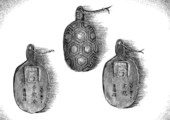 The turtle badges held by members of the Golden Turtles
 -
 The Persian branch of the Order in the 9th century
 -
 The insignia of the Angolo-Saxon branch of the Order
 -
 The medallion held by members of the Order's Anglo-Saxon branch


Appearances
- Assassin's Creed III (indirect mention only) (retroactive)
- Assassin's Creed: Origins (first appearance)
- Assassin's Creed: Origins – Desert Oath
- Assassin's Creed: Origins comic
- Assassin's Creed: Rebellion
- The Mask of the Ibis (mentioned only)
- The Hunter's Hounds
- Assassin's Creed: Odyssey (mentioned only)
- Assassin's Creed: Dynasty
- Assassin's Creed: Valhalla – Song of Glory
- Assassin's Creed: Valhalla
- Dawn of Ragnarök (simulation only)
- Shared History
- Assassin's Creed: Valhalla – Geirmund's Saga (mentioned only)
- Assassin's Creed: Valhalla – Blood Brothers
- Assassin's Creed: The Imperial Jade Seal – Prophecy of the Emperor
- Assassin's Creed: The Silk Road
- Assassin's Creed: Valhalla – Sword of the White Horse
- Assassin's Creed: The Golden City
- The World of Assassin's Creed Valhalla: Journey to the North – Logs and Files of a Hidden One (mentioned only)
- Assassin's Creed: Mirage
- Assassin's Creed: Mirage – Daughter of No One (mentioned only)
References


| ||||||||||||||||||||||||||||||||||||||||||||||||||||||||||||||||||

| ||||||||||||||||||||||||||||||||||||||||
| |||||||||||
| |||||||||||||||||||||||||
| |||||||||||||||||||||||||||||||||||||||||||||||||||||||||||
| ||||||||||||||||||||||||||||||||||||||||||||||
| |||||||||||||||||||||||||||||||||||||||||||||||||||||||||
| |||||||||||||||||||||||||
| |||||||||||||||||||||||||||||||
| |||||||||||||||||||||||||
| ||||||||||||||||||||||||||||
| ||||||||||||||||||||
| |||||||||||||||||||||||||
| |||||||||||||||||||||||||||||||||||||