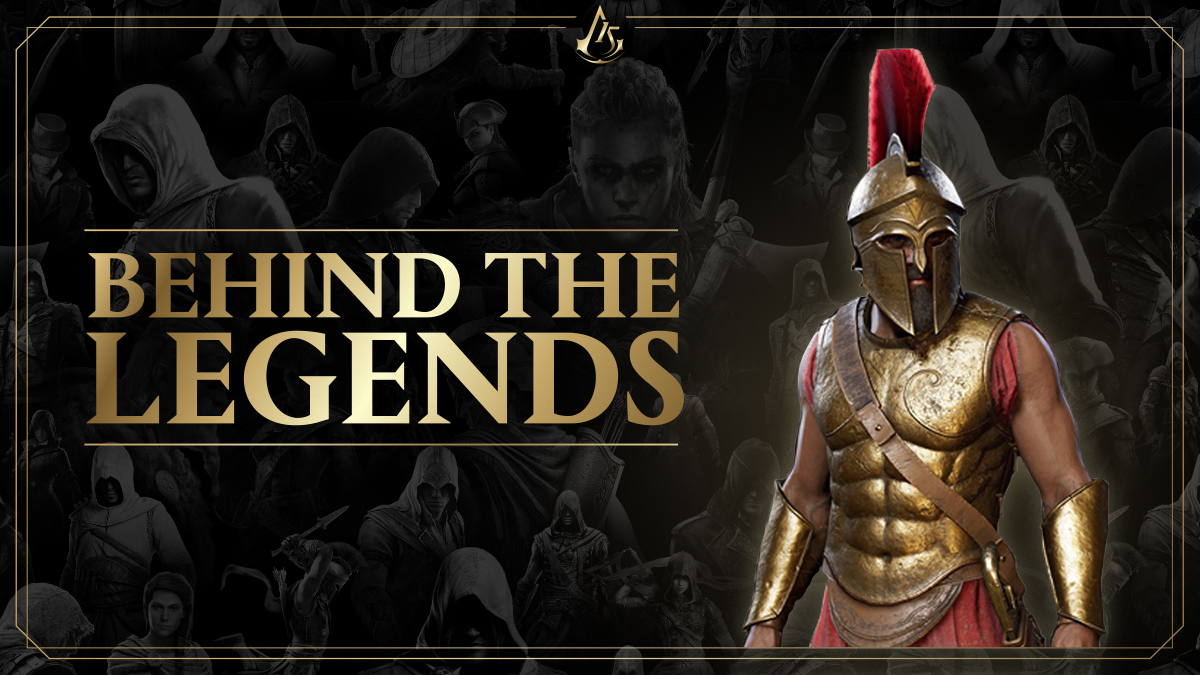
| Blackbeard's Flagship Discovered!|archiveurl=https://web.archive.org/web/20120202135509/http://lat3440.com/index.php?option=com_content&view=article&id=90&Itemid=32|archivedate=2 February 2012|author=Interstal, Inc.|date=2012|publisher=''Interstal, Inc.''|accessdate=15 January 2024}}</ref> and archaeologist Richard Lawrence may just have made the discovery of a lifetime. It's something of a childhood dream come true. Off the coast of [[North Carolina]], thirty feet below the surface of the water, he can make out the vestiges of a [[shipwreck]]. And so, he begins to count. One cannon. Two cannons. A third. Too many cannons to count! The firepower is ''immense'', and the archaeologist knows there's a high chance that what he's looking at is ''[[Queen Anne's Revenge]]'', the ship belonging to probably the most famous pirate of all time: Blackbeard. Resting at the bottom of {{Wiki|Beaufort, North Carolina|Beaufort Inlet}}, the flagship's location is one ''hell'' of a clue: this is where the pirate ship was said to have run aground back in May 1718. But as he drifts back up to the surface, Lawrence is suddenly wracked with doubt. This part of the world is awash with shipwrecks. What if he's wrong? Out of nowhere, a memory stirs: Blackbeard died on November 22nd, 1718. That makes 278 years, to the day. Pure coincidence? Or destiny in motion? A few years later,<ref>Lawrence, Richard W., and Wilde-Ramsing, Mark. (February 2001). "[https://libres.uncg.edu/ir/asu/f/SoutheasternGeology_Vol40_No1_2001.pdf In Search of Blackbeard: Historical and Archaeological Research at Shipwreck Site 0003BUI]". ''Southeastern Geology'', '''40''' (1). pg. 1-9. Retrieved on 15 January 2024.</ref> his inkling was confirmed as fact, and the shipwreck unlocked some precious secrets about this [[bandit]] of the seas. Yet, despite it all, Blackbeard remains a mystery even today. We know little about his life except that his reign of terror stretched from the Caribbean to North America's eastern coast back in the [[Golden Age of Piracy]]. Famous yet unknown, over time, Blackbeard has come to be celebrated as the ''ultimate'' king of the pirates.<br><br>You're listening to ''Echoes of History: Behind the Legends'', the podcast that tells you the true stories of some of history's most legendary heroes. As the ''Assassin's Creed'' franchise turns 15, travel back through 2,500 years of history to meet the men and women whose destiny lead them to greatness. Uncover their stories and bring their legends back to life. Episode six, Blackbeard.<br><br>Tracking a pirate's murky footprints is never easy; these are tough guys to pin down. Firstly, because they rarely knew how to write, and secondly, because their lives as outlaws went hand-in-hand with keeping a low profile. When it comes to Blackbeard, the mystery starts with his name. Edward Drummond? Edward Thatch? Or Edward Teach, even. The archives aren't much help. Some historians believe he was born in [[Bristol]], England,<ref name="Johnson70">{{Cite web|url=https://archive.org/details/generalhistoryof00john/page/n11/mode/2up|title=''A General History of the Robberies and Murders of the most notorious Pyrates''.|author=Johnson, Charles|date=14 May 1724|publisher={{Wiki|Charles Rivington}}, J. Lacy, and J. Stone|accessdate=15 January 2024|pages=p. 70}}</ref> while some claim he was the son of a [[South Carolina]] colonial. And others still are convinced he came from a wealthy [[Jamaica]]n family. Edward Teach—as we'll call him from now on—was born around 1618. However, even that basic detail is shrouded in uncertainty: it's based on the age he was ''thought'' to be when he died, which was around 38 years old. Most of the stories about him come from personal accounts from his victims and the people who tried to hunt him down. And, to be honest—well, it's not a pretty picture. Six years after his death, a book was published that would go on to cement Blackbeard's legacy and turn the man into legend. English captain [[Charles Johnson]]'s ''{{Wiki|A General History of the Pyrates|A General History of the Robberies and Murders of the most notorious Pyrates}}'' was published in 1724, and, it was a runaway success right off the press. The book is a compendium of biographies, and the section on Edward Teach is very well researched. It explains how he serves on Britain's [[privateer]] ships during the [[War of the Spanish Succession]]<ref name="Johnson70"/> until the signing of the [[Peace of Utrecht|Treaty of Utrecht]] in 1713, which puts an end to the conflict.<ref>Johnson, Charles. ''A General History of the Robberies and Murders of the most notorious Pyrates''. pg. 64</ref> It was at ''that'' point that he decided it was his time to ''shine''.<br><br>In 1716, at the pirates' safehaven and [[The Bahamas|Bahamian]] island of [[New Providence]], he meets Captain [[Benjamin Hornigold|Hornigold]], a seasoned sea-bandit who becomes his mentor and entrusts him with a {{Wiki|sloop}}—a kind of small sailboat. The pair set off to plunder a series of ships off the North American coast.<ref name="Johnson70"/> The following year, in the {{Wiki|Lesser Antilles}}, Teach captures ''La Concorde'', a 300-ton French [[slave ship]]<ref>Johnson, Charles. ''A General History of the Robberies and Murders of the most notorious Pyrates''. pg. 70–71</ref> boasting 26 [[cannon]]s. He takes control of the ship and increases the cannon count to 40, making it the most powerful pirate ship to sail the seas at that moment. Backed by his crew, Teach is ''more'' than a match for the military vessels sent to cross his path. In February 1717, he even takes on—and forces to ''flee''—the ''{{Wiki|HMS Scarborough (1711)|Scarborough}}'', a British ship kitted out with 30 cannons<ref>Johnson, Charles. ''A General History of the Robberies and Murders of the most notorious Pyrates''. pg. 71</ref> and specifically launched to capture ''La Concorde''. With no real rival on the horizon, the frigate belonging to the pirate now known as "Blackbeard" captures ship after ship.<br><br>In January 1718, ''La Concorde'' is rechristened ''Queen Anne's Revenge''. Teach and his crew are an ''unstoppable'' force to be reckoned with. Rumor has it that the pirate was a cruel, bloodthirsty, and merciless man, and there is some truth to the stories. It's safe to say that Blackbeard was no bleeding heart and had no qualms about cutting off a finger here and there should his hostages deny him their [[diamond]]-studded rings. But the legends—well, they were overegged. There is no evidence to suggest that Teach was any more violent than ''any'' other pirate. Quite the contrary, in fact! With Blackbeard, if you submitted without resistance, you would be ''spared'' without harm. Often, ''no'' blood was shed, as the captured ships—cowed by the power of the ''Queen Anne's Revenge''—would surrender without a fight. Probably a good move!<br><br>Captain Johnson ''sometimes'' let his imagination loose in building up the legend of Blackbeard. He recounts how Edward Teach once shut himself away in his ship's hold and set fire to the [[Gunpowder|powder]] kegs, just to show off to his crew<ref name="Johnson88">Johnson, Charles. ''A General History of the Robberies and Murders of the most notorious Pyrates''. pg. 88</ref>—we've all done it. This kind of outlandish anecdote forms the bedrock of Johnson's general outlook, demonstrating, quote, "to what a Pitch of Wickedness human Nature may arrive".<ref name="Johnson88"/> Many experts believe that "Captain Johnson" was simply a ''nom de plume'' for none other than {{Wiki|Daniel Defoe}}, the famous author of ''{{Wiki|Robinson Crusoe}}''. The ultimate seafaring adventure novelist, he enjoyed blurring the boundaries between fact and fiction, and was also a marine insurerer and merchant back in Blackbeard's day. As you can imagine, he wasn't the ''biggest'' fan of pirates, although they did serve as an endless source of inspiration and fascination to him as a writer. In his business dealings, though, he had ''nothing'' but ''hatred'' for the buccaneers, and like nothing more than to see them hanged. Hence, Teach being protrayed as a monster, perhaps.<br><br>Irrespective of the man ''behind'' the writings, one thing's for sure: ''A General History of the Robberies and Murders of the most notorious Pyrates''—not the snappiest title, by the way—breathed live into Blackbeard's appearance in our collective consciousness. The pirate is known for one physical trait in particular—a black beard, obviously—which, according to the book, was left to "grow [to] an extravagant length".<ref name="Johnson87">Johnson, Charles. ''A General History of the Robberies and Murders of the most notorious Pyrates''. pg. 87</ref> Beards have been a symbol of manliness and authority since ancient Greek times, but the book adds one key detail that changes everything. Teach's beard, the author writes, was not only long, but, quote, "as to breadth, it came up to his eyes".<ref name="Johnson88"/> And so the beard here is a defect, not an asset. Behind his hairy mask, Teach is closer to beast than man. This monster-like description should be compared and contrasted with the handful of ''other '' descriptions of Blackbeard we have at our disposal, like that of Captain Henry Bostock. In December 1717, his merchant ship ''Margaret'' is attacked by ''La Concorde'' just off the coast of [[Puerto Rico]], with Teach and his mean sparing the crew but seizing its cargo. When Captain Bostock reports back to the British governor of {{Wiki|Leeeward Islands}}, he describes the pirate as a tall spare man with a very black beard, which he wore very long—which is, clearly, a less-terrifying description—and, as an aside, according to Bostock, no harm came to his crew. Once unarmed and pillaged, the ''Margaret'' and her crew are set free. All a ''far cry'' from the blood-curdling pirate of legend.<br><br>''A General History of the Robberies and Murders of the most notorious Pyrates''—and again, I think I would probably just have called it ''Pirates''—also explains how Teach wore a hat fitted with two lit fuses designed to terrify his enemies. In ''[[Assassin's Creed IV: Black Flag]]'', upon treating the protagonist [[Edward Kenway]] to a [[Diving for Medicines|masterclass]] in piracy, Blackbeard pulls on a hat adorned with four smoking hemp fuses and spills his secrets. He says, "For an audience, aye. It's all a big show. Give your quarry something to fear, some hellish thing from a fever'd dream, and men will drop to their knees pleading for their Lord before aught else!". Maybe Teach isn't the devil incarnate—but he can certainly make you ''think'' he is.<br><br>His death mirrors his life: a violent finale befitting the most formidable of pirates. He humiliated the [[Royal Navy]], rendering it ''powerless'' to protect the merchant ships that were left prey to his pluundering. He delivered ''dazzling'' blows, like the ''majestic'' [[Siege of Charles-Towne|blockade of Charles-Town Harbor]] in May 1718.<ref>Johnson, Charles. ''A General History of the Robberies and Murders of the most notorious Pyrates''. pg. 72–74</ref> He ''laughed'' in the face of the [[George I of Great Britain|Royal]] Pardon. He sailed the seven seas, ''tirelessly'' prowing the waves, and ultimately, he enraged the colonial authorities. [[Alexander Spotswood]], Governor of [[Virginia (state)|Virginia]] finally places a ''hefty'' [[Bounty hunter|bounty]] on Blackbeard's head and his crew along with him: [[Pound sterling|£]]10 per sailor and ''£100'' for their captain. In those days, it was a pretty penny indeed. Governor Spotswood also entrusts Royal Navy lieutenant [[Robert Maynard|Maynard]] with leading a [[Attack on Ocracoke|crackdown expedition]] on [[Ocracoke]], an island just off the coast of North Carolina where Teach has set up shop.<ref>Johnson, Charles. ''A General History of the Robberies and Murders of the most notorious Pyrates''. pg. 78–81</ref><br><br>The battle takes place on November 22, 1718. Blackbeard is taken by surprise by Maynard at daybreak, with the pirate having ''just'' enough time to set sail on his new ship, the ''Adventure''.<ref>Johnson, Charles. ''A General History of the Robberies and Murders of the most notorious Pyrates''. pg. 81–83</ref> The fighting is fierce, the battle a bloodbath, the cannons deafening. Armed with his cutlass and six-pistol harness, Blackbeard eventually boards Maynard's [[frigate]]. The lieutenant and pirate clash in an ''almighty'' duel,<ref>Johnson, Charles. ''A General History of the Robberies and Murders of the most notorious Pyrates''. pg. 83–84</ref> with Teach quickly wounded by a first bullet. Staggering, but not down, he fights tooth and nail, and ''just'' as he's about to deliver the ''final'' blow to his adversary, he's cut down from behind by one of Maynard's men. Legend has it that he suffers 25 wounds, including 5 gunshot wounds, before falling.<ref>Johnson, Charles. ''A General History of the Robberies and Murders of the most notorious Pyrates''. pg. 84</ref> Lieutenant Maynard has his head cut off and placed on a pole as a trophy. It's fixed to the mast of the ship as it sails towards Virginia bearing news of his feat.<ref>Johnson, Charles. ''A General History of the Robberies and Murders of the most notorious Pyrates''. pg. 85</ref><br><br>No pirate worth his [[salt]] is complete without a buried treasure. Did Blackbeard take the secret of his booty to the grave with him? Legend has it that he trusted nobody but the Devil himself, and Teach was even believed to have made a pact with Satan, according to which whoever lived longest could claim the treasure for himself.<ref>Johnson, Charles. ''A General History of the Robberies and Murders of the most notorious Pyrates''. pg. 88–89</ref> Historians tend to take a more grounded view: Teach was a ''big'' spender, and despite his glory on the seas, his looting was often modest compared to the ''sums'' raked in by other pirates such as [[Bartholomew Roberts]], {{Wiki|Henry Every}}. The island of Ocracoke was dug up and ''scoured'' by ''thousands'' of treasure hunters, but, to no avail.<br><br>Blackbeard may not have been the ''richest'' of pirates, but he was, without the shadow of a doubt, the most famous. In novels, films, manga, video games, his legacy has lived on through the stereotype of the bloodthirsty pirate. The man himself lives on in myth, too. Still today, sailors refer to the unexplained lights that dance on the horizon of the open sea as "Teach's light". And some believe that the pirate continues to wander the seven seas, haunting the oceans for all eternity.<br><br>Thanks for listening to ''Echoes of History: Behind the Legends'', a Ubisoft podcast produced by Paradiso Media.'' | | Blackbeard's Flagship Discovered!|archiveurl=https://web.archive.org/web/20120202135509/http://lat3440.com/index.php?option=com_content&view=article&id=90&Itemid=32|archivedate=2 February 2012|author=Interstal, Inc.|date=2012|publisher=''Interstal, Inc.''|accessdate=15 January 2024}}</ref> and archaeologist Richard Lawrence may just have made the discovery of a lifetime. It's something of a childhood dream come true. Off the coast of [[North Carolina]], thirty feet below the surface of the water, he can make out the vestiges of a [[shipwreck]]. And so, he begins to count. One cannon. Two cannons. A third. Too many cannons to count! The firepower is ''immense'', and the archaeologist knows there's a high chance that what he's looking at is ''[[Queen Anne's Revenge]]'', the ship belonging to probably the most famous pirate of all time: Blackbeard. Resting at the bottom of {{Wiki|Beaufort, North Carolina|Beaufort Inlet}}, the flagship's location is one ''hell'' of a clue: this is where the pirate ship was said to have run aground back in May 1718. But as he drifts back up to the surface, Lawrence is suddenly wracked with doubt. This part of the world is awash with shipwrecks. What if he's wrong? Out of nowhere, a memory stirs: Blackbeard died on November 22nd, 1718. That makes 278 years, to the day. Pure coincidence? Or destiny in motion? A few years later,<ref>Lawrence, Richard W., and Wilde-Ramsing, Mark. (February 2001). "[https://libres.uncg.edu/ir/asu/f/SoutheasternGeology_Vol40_No1_2001.pdf In Search of Blackbeard: Historical and Archaeological Research at Shipwreck Site 0003BUI]". ''Southeastern Geology'', '''40''' (1). pg. 1-9. Retrieved on 15 January 2024.</ref> his inkling was confirmed as fact, and the shipwreck unlocked some precious secrets about this [[bandit]] of the seas. Yet, despite it all, Blackbeard remains a mystery even today. We know little about his life except that his reign of terror stretched from the Caribbean to North America's eastern coast back in the [[Golden Age of Piracy]]. Famous yet unknown, over time, Blackbeard has come to be celebrated as the ''ultimate'' king of the pirates.<br><br>You're listening to ''Echoes of History: Behind the Legends'', the podcast that tells you the true stories of some of history's most legendary heroes. As the ''Assassin's Creed'' franchise turns 15, travel back through 2,500 years of history to meet the men and women whose destiny lead them to greatness. Uncover their stories and bring their legends back to life. Episode six, Blackbeard.<br><br>Tracking a pirate's murky footprints is never easy; these are tough guys to pin down. Firstly, because they rarely knew how to write, and secondly, because their lives as outlaws went hand-in-hand with keeping a low profile. When it comes to Blackbeard, the mystery starts with his name. Edward Drummond? Edward Thatch? Or Edward Teach, even. The archives aren't much help. Some historians believe he was born in [[Bristol]], England,<ref name="Johnson70">{{Cite web|url=https://archive.org/details/generalhistoryof00john/page/n11/mode/2up|title=''A General History of the Robberies and Murders of the most notorious Pyrates''.|author=Johnson, Charles|date=14 May 1724|publisher={{Wiki|Charles Rivington}}, J. Lacy, and J. Stone|accessdate=15 January 2024|pages=p. 70}}</ref> while some claim he was the son of a [[South Carolina]] colonial. And others still are convinced he came from a wealthy [[Jamaica]]n family. Edward Teach—as we'll call him from now on—was born around 1618. However, even that basic detail is shrouded in uncertainty: it's based on the age he was ''thought'' to be when he died, which was around 38 years old. Most of the stories about him come from personal accounts from his victims and the people who tried to hunt him down. And, to be honest—well, it's not a pretty picture. Six years after his death, a book was published that would go on to cement Blackbeard's legacy and turn the man into legend. English captain [[Charles Johnson]]'s ''{{Wiki|A General History of the Pyrates|A General History of the Robberies and Murders of the most notorious Pyrates}}'' was published in 1724, and, it was a runaway success right off the press. The book is a compendium of biographies, and the section on Edward Teach is very well researched. It explains how he serves on Britain's [[privateer]] ships during the [[War of the Spanish Succession]]<ref name="Johnson70"/> until the signing of the [[Peace of Utrecht|Treaty of Utrecht]] in 1713, which puts an end to the conflict.<ref>Johnson, Charles. ''A General History of the Robberies and Murders of the most notorious Pyrates''. pg. 64</ref> It was at ''that'' point that he decided it was his time to ''shine''.<br><br>In 1716, at the pirates' safehaven and [[The Bahamas|Bahamian]] island of [[New Providence]], he meets Captain [[Benjamin Hornigold|Hornigold]], a seasoned sea-bandit who becomes his mentor and entrusts him with a {{Wiki|sloop}}—a kind of small sailboat. The pair set off to plunder a series of ships off the North American coast.<ref name="Johnson70"/> The following year, in the {{Wiki|Lesser Antilles}}, Teach captures ''La Concorde'', a 300-ton French [[slave ship]]<ref>Johnson, Charles. ''A General History of the Robberies and Murders of the most notorious Pyrates''. pg. 70–71</ref> boasting 26 [[cannon]]s. He takes control of the ship and increases the cannon count to 40, making it the most powerful pirate ship to sail the seas at that moment. Backed by his crew, Teach is ''more'' than a match for the military vessels sent to cross his path. In February 1717, he even takes on—and forces to ''flee''—the ''{{Wiki|HMS Scarborough (1711)|Scarborough}}'', a British ship kitted out with 30 cannons<ref>Johnson, Charles. ''A General History of the Robberies and Murders of the most notorious Pyrates''. pg. 71</ref> and specifically launched to capture ''La Concorde''. With no real rival on the horizon, the frigate belonging to the pirate now known as "Blackbeard" captures ship after ship.<br><br>In January 1718, ''La Concorde'' is rechristened ''Queen Anne's Revenge''. Teach and his crew are an ''unstoppable'' force to be reckoned with. Rumor has it that the pirate was a cruel, bloodthirsty, and merciless man, and there is some truth to the stories. It's safe to say that Blackbeard was no bleeding heart and had no qualms about cutting off a finger here and there should his hostages deny him their [[diamond]]-studded rings. But the legends—well, they were overegged. There is no evidence to suggest that Teach was any more violent than ''any'' other pirate. Quite the contrary, in fact! With Blackbeard, if you submitted without resistance, you would be ''spared'' without harm. Often, ''no'' blood was shed, as the captured ships—cowed by the power of the ''Queen Anne's Revenge''—would surrender without a fight. Probably a good move!<br><br>Captain Johnson ''sometimes'' let his imagination loose in building up the legend of Blackbeard. He recounts how Edward Teach once shut himself away in his ship's hold and set fire to the [[Gunpowder|powder]] kegs, just to show off to his crew<ref name="Johnson88">Johnson, Charles. ''A General History of the Robberies and Murders of the most notorious Pyrates''. pg. 88</ref>—we've all done it. This kind of outlandish anecdote forms the bedrock of Johnson's general outlook, demonstrating, quote, "to what a Pitch of Wickedness human Nature may arrive".<ref name="Johnson88"/> Many experts believe that "Captain Johnson" was simply a ''nom de plume'' for none other than {{Wiki|Daniel Defoe}}, the famous author of ''{{Wiki|Robinson Crusoe}}''. The ultimate seafaring adventure novelist, he enjoyed blurring the boundaries between fact and fiction, and was also a marine insurerer and merchant back in Blackbeard's day. As you can imagine, he wasn't the ''biggest'' fan of pirates, although they did serve as an endless source of inspiration and fascination to him as a writer. In his business dealings, though, he had ''nothing'' but ''hatred'' for the buccaneers, and like nothing more than to see them hanged. Hence, Teach being protrayed as a monster, perhaps.<br><br>Irrespective of the man ''behind'' the writings, one thing's for sure: ''A General History of the Robberies and Murders of the most notorious Pyrates''—not the snappiest title, by the way—breathed live into Blackbeard's appearance in our collective consciousness. The pirate is known for one physical trait in particular—a black beard, obviously—which, according to the book, was left to "grow [to] an extravagant length".<ref name="Johnson87">Johnson, Charles. ''A General History of the Robberies and Murders of the most notorious Pyrates''. pg. 87</ref> Beards have been a symbol of manliness and authority since ancient Greek times, but the book adds one key detail that changes everything. Teach's beard, the author writes, was not only long, but, quote, "as to breadth, it came up to his eyes".<ref name="Johnson88"/> And so the beard here is a defect, not an asset. Behind his hairy mask, Teach is closer to beast than man. This monster-like description should be compared and contrasted with the handful of ''other '' descriptions of Blackbeard we have at our disposal, like that of Captain Henry Bostock. In December 1717, his merchant ship ''Margaret'' is attacked by ''La Concorde'' just off the coast of [[Puerto Rico]], with Teach and his mean sparing the crew but seizing its cargo. When Captain Bostock reports back to the British governor of {{Wiki|Leeward Islands}}, he describes the pirate as a tall spare man with a very black beard, which he wore very long—which is, clearly, a less-terrifying description—and, as an aside, according to Bostock, no harm came to his crew. Once unarmed and pillaged, the ''Margaret'' and her crew are set free. All a ''far cry'' from the blood-curdling pirate of legend.<br><br>''A General History of the Robberies and Murders of the most notorious Pyrates''—and again, I think I would probably just have called it ''Pirates''—also explains how Teach wore a hat fitted with two lit fuses designed to terrify his enemies. In ''[[Assassin's Creed IV: Black Flag]]'', upon treating the protagonist [[Edward Kenway]] to a [[Diving for Medicines|masterclass]] in piracy, Blackbeard pulls on a hat adorned with four smoking hemp fuses and spills his secrets. He says, "For an audience, aye. It's all a big show. Give your quarry something to fear, some hellish thing from a fever'd dream, and men will drop to their knees pleading for their Lord before aught else!". Maybe Teach isn't the devil incarnate—but he can certainly make you ''think'' he is.<br><br>His death mirrors his life: a violent finale befitting the most formidable of pirates. He humiliated the [[Royal Navy]], rendering it ''powerless'' to protect the merchant ships that were left prey to his pluundering. He delivered ''dazzling'' blows, like the ''majestic'' [[Siege of Charles-Towne|blockade of Charles-Town Harbor]] in May 1718.<ref>Johnson, Charles. ''A General History of the Robberies and Murders of the most notorious Pyrates''. pg. 72–74</ref> He ''laughed'' in the face of the [[George I of Great Britain|Royal]] Pardon. He sailed the seven seas, ''tirelessly'' prowing the waves, and ultimately, he enraged the colonial authorities. [[Alexander Spotswood]], Governor of [[Virginia (state)|Virginia]] finally places a ''hefty'' [[Bounty hunter|bounty]] on Blackbeard's head and his crew along with him: [[Pound sterling|£]]10 per sailor and ''£100'' for their captain. In those days, it was a pretty penny indeed. Governor Spotswood also entrusts Royal Navy lieutenant [[Robert Maynard|Maynard]] with leading a [[Attack on Ocracoke|crackdown expedition]] on [[Ocracoke]], an island just off the coast of North Carolina where Teach has set up shop.<ref>Johnson, Charles. ''A General History of the Robberies and Murders of the most notorious Pyrates''. pg. 78–81</ref><br><br>The battle takes place on November 22, 1718. Blackbeard is taken by surprise by Maynard at daybreak, with the pirate having ''just'' enough time to set sail on his new ship, the ''Adventure''.<ref>Johnson, Charles. ''A General History of the Robberies and Murders of the most notorious Pyrates''. pg. 81–83</ref> The fighting is fierce, the battle a bloodbath, the cannons deafening. Armed with his cutlass and six-pistol harness, Blackbeard eventually boards Maynard's [[frigate]]. The lieutenant and pirate clash in an ''almighty'' duel,<ref>Johnson, Charles. ''A General History of the Robberies and Murders of the most notorious Pyrates''. pg. 83–84</ref> with Teach quickly wounded by a first bullet. Staggering, but not down, he fights tooth and nail, and ''just'' as he's about to deliver the ''final'' blow to his adversary, he's cut down from behind by one of Maynard's men. Legend has it that he suffers 25 wounds, including 5 gunshot wounds, before falling.<ref>Johnson, Charles. ''A General History of the Robberies and Murders of the most notorious Pyrates''. pg. 84</ref> Lieutenant Maynard has his head cut off and placed on a pole as a trophy. It's fixed to the mast of the ship as it sails towards Virginia bearing news of his feat.<ref>Johnson, Charles. ''A General History of the Robberies and Murders of the most notorious Pyrates''. pg. 85</ref><br><br>No pirate worth his [[salt]] is complete without a buried treasure. Did Blackbeard take the secret of his booty to the grave with him? Legend has it that he trusted nobody but the Devil himself, and Teach was even believed to have made a pact with Satan, according to which whoever lived longest could claim the treasure for himself.<ref>Johnson, Charles. ''A General History of the Robberies and Murders of the most notorious Pyrates''. pg. 88–89</ref> Historians tend to take a more grounded view: Teach was a ''big'' spender, and despite his glory on the seas, his looting was often modest compared to the ''sums'' raked in by other pirates such as [[Bartholomew Roberts]], {{Wiki|Henry Every}}. The island of Ocracoke was dug up and ''scoured'' by ''thousands'' of treasure hunters, but, to no avail.<br><br>Blackbeard may not have been the ''richest'' of pirates, but he was, without the shadow of a doubt, the most famous. In novels, films, manga, video games, his legacy has lived on through the stereotype of the bloodthirsty pirate. The man himself lives on in myth, too. Still today, sailors refer to the unexplained lights that dance on the horizon of the open sea as "Teach's light". And some believe that the pirate continues to wander the seven seas, haunting the oceans for all eternity.<br><br>Thanks for listening to ''Echoes of History: Behind the Legends'', a Ubisoft podcast produced by Paradiso Media.'' |