

Florence: Difference between revisions
No edit summary |
No edit summary |
||
| (5 intermediate revisions by 2 users not shown) | |||
| Line 22: | Line 22: | ||
By 1030, on the site of the Roman Forum was established the [[Mercato Vecchio]], which served as the business center of the city.<ref>''[[Assassin's Creed II]]'' – [[Database: Mercato Vecchio]]</ref> | By 1030, on the site of the Roman Forum was established the [[Mercato Vecchio]], which served as the business center of the city.<ref>''[[Assassin's Creed II]]'' – [[Database: Mercato Vecchio]]</ref> | ||
By the 12th century, Florence became a [[Republic of Florence|Republic]] governed by the ''Signoria'', made up of nine members (or Priori) selected by the | By the 12th century, Florence became a [[Republic of Florence|Republic]] governed by the ''Signoria'', made up of nine members (or Priori) selected by the city's guilds, two from each district, and a Gonfalonier of Justice. The Priori were supposed to be chosen by lot.<ref name="Database: Palazzo Della Signoria"/> Through its history, Florence attempted to gain control of the surrounding lands and towns. Two such areas were [[Monteriggioni]] to the north and Pisa to the west. Although the former maintained a shaky alliance with Florence afterwards, it would be years before Pisa would follow suit. Florentine heralds often spread the news of Pisa's demonstrations of contempt to Florence.<ref name="AC2">''[[Assassin's Creed II]]''</ref> | ||
In 1258, the [[Basilica di Santa Trinita]] was built over an existing [[church]], becoming the mother church of the Vallumbrosan order of monks, a very serious group that strictly enforced both poverty and silence, for life.<ref name="Database: Santa Trinita">''[[Assassin's Creed II]]'' – [[Database: Santa Trinita]]</ref> | In 1258, the [[Basilica di Santa Trinita]] was built over an existing [[church]], becoming the mother church of the Vallumbrosan order of monks, a very serious group that strictly enforced both poverty and silence, for life.<ref name="Database: Santa Trinita">''[[Assassin's Creed II]]'' – [[Database: Santa Trinita]]</ref> | ||
[[File:Palazzo Signoria. | [[File:ACB DB Palazzo della Signoria.png|thumb|250px|left|Palazzo della Signoria, Florence's seat of power]] | ||
In 1296, [[Arnolfo di Cambio]] designed [[Cattedrale di Santa Maria del Fiore|Santa Maria del Fiore]], which will become the largest landmark of the city.<ref name="Database: Santa Maria del Fiore">''[[Assassin's Creed II]]'' – [[Database: Santa Maria del Fiore]]</ref> In 1299, Arnolfo also designed the [[Palazzo della Signoria]], which served as the center of the Signoria in the San Giovanni District.<ref name="Database: Palazzo Della Signoria">''[[Assassin's Creed II]]'' – [[Database: Palazzo Della Signoria]]</ref> | In 1296, [[Arnolfo di Cambio]] designed [[Cattedrale di Santa Maria del Fiore|Santa Maria del Fiore]], which will become the largest landmark of the city.<ref name="Database: Santa Maria del Fiore">''[[Assassin's Creed II]]'' – [[Database: Santa Maria del Fiore]]</ref> In 1299, Arnolfo also designed the [[Palazzo della Signoria]], which served as the center of the Signoria in the San Giovanni District.<ref name="Database: Palazzo Della Signoria">''[[Assassin's Creed II]]'' – [[Database: Palazzo Della Signoria]]</ref> | ||
| Line 33: | Line 33: | ||
The [[Italian Brotherhood of Assassins|Italian Assassins]] had a presence in Florence, with the politician and writer [[Dante Alighieri]] as their members.<ref name="Paying Respects"/> After being exile by political enemies, Aligheri wrote the ''Divine Comedy'', condemning to hell the ones who wrong him.<ref>''[[Assassin's Creed: Revelations]]'' – [[A Little Errand]]</ref> After 1324, his apprentice [[Domenico Auditore|Domenico]] and his son [[Renato Auditore|Renato]] came to live in Florence, and adopted the name of "[[House of Auditore|Auditore]]". Under this guise of nobility, they quickly assimilated themselves into the city's upper class, and became a well-respected and known family in Florence before moving to Monteriggioni.<ref name="Paying Respects">''[[Assassin's Creed II]]'' – [[Paying Respects]]</ref> | The [[Italian Brotherhood of Assassins|Italian Assassins]] had a presence in Florence, with the politician and writer [[Dante Alighieri]] as their members.<ref name="Paying Respects"/> After being exile by political enemies, Aligheri wrote the ''Divine Comedy'', condemning to hell the ones who wrong him.<ref>''[[Assassin's Creed: Revelations]]'' – [[A Little Errand]]</ref> After 1324, his apprentice [[Domenico Auditore|Domenico]] and his son [[Renato Auditore|Renato]] came to live in Florence, and adopted the name of "[[House of Auditore|Auditore]]". Under this guise of nobility, they quickly assimilated themselves into the city's upper class, and became a well-respected and known family in Florence before moving to Monteriggioni.<ref name="Paying Respects">''[[Assassin's Creed II]]'' – [[Paying Respects]]</ref> | ||
In 1334, Giotto began the construction of a [[Campanile di Giotto|gothic bell tower]] near Santa Maria del Fiore. When he died, [[Andrea Pisano]] took over the construction before dying from the Black Death in 1348.<ref name="Database: | In 1334, Giotto began the construction of a [[Campanile di Giotto|gothic bell tower]] near Santa Maria del Fiore. When he died, [[Andrea Pisano]] took over the construction before dying from the Black Death in 1348.<ref name="Database: Giotto's Campanile">''[[Assassin's Creed II]]'' – [[Database: Giotto's Campanile]]</ref> | ||
[[File:ACII DB Ponte Vecchio.png|thumb|250px|The Ponte Vecchio]] | [[File:ACII DB Ponte Vecchio.png|thumb|250px|The Ponte Vecchio]] | ||
| Line 42: | Line 42: | ||
In 1350, a member of the Vespucci House built the [[Casa di Vespucci|first residence]] with a painted façade in Florence, a style that was later recreated in the Oltrarno district.<ref>''[[Assassin's Creed II]]'' – [[Database: Casa di Vespucci]]</ref> | In 1350, a member of the Vespucci House built the [[Casa di Vespucci|first residence]] with a painted façade in Florence, a style that was later recreated in the Oltrarno district.<ref>''[[Assassin's Creed II]]'' – [[Database: Casa di Vespucci]]</ref> | ||
[[File:Campanile | [[File:ACB DB Giotto's Campanile.png|thumb|250px|left|The Campanile di Giotto]] | ||
In 1359, Giotto's Campanile was completed by [[Francesco Talenti]], who deviated from | In 1359, Giotto's Campanile was completed by [[Francesco Talenti]], who deviated from Giotto's plan in his design of the three upper floors. He enlarged each floor to match the previous according to perspective, so, when seen from below, all three floors seem to be exactly the same size. The tower was clad with white [[Marble|marble]] from Carrara, red marble from Siena and green marble from Prato.<ref name="Database: Giotto's Campanile"/> | ||
In 1378, a major revolt of the lower class led to the wool combers rising up and seizing the government of the city. Their progressive, radical democracy lasted for less than two months before the upper classes seized control once more, but the revolt so terrified the rich it was still discussed in hushed tones a century later. The Albizzi family became the de facto rulers after the revolt.<ref name="Database: Firenze"/> | In 1378, a major revolt of the lower class led to the wool combers rising up and seizing the government of the city. Their progressive, radical democracy lasted for less than two months before the upper classes seized control once more, but the revolt so terrified the rich it was still discussed in hushed tones a century later. The Albizzi family became the de facto rulers after the revolt.<ref name="Database: Firenze"/> | ||
| Line 59: | Line 59: | ||
Two architectural competitions opposed [[Lorenzo Ghiberti]] and [[Filippo Brunelleschi]]. While Ghiberti was selected to design the Florence Baptistery doors, Brunelleschi won the competition to build the Dome of Santa Maria del Fiore. Brunelleschi invented machines to hoist the bricks needed for the dome up to the workers and was able to construct the entire dome without using centring (a support structure to hold the dome in place while the bricks were laid). Containing over 4 million bricks, the dome was completed in 1436.<ref name="Database: Santa Maria del Fiore"/> | Two architectural competitions opposed [[Lorenzo Ghiberti]] and [[Filippo Brunelleschi]]. While Ghiberti was selected to design the Florence Baptistery doors, Brunelleschi won the competition to build the Dome of Santa Maria del Fiore. Brunelleschi invented machines to hoist the bricks needed for the dome up to the workers and was able to construct the entire dome without using centring (a support structure to hold the dome in place while the bricks were laid). Containing over 4 million bricks, the dome was completed in 1436.<ref name="Database: Santa Maria del Fiore"/> | ||
In 1445, the [[Ospedale degli Innocenti]] opened. Designed by Filippo Brunelleschi, the building was the first orphanage for unwanted babies in Europe. Babies were typically abandoned in a basin in the front, although later transactions were facilitated by the introduction of a rotating horizontal wheel which moved infants into the building without the parent being seen. Many a mother abandoned her baby in order to be hired by the Ospedale as a wet nurse, so she could be paid to feed her own child. Boys were tutored in various professions by the | In 1445, the [[Ospedale degli Innocenti]] opened. Designed by Filippo Brunelleschi, the building was the first orphanage for unwanted babies in Europe. Babies were typically abandoned in a basin in the front, although later transactions were facilitated by the introduction of a rotating horizontal wheel which moved infants into the building without the parent being seen. Many a mother abandoned her baby in order to be hired by the Ospedale as a wet nurse, so she could be paid to feed her own child. Boys were tutored in various professions by the Ospedale's staff, while girls were usually trained to become nuns or wives.<ref name="Database: Ospedale degli Innocenti">''[[Assassin's Creed II]]'' – [[Database: Ospedale degli Innocenti]]</ref> | ||
Brunelleschi also designed the layout of San Lorenzo, but he died before the church was finished and several of his designs were subsequently modified.<ref name="Database: San Lorenzo"/> | Brunelleschi also designed the layout of San Lorenzo, but he died before the church was finished and several of his designs were subsequently modified.<ref name="Database: San Lorenzo"/> | ||
| Line 91: | Line 91: | ||
[[File:Palazzo Auditore 1 v.png|thumb|250px|Palazzo Auditore]] | [[File:Palazzo Auditore 1 v.png|thumb|250px|Palazzo Auditore]] | ||
In 1473, the Palazzo Auditore was completed, notable for its rusticated stonework and Roman pilasters. Giovanni Auditore designed the palazzo himself, based on initial sketches by Leone Battista Alberti. He incorporated a secret room for his Assassin's business. Lorenzo de'Medici admired the | In 1473, the Palazzo Auditore was completed, notable for its rusticated stonework and Roman pilasters. Giovanni Auditore designed the palazzo himself, based on initial sketches by Leone Battista Alberti. He incorporated a secret room for his Assassin's business. Lorenzo de'Medici admired the façade's lack of “ostentation”.<ref name="Database: Palazzo Auditore">''[[Assassin's Creed II]]'' – [[Database: Palazzo Auditore]]</ref> | ||
The painter [[Domenico Ghirlandaio]] decorated the {{Wiki|Sassetti Chapel|Sassetti}} chapel of Santa Trinita with frescos of the life of [[Francis of Assisi|Saint Francis]].<ref name="Database: Santa Trinita"/> | The painter [[Domenico Ghirlandaio]] decorated the {{Wiki|Sassetti Chapel|Sassetti}} chapel of Santa Trinita with frescos of the life of [[Francis of Assisi|Saint Francis]].<ref name="Database: Santa Trinita"/> | ||
| Line 105: | Line 105: | ||
Eventually, in May of 1498, the Assassin Order intervened in his rule. Ezio Auditore tracked down and killed Savonarola's nine lieutenants, while Niccolò Machiavelli, [[La Volpe]], and [[Paola]] rallied the citizens. The Florentine people eventually rioted before Savonarola's residence in the [[Palazzo Pitti]], dragging him to the Piazza della Signoria to be burned at the stake.<ref name="AC2 - Bonfire"/> | Eventually, in May of 1498, the Assassin Order intervened in his rule. Ezio Auditore tracked down and killed Savonarola's nine lieutenants, while Niccolò Machiavelli, [[La Volpe]], and [[Paola]] rallied the citizens. The Florentine people eventually rioted before Savonarola's residence in the [[Palazzo Pitti]], dragging him to the Piazza della Signoria to be burned at the stake.<ref name="AC2 - Bonfire"/> | ||
===Leonardo da Vinci's research on the havens=== | |||
Just before his death in 1519, [[Leonardo da Vinci]], afraid of possible interception, hid encoded information with trusted friends scattered around [[Europe]] under express instructions to destroy it should the [[Assassins]] not be able to contact them within a month of his death.<ref>''[[Assassin's Creed: The Last Quest of Leonardo da Vinci]]'' – Letter from Leonardo</ref> Leonardo's letter to the Assassins about Florence informed them that his famous painting, ''[[Annunciation]]'', had been fragmented and its pieces scattered throughout the city. He tasked the Brotherhood with reconstructing it in order to find the clue to the havens hidden in the [[Assassin Tombs|Assassin Tomb]] inside the Santa Maria Del Fiore.<ref>''[[Assassin's Creed: The Last Quest of Leonardo da Vinci]]'' – Mini-map: Florence</ref> Having received the quest, the local chapter sent agents to five landmarks to investigate. | |||
At Leonardo's [[Bottega di Leonardo#Florence|oldest atelier]],<ref>''[[Assassin's Creed: The Last Quest of Leonardo da Vinci]]'' – Portfolio 28</ref> a day of intense search yielded a type of matrix meant to hold different parts of a painting.<ref>''[[Assassin's Creed: The Last Quest of Leonardo da Vinci]]'' – Card 047</ref> One of the sections of ''Annunciation'' was located in the nearby ruins of the [[Palazzo Auditore]],<ref>''[[Assassin's Creed: The Last Quest of Leonardo da Vinci]]'' – Portfolio 44</ref> having been hidden there a short time prior.<ref>''[[Assassin's Creed: The Last Quest of Leonardo da Vinci]]'' – Card 089</ref> Investigation into the [[Ponte Vecchio]]<ref>''[[Assassin's Creed: The Last Quest of Leonardo da Vinci]]'' – Portfolio 42</ref> did not garner any new pieces of the puzzle, but did lead to a skirmish against a group of bandits that had been attacking passers-by.<ref>''[[Assassin's Creed: The Last Quest of Leonardo da Vinci]]'' – Card 069</ref> After they had been driven off,<ref>''[[Assassin's Creed: The Last Quest of Leonardo da Vinci]]'' – Card 084</ref> two would-be-victims, [[Flora]]<ref>''[[Assassin's Creed: The Last Quest of Leonardo da Vinci]]'' – Card 024</ref> and [[Alessio]],<ref>''[[Assassin's Creed: The Last Quest of Leonardo da Vinci]]'' – Card 036</ref> offered to join the Assassin in their quest, helping out with their experience as a thief and sharp mind, respectively. | |||
One of the Assassins' informants tracked down other fragments of the painting to a merchant<ref>''[[Assassin's Creed: The Last Quest of Leonardo da Vinci]]'' – Card 079</ref> operating in the [[Mercato Vecchio]],<ref>''[[Assassin's Creed: The Last Quest of Leonardo da Vinci]]'' – Portfolio 37</ref> leading the Brotherhood to retrieving two pieces from his locked chest.<ref>''[[Assassin's Creed: The Last Quest of Leonardo da Vinci]]'' – Card 076</ref> A doctor walking quickly through the market intrigued the Assassin and they followed the doctor<ref>''[[Assassin's Creed: The Last Quest of Leonardo da Vinci]]'' – Card 094</ref> to the [[Ospedale degli Innocenti]].<ref>''[[Assassin's Creed: The Last Quest of Leonardo da Vinci]]'' – Portfolio 17</ref> At the hospital, they talked to the head doctor, learning that he had worked as Leonardo's personal assistant, accompannying him during his last year at Amboise before being called back to Florence some weeks prior to his death. He had been gifted with both the final section of the painting and with some instructions to solve the riddle, which he relayed to the Assassin.<ref>''[[Assassin's Creed: The Last Quest of Leonardo da Vinci]]'' – Carnet de voyage 09</ref> | |||
Infiltrating the Duomo,<ref>''[[Assassin's Creed: The Last Quest of Leonardo da Vinci]]'' – Portfolio 08</ref> the Assassins found that the entrance to the Tomb did not open as it once did.<ref>''[[Assassin's Creed: The Last Quest of Leonardo da Vinci]]'' – Card 012</ref> Figuring out Leonardo's enigma, they managed to trigger the new mechanism,<ref>''[[Assassin's Creed: The Last Quest of Leonardo da Vinci]]'' – Card 080</ref> and inside found another note from him as well as a map of Europe and the Mediterranean.<ref>''[[Assassin's Creed: The Last Quest of Leonardo da Vinci]]'' – Card 092</ref> | |||
===Medici return=== | ===Medici return=== | ||
| Line 114: | Line 123: | ||
===Modern times=== | ===Modern times=== | ||
In 2012, Florence was used as a simulated training location | In 2012, Florence was used as a simulated training location by [[Abstergo Industries]] during the [[Assassin's Creed: Brotherhood|first]]<ref name="ACB"/> and [[Assassin's Creed: Revelations|second]] stage of their [[Animi Training Program]], being introduced to the latter via a [[Mediterranean Traveler Map Pack|system update]].<ref>''[[Assassin's Creed: Revelations]]''</ref> | ||
The simulation depicted the [[Mercato Vecchio]], a well-known marketplace in Florence's Santa Maria Novella district, and the surrounding area, which featured lots of narrow alleys, allowing for a quick escape when necessary. Visitors could take a break from the vendors' noisy shouting by reclining on the benches in one of the area's relaxing courtyards. Construction was in progress on some of the rooftops, with [[Chase breakers|hanging platforms]] having been set up, which allowed people to move easily from the encircling buildings to the Mercato Vecchio itself.<ref name="ACB"/> | The simulation depicted the [[Mercato Vecchio]], a well-known marketplace in Florence's Santa Maria Novella district, and the surrounding area, which featured lots of narrow alleys, allowing for a quick escape when necessary. Visitors could take a break from the vendors' noisy shouting by reclining on the benches in one of the area's relaxing courtyards. Construction was in progress on some of the rooftops, with [[Chase breakers|hanging platforms]] having been set up, which allowed people to move easily from the encircling buildings to the Mercato Vecchio itself.<ref name="ACB"/> | ||
| Line 183: | Line 192: | ||
*''[[Assassin's Creed: Identity]]'' | *''[[Assassin's Creed: Identity]]'' | ||
*''[[Assassin's Creed: Reflections]]'' {{Mo}} | *''[[Assassin's Creed: Reflections]]'' {{Mo}} | ||
*''[[The Tower: Assassin's Creed]]'' | |||
*''[[Assassin's Creed: Rebellion]]'' | *''[[Assassin's Creed: Rebellion]]'' | ||
**''[[A War in the Shadows]]'' | **''[[A War in the Shadows]]'' | ||
**''[[Echoes Through the Animus]]'' | **''[[Echoes Through the Animus]]'' | ||
*''[[Assassin's Creed: The Last Quest of Leonardo da Vinci]]'' | |||
*''[[Assassin's Creed: Nexus VR]]'' {{Mdat}} | *''[[Assassin's Creed: Nexus VR]]'' {{Mdat}} | ||
| Line 196: | Line 207: | ||
{{ACID}} | {{ACID}} | ||
{{ACRebellion}} | {{ACRebellion}} | ||
[[Category:Florence| ]] | [[Category:Florence| ]] | ||
Latest revision as of 15:45, 2 September 2026

|
Ezio, my friend! How may I be of service? This article is in desperate need of a revamp. Please improve it in any way necessary in order for it to achieve a higher standard of quality in accordance with our Manual of Style. |
Florence (Italian: Firenze) is a major city located in central Italy, and the capital of the region of Tuscany. During the late 15th century, the city was ruled by the powerful Medici family, and comprised four districts: Santa Maria Novella, San Giovanni, San Marco, and Oltrarno. For a brief time, the extremist Dominican friar Girolamo Savonarola ruled the city and instituted the Bonfire of the Vanities, in which thousands of items deemed sources of sin were destroyed, but a civilian uprising ended his power and the Medici were restored as the city's leaders.
History[edit | edit source]
Roman Era[edit | edit source]
Florence was founded by Gaius Julius Caesar during the Republic era, in the year 59 BCE.[2] Inside the city, the Romans built a forum and an oratory in the west side of the city and constructed a bridge crossing the Arno River.[3] With the development of Christianity, John the Baptist became the city's patron saint of the city, giving his name to its central district.[4] In 393 CE, San Lorenzo, one of the first churches in the area, was consecrated just outside the city.[5]
Middle Age[edit | edit source]
After the sacking of Rome in the 5th century, the Ostrogoths took over. Under their rule, the city was constantly under attack from the Byzantines, who sent the population level below 1,000. However, the Lombards came to power in the 6th century, ending the Byzantine assaults.[2]
By 1030, on the site of the Roman Forum was established the Mercato Vecchio, which served as the business center of the city.[6]
By the 12th century, Florence became a Republic governed by the Signoria, made up of nine members (or Priori) selected by the city's guilds, two from each district, and a Gonfalonier of Justice. The Priori were supposed to be chosen by lot.[7] Through its history, Florence attempted to gain control of the surrounding lands and towns. Two such areas were Monteriggioni to the north and Pisa to the west. Although the former maintained a shaky alliance with Florence afterwards, it would be years before Pisa would follow suit. Florentine heralds often spread the news of Pisa's demonstrations of contempt to Florence.[8]
In 1258, the Basilica di Santa Trinita was built over an existing church, becoming the mother church of the Vallumbrosan order of monks, a very serious group that strictly enforced both poverty and silence, for life.[9]

In 1296, Arnolfo di Cambio designed Santa Maria del Fiore, which will become the largest landmark of the city.[10] In 1299, Arnolfo also designed the Palazzo della Signoria, which served as the center of the Signoria in the San Giovanni District.[7]
Florence grew to a population of 80,000 in the 14th century, of which 25,000 were working in the wool industry.[2] The city also became a center of the Italian Renaissance. By the 14th century was built Basilica di Santa Croce, the largest Franciscan church in the world. The architect and painter Giotto di Bondone did some frescos inside the basilica.[11]
The Italian Assassins had a presence in Florence, with the politician and writer Dante Alighieri as their members.[12] After being exile by political enemies, Aligheri wrote the Divine Comedy, condemning to hell the ones who wrong him.[13] After 1324, his apprentice Domenico and his son Renato came to live in Florence, and adopted the name of "Auditore". Under this guise of nobility, they quickly assimilated themselves into the city's upper class, and became a well-respected and known family in Florence before moving to Monteriggioni.[12]
In 1334, Giotto began the construction of a gothic bell tower near Santa Maria del Fiore. When he died, Andrea Pisano took over the construction before dying from the Black Death in 1348.[14]

In 1345, the Ponte Vecchio was built after two previous incarnations were swept away in floods. The bridge consists of three segmental arches and a tower was built at the southeast corner to defend it. Different shops lined the central passageway, firstly butchers, but over time they were pushed out by jewelers and souvenir shops.[3]
After 1348, Florence was appealed by the council of San Gimignano which needed money after being decimated by the Black Death. Florence took control of the city, integrated it in the republic.[15]
In 1350, a member of the Vespucci House built the first residence with a painted façade in Florence, a style that was later recreated in the Oltrarno district.[16]

In 1359, Giotto's Campanile was completed by Francesco Talenti, who deviated from Giotto's plan in his design of the three upper floors. He enlarged each floor to match the previous according to perspective, so, when seen from below, all three floors seem to be exactly the same size. The tower was clad with white marble from Carrara, red marble from Siena and green marble from Prato.[14]
In 1378, a major revolt of the lower class led to the wool combers rising up and seizing the government of the city. Their progressive, radical democracy lasted for less than two months before the upper classes seized control once more, but the revolt so terrified the rich it was still discussed in hushed tones a century later. The Albizzi family became the de facto rulers after the revolt.[2]
In 1382, after 6 years, Benci de Cione and Simone di Francesco Talenti finished the Loggia dei Lanzi to provide a covering for the swearing-in of the members of the Signoria.[17]
In 1420, the unfinished Basilica di Santa Maria Novella was consecrated. The first great basilica in Florence, it was built on the site of an ancient oratory with a hidden tomb underneath.[18]
Worried about the rise of the Medici family, who were rich bankers rapidly gaining influence in Florence, Maso and Rinaldo Albizzi imprisoned Cosimo de' Medici and exiled him in 1433. However, Cosimo gained influence behind the scenes, and rose to power in 1434, exiling the entire Albizzi family except for Luca, who had been loyal to Cosimo. Luca Albizzi joined the Signoria, the ruling body of Florence, as Gonfaloniere, succeeding Cosimo's old friend Ilario Auditore in 1442.[2]
Medici rule[edit | edit source]
After Cosimo de' Medici's revolt, the Medici family governed the city in what would come to be known as its Golden Age; a true Renaissance. The family had a focus on the arts and sciences, as well as an intricate banking system.[2] Even if Cosimo kept the republican government, the lots for the members of the Signoria were rigged to designate friends of the Medici.[7]

Two architectural competitions opposed Lorenzo Ghiberti and Filippo Brunelleschi. While Ghiberti was selected to design the Florence Baptistery doors, Brunelleschi won the competition to build the Dome of Santa Maria del Fiore. Brunelleschi invented machines to hoist the bricks needed for the dome up to the workers and was able to construct the entire dome without using centring (a support structure to hold the dome in place while the bricks were laid). Containing over 4 million bricks, the dome was completed in 1436.[10]
In 1445, the Ospedale degli Innocenti opened. Designed by Filippo Brunelleschi, the building was the first orphanage for unwanted babies in Europe. Babies were typically abandoned in a basin in the front, although later transactions were facilitated by the introduction of a rotating horizontal wheel which moved infants into the building without the parent being seen. Many a mother abandoned her baby in order to be hired by the Ospedale as a wet nurse, so she could be paid to feed her own child. Boys were tutored in various professions by the Ospedale's staff, while girls were usually trained to become nuns or wives.[19]
Brunelleschi also designed the layout of San Lorenzo, but he died before the church was finished and several of his designs were subsequently modified.[5]

In 1446, a lantern was added to Santa Maria del Fiore.[10] Inside, the Assassin Brotherhood installed a tomb dedicated to Iltani, a Babylonian Proto-Assassin who poisoned Alexander the Great.[20] Beneath Santa Maria Novella, the Assassins also installed the tomb of Darius, a Persian Proto-Assassin who killed the king Xerxes I of Persia with his creation, the Hidden Blade.[21] Inside their sarcophagus, the Assassins hid Assassin Seals permitting to unlock the Armor of Altaïr inside the Sanctuary beneath the Villa Auditore in Monteriggioni.[22]
In the late 1400s, the San Marco District began to expand with the construction of new buildings.[23]
By 1448, the Assassin Giovanni Auditore settled to Florence, meeting Maria de' Mozzi and married her four years later. While founding a family, Giovanni established an Assassin network in the city, creating contacts with thieves, courtesans, and mercenaries of Florence.[24]
In 1454, Florence sent an army led by Federico da Montefeltro to recover a Shroud of Eden beneath Monteriggini. Mario Auditore, ruler of the city and leader of the Assassin, repelled the Florentine army during a siege and moved the artifact to protect his city from further attacks from Florence.[25]
In 1455, Giovanni saved Cosimo's grandson, Lorenzo de' Medici, who fell in the Arno River. As result of this event, Lorenzo later became Giovanni close friend and patron; forging the ties between their families.[26]

Cosimo de' Medici ordered the construction of palazzo as the private residence of the Medici family. After refusing Brunelleschi's architectural plan for an open façade, Cosimo hired the architect Michelosso di Bartolomeo Michelozzi. Completing the building in 1455, the palazzo was designed according to the values of humanism, which attempts to engage the viewer with structures built on a more human scale. In fact, the outside was foreboding, with hard edges. In contrast, the interior courtyard, which only the Medici and their guests saw, was full of luscious, curving rounded arches.[27]
In 1456, Paola, the daughter of two Assassins, was arrested after killing a city guard. Giovanni Auditore represented her at the court pleading self-defense. Once released, she joined the Assassin and her sister Annetta served the Auditore as a wetnurse.[28] In 1465, Paola opened La Rosa Colta, a brothel in the San Marco District. The courtesans there were known for being upper-class, they were educated in poetry and the arts, as well as sexual intercourse. It was not rare to see members of the Signoria at La Rosa Colta, and even on occasion, a Medici.[29]
By 1467, the legendary thief known as La Volpe operated in Florence. He became the leader of the local thieves guild and joined the Assassins.[30]

After the death of Cosimo, a crypt for the Medici House was installed in San Lorenzo.[5] Cosimo's son Piero di Cosimo de' Medici became the ruler of Florence, although he was inept and sickly. Dying of gout in 1469, Lorenzo became the new prince of Florence. As his mother Lucrezia Tornabuoni instilling in him a love of art and culture, the city flourished during his reign, with great artists, philosophers, and others contributed to the city's development. At the time, the city was also home to some of Italy's most notable figures; including Leonardo da Vinci, Sandro Botticelli, Michelangelo, and Niccolò Machiavelli, some of whom received funding from the Medici for their works.[2] Leonardo Da Vinci also became acquainted with the Auditore family.[31]
In 1470, Santa Maria Novella's upper façade was completed by the designs of Leon Battista Alberti.[18]
In 1471, Giovanni Auditore successful secured the Pope's support to the Medici bank. As a gift, Lorenzo de'Medici paid the construction of the Palazzo Auditore.[32]
In 1472, Luca Pitti died, leaving his severe Roman-style palazzo unfinished.[33]

In 1473, the Palazzo Auditore was completed, notable for its rusticated stonework and Roman pilasters. Giovanni Auditore designed the palazzo himself, based on initial sketches by Leone Battista Alberti. He incorporated a secret room for his Assassin's business. Lorenzo de'Medici admired the façade's lack of “ostentation”.[34]
The painter Domenico Ghirlandaio decorated the Sassetti chapel of Santa Trinita with frescos of the life of Saint Francis.[9]
Though the Assassin-affiliated Auditore family abandoned Florence after the Pazzi conspiracy in 1478, one of its members, Ezio Auditore da Firenze, continued to frequent the city.[8] During the early 16th century, he would also send his apprentices to Florence to complete several contracts for the Assassin Order; such as delivering reports, stealing weapons, or delivering forged pardons.[35]
Bonfire of the Vanities[edit | edit source]
Eventually, the Medici's extravagant lifestyle drew the ire of the middle and lower classes and their popularity waned. After the death of Lorenzo de' Medici in 1492, he was succeeded by his son, Piero. Piero ruled as Signore of Florence until 1494, when he was exiled from the city by Girolamo Savonarola.[36]
In 1493, Bonacolto Contarini, a Templar and member of the famed Veneitian Contarini noble family, travelled to Florence to attempt a resurgence of the Templar influence in city. Using his family's riches and influence, he strong armed merchants and officials who sided with the Templars while imprisoning those who resisted, intending to sell them off to foreign slavers. In response, Ezio returned to Florence with assistance from Corvo Antonelli, Perina di Bastian, and the Spanish Brotherhood to stop Bonacolto's operations, destroying the Templar presence once again.[37]
Between 1497 and 1498, the monk instigated the Bonfire of the Vanities, where paintings, books, and other works of art were publicly burned throughout Florence. Despite civil unrest, Savonarola held control over the people with both the Apple of Eden, and the terror of his nine lieutenants.[38]
Eventually, in May of 1498, the Assassin Order intervened in his rule. Ezio Auditore tracked down and killed Savonarola's nine lieutenants, while Niccolò Machiavelli, La Volpe, and Paola rallied the citizens. The Florentine people eventually rioted before Savonarola's residence in the Palazzo Pitti, dragging him to the Piazza della Signoria to be burned at the stake.[38]
Leonardo da Vinci's research on the havens[edit | edit source]
Just before his death in 1519, Leonardo da Vinci, afraid of possible interception, hid encoded information with trusted friends scattered around Europe under express instructions to destroy it should the Assassins not be able to contact them within a month of his death.[39] Leonardo's letter to the Assassins about Florence informed them that his famous painting, Annunciation, had been fragmented and its pieces scattered throughout the city. He tasked the Brotherhood with reconstructing it in order to find the clue to the havens hidden in the Assassin Tomb inside the Santa Maria Del Fiore.[40] Having received the quest, the local chapter sent agents to five landmarks to investigate.
At Leonardo's oldest atelier,[41] a day of intense search yielded a type of matrix meant to hold different parts of a painting.[42] One of the sections of Annunciation was located in the nearby ruins of the Palazzo Auditore,[43] having been hidden there a short time prior.[44] Investigation into the Ponte Vecchio[45] did not garner any new pieces of the puzzle, but did lead to a skirmish against a group of bandits that had been attacking passers-by.[46] After they had been driven off,[47] two would-be-victims, Flora[48] and Alessio,[49] offered to join the Assassin in their quest, helping out with their experience as a thief and sharp mind, respectively.
One of the Assassins' informants tracked down other fragments of the painting to a merchant[50] operating in the Mercato Vecchio,[51] leading the Brotherhood to retrieving two pieces from his locked chest.[52] A doctor walking quickly through the market intrigued the Assassin and they followed the doctor[53] to the Ospedale degli Innocenti.[54] At the hospital, they talked to the head doctor, learning that he had worked as Leonardo's personal assistant, accompannying him during his last year at Amboise before being called back to Florence some weeks prior to his death. He had been gifted with both the final section of the painting and with some instructions to solve the riddle, which he relayed to the Assassin.[55]
Infiltrating the Duomo,[56] the Assassins found that the entrance to the Tomb did not open as it once did.[57] Figuring out Leonardo's enigma, they managed to trigger the new mechanism,[58] and inside found another note from him as well as a map of Europe and the Mediterranean.[59]
Medici return[edit | edit source]
Michelangelo designed the inner façade of San Lorenzo.[5]
In the 16th century, the Medici constructed a private balcony on top of the Loggia dei Lanzi, making it clear to the city of Florence who was really in charge.[17]
Later, the Medici bought the Pitti Palace, connecting it to the Palazzo della Signoria and the Uffizi with a series of secret passages, one of which crossed the upper level of the Ponte Vecchio.[33]
Modern times[edit | edit source]
In 2012, Florence was used as a simulated training location by Abstergo Industries during the first[35] and second stage of their Animi Training Program, being introduced to the latter via a system update.[60]
The simulation depicted the Mercato Vecchio, a well-known marketplace in Florence's Santa Maria Novella district, and the surrounding area, which featured lots of narrow alleys, allowing for a quick escape when necessary. Visitors could take a break from the vendors' noisy shouting by reclining on the benches in one of the area's relaxing courtyards. Construction was in progress on some of the rooftops, with hanging platforms having been set up, which allowed people to move easily from the encircling buildings to the Mercato Vecchio itself.[35]
Florence, like most of the simulated locations in the first and second stage, had two aesthetic variations. As such, it could be utilized during the day or the night.[35]
An Assassin cell led by Adriano Maestranzi was located in Florence by 2012. However, the Templar Juhani Otso Berg managed to follow the Assassin Harlan Cunningham back to the cell. Berg and Sigma Team attacked the Assassin hideout, although Maestranzi blew it up, killing everyone except Cunningham and Berg.[61]
Landmarks[edit | edit source]
- Santa Maria Novella District
- San Marco District
- San Giovanni District
- Oltrarno District
Trivia[edit | edit source]
- In Assassin's Creed II, the landmark Battistero di San Giovanni was missing from the piazza in front of the Santa Maria del Fiore, despite being built several hundred years before the events of the game. Ubisoft explained that the Baptistry's omission was due to hardware limitations.[62]
- During the Bonfire of the Vanities sequence, the sky over Florence was covered by dark clouds, presumably from the smoke coming from continuous burning of Renaissance material.
Gallery[edit | edit source]
-
 Concept art of Florence
 -
 Florence from a bird's eye view
 -
 The rooftops of Florence
 -
 Ezio surveying Florence from a viewpoint
 -
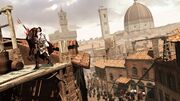 Ezio killing a guard on a Florentine rooftop
 -
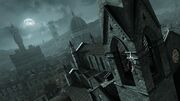 Ezio in Florence at night
 -
 Florence's database Icon
 -
 A map of Florence in the Animi Training Program
 -
 Florence at night
 -
 Database image of Florence in Assassin's Creed: Identity
 -
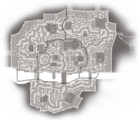 A map of Florence


Appearances[edit | edit source]
- Assassin's Creed: Lineage (first appearance)
- Assassin's Creed II
- Assassin's Creed: Renaissance
- Assassin's Creed: Brotherhood (mentioned only)
- Assassin's Creed: Revelations (mentioned only)
- Assassin's Creed: Revelations novel (mentioned only)
- Assassin's Creed: Embers
- Assassin's Creed: Initiates (mentioned only)
- Assassin's Creed IV: Black Flag (mentioned only)
- Assassin's Creed: Memories (mentioned only)
- Assassin's Creed: Rogue (mentioned only)
- Assassin's Creed Chronicles: China (mentioned in Database entry only)
- Assassin's Creed: Syndicate (mentioned only)
- Assassin's Creed (Titan Comics)
- Assassin's Creed: Identity
- Assassin's Creed: Reflections (mentioned only)
- The Tower: Assassin's Creed
- Assassin's Creed: Rebellion
- Assassin's Creed: The Last Quest of Leonardo da Vinci
- Assassin's Creed: Nexus VR (mentioned in Database entry only)
References[edit | edit source]
| ||||||||||||||||||||||||||||
| |||||||||||||||||||||||||||||||||||||
| |||||||||||||||||||||||||||||||
| |||||||||||||||||||||||||||||||
| |||||||||||||||||||||||||||||||||||||||||||||||||||||||||||