


Niccolò Machiavelli: Difference between revisions
imported>Gener4l Cl4ank4 |
imported>Soranin |
||
| (14 intermediate revisions by 4 users not shown) | |||
| Line 1: | Line 1: | ||
{{Era|Individuals|Assassins|Featured}}{{WP-REAL}} | {{Era|Individuals|Assassins|Featured}}{{WP-REAL}} | ||
{{Update|''[[Assassin's Creed: Brotherhood of Venice]]''}} | |||
{{Update| | |||
{{Quote|Unarmed prophets have always been destroyed, whereas armed prophets have succeeded.|Niccolò Machiavelli in ''The Prince''.|Assassin's Creed II|Database: Niccolò Machiavelli (Assassin's Creed II)}} | {{Quote|Unarmed prophets have always been destroyed, whereas armed prophets have succeeded.|Niccolò Machiavelli in ''The Prince''.|Assassin's Creed II|Database: Niccolò Machiavelli (Assassin's Creed II)}} | ||
{{Character Infobox | {{Character Infobox | ||
| Line 7: | Line 6: | ||
| image = ACB Niccolo Machiavelli.png | | image = ACB Niccolo Machiavelli.png | ||
| birth = 3 May 1469<br>[[Florence]], [[Republic of Florence]] | | birth = 3 May 1469<br>[[Florence]], [[Republic of Florence]] | ||
| death = 21 June 1527 | | death = 21 June 1527 {{c|aged 58}}<br>Florence, Republic of Florence | ||
| species = [[Human]] | | species = [[Human]] | ||
| database = [[Database: Niccolò Machiavelli (Assassin's Creed II)|Niccolò Machiavelli (Assassin's Creed II)]]<br>[[Database: Niccolò Machiavelli (Brotherhood)|Niccolò Machiavelli (Brotherhood)]]<br>[[Database: Niccolò Machiavelli (Identity)|Niccolò Machiavelli (Identity)]]<br>[[Database: Niccolò Machiavelli (Rebellion)|Niccolò Machiavelli (Rebellion)]] | | database = [[Database: Niccolò Machiavelli (Assassin's Creed II)|Niccolò Machiavelli (Assassin's Creed II)]]<br>[[Database: Niccolò Machiavelli (Brotherhood)|Niccolò Machiavelli (Brotherhood)]]<br>[[Database: Niccolò Machiavelli (Identity)|Niccolò Machiavelli (Identity)]]<br>[[Database: Niccolò Machiavelli (Rebellion)|Niccolò Machiavelli (Rebellion)]] | ||
| Line 13: | Line 12: | ||
*[[Italian Brotherhood of Assassins|Italian Brotherhood]] | *[[Italian Brotherhood of Assassins|Italian Brotherhood]] | ||
}} | }} | ||
'''Niccolò di Bernardo dei Machiavelli''' (1469 – 1527) was an [[Italy|Italian]] philosopher, humanist and writer, and a [[Mentor]] of the [[Italian Brotherhood of Assassins|Italian Brotherhood]] of [[Assassins]]. Considered one of the main founders of modern political science, he was a diplomat, political philosopher, musician, and playwright, but foremost, he was a civil servant of the Florentine Republic. | '''Niccolò di Bernardo dei Machiavelli''' (1469 – 1527) was an [[Italy|Italian]] philosopher, humanist and writer, and a [[Mentor]] of the [[Italian Brotherhood of Assassins|Italian Brotherhood]] of [[Assassins]]. Considered one of the main founders of modern political science, he was a diplomat, political philosopher, musician, and playwright, but foremost, he was a civil servant of the [[Republic of Florence|Florentine Republic]]. | ||
With the Assassin Order, Niccolò primarily worked with his ally [[Ezio Auditore da Firenze]], and helped him with driving the Orsi brothers from [[Forlì]] and | With the Assassin Order, Niccolò primarily worked with his ally [[Ezio Auditore da Firenze]], and helped him with driving the [[Checco Orsi|Orsi]] [[Ludovico Orsi|brothers]] from [[Forlì]] and removing the monk [[Girolamo Savonarola]] from power in [[Florence]] to obtain the [[Apple of Eden 6|Apple of Eden]], an ancient [[Isu]] [[Piece of Eden|artifact]], from him. | ||
Two years later, Machiavelli took up the position of leader of the Italian Assassins, after the death of the previous leader [[Mario Auditore]]. Once again joined by Ezio, they fought against the corrupted [[House of Borgia|Borgia]] family, which ruled over [[Rome]]. Eventually successful in their goal, Machiavelli joined Ezio and [[Leonardo da Vinci]] in chasing [[Cesare Borgia]] in [[Valencia]]. | Two years later, Machiavelli took up the position of leader of the Italian Assassins, after the death of the previous leader [[Mario Auditore]]. Once again joined by Ezio, they fought against the corrupted [[House of Borgia|Borgia]] family, which ruled over [[Rome]]. Eventually successful in their goal, Machiavelli joined Ezio and [[Leonardo da Vinci]] in chasing [[Cesare Borgia]] in [[Valencia]], [[Spain]]. | ||
Machiavelli | In his later life, Machiavelli focused on his duties in the Florentine government, leading the Florentine militia until he was defeated, arrested and deprived of office. | ||
==Biography== | ==Biography== | ||
===Early life=== | ===Early life=== | ||
Niccolò was born in Florence as the first son and third child of attorney {{Wiki|Bernardo di Niccolò Machiavelli}}, and his wife Bartolomea di Stefano Nelli. He was tutored by his father in grammar, rhetoric and {{Wiki|Latin}}.<ref name="Database">''[[Assassin's Creed II]]'' – [[Database: Niccolò Machiavelli (Assassin's Creed II)]]</ref> | Niccolò was born in Florence in 1469, as the first son and third child of attorney {{Wiki|Bernardo di Niccolò Machiavelli}}, and his wife Bartolomea di Stefano Nelli. He was tutored by his father in grammar, rhetoric and {{Wiki|Latin}}.<ref name="Database">''[[Assassin's Creed II]]'' – [[Database: Niccolò Machiavelli (Assassin's Creed II)|Database: Niccolò Machiavelli]]</ref> | ||
At a young age, Niccolò was trained and [[Initiation into the Assassin Order|inducted]] into the Assassin Order.<ref name=" | At a young age, Niccolò was trained and [[Initiation into the Assassin Order|inducted]] into the [[Assassins|Assassin Order]].<ref name="Play Along">''[[Assassin's Creed II]]'' – [[Play Along]]</ref> | ||
===Acquiring the Apple of Eden=== | ===Acquiring the Apple of Eden=== | ||
{{Quote|A prophet's arrival was foretold... And, unbeknownst to us - here you are. Perhaps all along, you were the one we sought.|Niccolò to Ezio.|Assassin's Creed II}} | {{Quote|A prophet's arrival was foretold... And, unbeknownst to us - here you are. Perhaps all along, you were the one we sought.|Niccolò to Ezio Auditore, 1488.|Assassin's Creed II|Play Along}} | ||
[[File:Machiavelli intro.png|thumb|left|250px|Machiavelli introducing himself to Ezio]] | [[File:Machiavelli intro.png|thumb|left|250px|Machiavelli introducing himself to Ezio]] | ||
In 1488, a 19-year-old Niccolò joined a group of Assassins in their attempt to acquire an [[Apple of Eden 6|Apple of Eden]] from [[Rodrigo Borgia]], the [[Grand Master of the Templar Order|Grand Master]] of the [[Roman Rite of the Templar Order|Italian Templars]], in [[Venice]]. When the group arrived at Rodrigo's location, they found him locked in combat with [[Ezio Auditore da Firenze|Ezio Auditore]], the son of the late Assassin [[Giovanni Auditore da Firenze]]. The other Assassins rushed to Ezio's aid, whereas Niccolò watched from a distance.<ref name="Play Along" /> | |||
After the group killed | After the group killed Rodrigo's [[Soldier|guards]] and chased the Grand Master away, Niccolò introduced himself to Ezio and revealed all present to be Assassins, a fact previously unknown to Ezio. The group subsequently gathered atop a tower in Venice, where they inducted Ezio into the Assassin Order before each performed a [[Leap of Faith]] off the tower.<ref name="Play Along" /> | ||
===Battle of Forlì=== | ===Battle of Forlì=== | ||
{{Quote|We discovered that [[Girolamo Riario]] was working with the Templars. Making a map of the locations of the remaining [[Altaïr Ibn-La'Ahad's Codex|Codex]] pages.|Niccolò, before the Battle of Forlì.|Assassin's Creed II}} | {{Quote|We discovered that [[Girolamo Riario]] was working with the Templars. Making a map of the locations of the remaining [[Altaïr Ibn-La'Ahad's Codex|Codex]] pages.|Niccolò to Ezio, shortly before the Battle of Forlì, 1488.|Assassin's Creed II|A Warm Welcome}} | ||
[[File:Holding 2.png|thumb|250px|Niccolò, Ezio and Caterina inside Rocca di Ravaldino]] | [[File:Holding 2.png|thumb|250px|Niccolò, Ezio and Caterina inside Rocca di Ravaldino]] | ||
Shortly after initiating Ezio into the Order, Niccolò accompanied | Shortly after initiating Ezio into the Order, Niccolò accompanied him to Forlì, where the Assassins intended to hide the Apple from the Templars. They knew it would be well-protected, as the city was currently under the rule of one of their allies, [[Caterina Sforza]].<ref name="Warm Welcome">''[[Assassin's Creed II]]'' – ''[[Battle of Forlì (DLC)|Battle of Forlì]]'' – [[A Warm Welcome]]</ref> | ||
After entering the outskirts of Forlì, they discovered that the city was under siege by the Orsi brothers. Entering the city, Ezio, Caterina and Niccolò fought their way to the [[Rocca di Ravaldino]]. Upon arriving there, they were assaulted by reinforcements, which Ezio, Caterina | After entering the outskirts of Forlì, they discovered that the city was under siege by the Orsi brothers.<ref name="Warm Welcome" /> Entering the city, Ezio, Caterina and Niccolò fought their way to the [[Rocca di Ravaldino]].<ref name="Bodyguard">''[[Assassin's Creed II]]'' – ''[[Battle of Forlì (DLC)|Battle of Forlì]]'' – [[Bodyguard]]</ref> Upon arriving there, they were assaulted by reinforcements, which Ezio, Caterina and Niccolò worked together to defeat.<ref name="Holding the Fort">''[[Assassin's Creed II]]'' – ''[[Battle of Forlì (DLC)|Battle of Forlì]]'' – [[Holding the Fort]]</ref> After the attack was dealt with, Ezio left the Apple in Caterina's possession while he went to rescue her children, who had been captured by the Orsi brothers.<ref name="Godfather">''[[Assassin's Creed II]]'' – ''[[Battle of Forlì (DLC)|Battle of Forlì]]'' – [[Godfather]]</ref> | ||
Upon Ezio's return to the Rocca di Ravaldino, Niccolò informed him that the Apple had been taken from them. He then sent Ezio to retrieve it from the fleeing [[Checco Orsi]]. Though Ezio was able to assassinate Checco, he was severely injured by the dying man, and the Apple was then taken by the monk Girolamo Savonarola.<ref name=" | Upon Ezio's return to the Rocca di Ravaldino, Niccolò informed him that the Apple had been taken from them. He then sent Ezio to retrieve it from the fleeing [[Checco Orsi]]. Though Ezio was able to assassinate Checco, he was severely injured by the dying man, and the Apple was then taken by the monk [[Girolamo Savonarola]].<ref name="Checcomate">''[[Assassin's Creed II]]'' – ''[[Battle of Forlì (DLC)|Battle of Forlì]]'' – [[Checcomate]]</ref> | ||
===Bonfire of the Vanities=== | ===Bonfire of the Vanities=== | ||
{{Quote|Rare is the man who is willing to oppose the status quo. And so it falls to us to help them see the truth.|Niccolò commenting on Savonarola's takeover.|Assassin's Creed II}} | {{Quote|Rare is the man who is willing to oppose the status quo. And so it falls to us to help them see the truth.|Niccolò commenting on Savonarola's takeover of Florence, 1497.|Assassin's Creed II|Florentine Fiasco}} | ||
[[File:Florentine Fiasco 2.png|thumb|250px|left|Niccolò and Ezio discussing Savonarola]] | [[File:Florentine Fiasco 2.png|thumb|250px|left|Niccolò and Ezio discussing Savonarola]] | ||
In 1497, Niccolò met with Ezio again in Florence and informed him that Savonarola had taken control of the city through the power of the Apple. Ezio reasoned that if he killed all nine of Savonarola's lieutenants, his grip would weaken. Niccolò thus informed fellow Assassins [[La Volpe]] and [[Paola]] of Ezio's plan, and after all of the lieutenants had been killed, the three encouraged the people to rise up against Savonarola.<ref | In 1497, Niccolò met with Ezio again in Florence and informed him that Savonarola had taken control of the city through the power of the Apple. Ezio reasoned that if he killed all nine of Savonarola's lieutenants, his grip would weaken.<ref name="Florentine Fiasco">''[[Assassin's Creed II]]'' – ''[[Bonfire of the Vanities (DLC)|Bonfire of the Vanities]]'' – [[Florentine Fiasco]]</ref> Niccolò thus informed fellow Assassins [[La Volpe]] and [[Paola]] of Ezio's plan, and after all of the lieutenants had been killed, the three encouraged the people to rise up against Savonarola.<ref>''[[Assassin's Creed II]]'' – ''[[Bonfire of the Vanities (DLC)|Bonfire of the Vanities]]'' – [[Still Life]]<br>↑ ''[[Assassin's Creed II]]'' – ''[[Bonfire of the Vanities (DLC)|Bonfire of the Vanities]]'' – [[Climbing the Ranks]]<br>↑ ''[[Assassin's Creed II]]'' – ''[[Bonfire of the Vanities (DLC)|Bonfire of the Vanities]]'' – [[Upward Mobility]]<br>↑ ''[[Assassin's Creed II]]'' – ''[[Bonfire of the Vanities (DLC)|Bonfire of the Vanities]]'' – [[Last Rites (Brotherhood)|Last Rites]]<br>↑ ''[[Assassin's Creed II]]'' – ''[[Bonfire of the Vanities (DLC)|Bonfire of the Vanities]]'' – [[Port Authority]]<br>↑ ''[[Assassin's Creed II]]'' – ''[[Bonfire of the Vanities (DLC)|Bonfire of the Vanities]]'' – [[Surgical Strike]]<br>↑ ''[[Assassin's Creed II]]'' – ''[[Bonfire of the Vanities (DLC)|Bonfire of the Vanities]]'' – [[Hitting the Hay]]<br>↑ ''[[Assassin's Creed II]]'' – ''[[Bonfire of the Vanities (DLC)|Bonfire of the Vanities]]'' – [[Arch Nemesis]]<br>↑ ''[[Assassin's Creed II]]'' – ''[[Bonfire of the Vanities (DLC)|Bonfire of the Vanities]]'' – [[Doomsday]]</ref> | ||
Stoked into revolt, an angry mob swarmed Savonarola's residence, the [[Palazzo Pitti]]. Savonarola tried to calm the crowd with the Apple, but Ezio knocked it out of his hand with a well-thrown knife. The Apple fell to the ground, but it was retrieved by one of Rodrigo Borgia's men, forcing Ezio to chase him down and retrieve it.<ref name="Bonfire | Stoked into revolt, an angry mob swarmed Savonarola's residence, the [[Palazzo Pitti]]. Savonarola tried to calm the crowd with the Apple, but Ezio knocked it out of his hand with a well-thrown [[Throwing knife|knife]]. The Apple fell to the ground, but it was retrieved by one of Rodrigo Borgia's men, forcing Ezio to chase him down and retrieve it.<ref name="Power to the People">''[[Assassin's Creed II]]'' – ''[[Bonfire of the Vanities (DLC)|Bonfire of the Vanities]]'' – [[Power to the People]]</ref> | ||
Savonarola was | Savonarola was later taken to be burned alive, and the Assassins watched from the distance. As they observed the execution, Ezio decided that no one should die in such agony, and killed the monk before the flames could reach him. After Ezio gave a speech to inspire the crowd to follow their own ways, the Assassins left the scene.<ref name="Mob Justice">''[[Assassin's Creed II]]'' – ''[[Bonfire of the Vanities (DLC)|Bonfire of the Vanities]]'' – [[Mob Justice]]</ref> | ||
===War in Rome=== | ===War in Rome=== | ||
{{Dialogue|Niccolò|I intend to write a book about you one day.|Ezio|If you do, make it short.|Ezio and Niccolò, after settling their differences.|Assassin's Creed: Brotherhood}} | {{Dialogue|Niccolò|I intend to write a book about you one day.|Ezio|If you do, make it short.|Ezio and Niccolò, after settling their differences, 1503.|Assassin's Creed: Brotherhood|Ascension}} | ||
[[File:X marks 4.png|thumb|250px| | [[File:X marks 4.png|thumb|250px|Niccolò and Ezio discussing the locations revealed by the Apple]] | ||
In December 1499, Niccolò, Ezio, Mario Auditore, [[Bartolomeo d'Alviano]], La Volpe, [[Antonio de Magianis]], Paola, and [[Teodora Contanto]], some of the highest-ranking Italian Assassins, gathered | In December 1499, Niccolò, Ezio, Mario Auditore, [[Bartolomeo d'Alviano]], La Volpe, [[Antonio de Magianis]], Paola, and [[Teodora Contanto]], some of the highest-ranking Italian Assassins, gathered at the [[Villa Auditore]] in [[Monteriggioni]] to discuss the location of "[[Vatican Vault|the Vault]]", an ancient [[Isu]] [[Temple (Isu)|temple]].<ref name="X Marks the Spot">''[[Assassin's Creed II]]'' – [[X Marks the Spot]]</ref> | ||
The Assassins came to the conclusion that the Vault was located in Rome, and that Rodrigo Borgia had become [[Papacy|Pope]] because the Papal Staff was the [[ | The Assassins came to the conclusion that the Vault was located in [[Rome]], and that Rodrigo Borgia had become [[Papacy|Pope]] because the [[Papal Staff of Eden|Papal Staff]] was the [[Staves of Eden|second Piece of Eden]] needed to unlock its entrance. All of them thus left for Rome to distract the Borgia guards while Ezio infiltrated [[Vaticano District|the Vatican]] to assassinate Rodrigo.<ref name="X Marks the Spot" /> | ||
Niccolò later returned to Monteriggioni to listen to what Ezio had discovered inside the Vault. Upon hearing that Ezio had spared Rodrigo, he furiously left for Rome to take down the Borgia once and for all.<ref name=" | Niccolò later returned to Monteriggioni to listen to what Ezio had discovered inside the Vault. Upon hearing that Ezio had spared Rodrigo's life, he furiously left for Rome to take down the Borgia once and for all.<ref name="Reunion">''[[Assassin's Creed: Brotherhood]]'' – [[Reunion (Brotherhood)|Reunion]]</ref> | ||
The following morning, Monteriggioni was [[siege of Monteriggioni|attacked]] by the | The following morning, Monteriggioni was [[siege of Monteriggioni|attacked]] by the Papal Army, under the command of Rodrigo's son, [[Cesare Borgia]]. Niccolò's disappearance right before the attack aroused some suspicion from La Volpe, who thought that Niccolò was secretly working for the Borgia. During the attack, Mario Auditore was killed and Niccolò took command over the disordered Assassin Order, basing it on [[Tiber Island]] in Rome.<ref name="Vilified">''[[Assassin's Creed: Brotherhood]]'' – [[Vilified]]</ref> | ||
[[File:New man 3.png|thumb|left|250px|Niccolò informing Ezio about the closed shops]] | [[File:New man 3.png|thumb|left|250px|Niccolò informing Ezio about the closed shops]] | ||
Following the attack, Ezio left for Rome as well, but passed out on the road there, succumbing to the two gunshot wounds he had received during the siege. Niccolò brought him to [[Margherita dei Campi|a woman]] living in Rome's countryside to have him cared for, and requested her to tell Ezio to meet him in front of the [[Mausoleo di Augusto]] as soon as he was able.<ref name=" | Following the attack, Ezio left for Rome as well, but passed out on the road there, succumbing to the two gunshot wounds he had received during the siege.<ref name="Emergency Exit">''[[Assassin's Creed: Brotherhood]]'' – [[Emergency Exit]]</ref> Niccolò brought him to [[Margherita dei Campi|a woman]] living in Rome's countryside to have him cared for, and requested her to tell Ezio to meet him in front of the [[Mausoleo di Augusto]] as soon as he was able.<ref name="Good As New">''[[Assassin's Creed: Brotherhood]]'' – [[As Good As New]]</ref> | ||
After Ezio arrived, Niccolò informed him of Rome's corrupt state and lent him some money to purchase some new equipment. He also "introduced" him to the [[Followers of Romulus]], who he suspected to be working for the Borgia, and showed him a faster way of traveling via the city's [[Tunnels|sewer system]]. | After Ezio arrived, Niccolò informed him of Rome's corrupt state and lent him some money to purchase some new equipment.<ref name="New Man in Town">''[[Assassin's Creed: Brotherhood]]'' – [[New Man in Town]]</ref><ref name="Easy Come, Easy Go">''[[Assassin's Creed: Brotherhood]]'' – [[Easy Come, Easy Go]]</ref> He also "introduced" him to the [[Followers of Romulus]], who he suspected to be working for the Borgia, and showed him a faster way of traveling via the city's [[Tunnels|sewer system]]. They then proceeded to use one such tunnel to get back to [[Tiber Island headquarters|their hideout]], which had been given to them by [[Fabio Orsini]], an Assassin ally.<ref name="Roman Underground">''[[Assassin's Creed: Brotherhood]]'' – [[Roman Underground]]</ref> | ||
They | |||
[[File:Roman Underground 3.png|thumb|250px|Niccolò speaking with Ezio and Fabio Orsini]] | [[File:Roman Underground 3.png|thumb|250px|Niccolò speaking with Ezio and Fabio Orsini]] | ||
After Ezio left to restore the underground, Niccolò set to work on using his contacts to obtain the names of several Templar agents that were terrorizing the people of Rome. After strengthening the Assassins' contacts with the underground and freeing Caterina Sforza from her prison, Ezio returned to Niccolò to discuss the recruitment of new Assassins into the Brotherhood. Skeptical at first, | After Ezio left to restore the underground, Niccolò set to work on using his contacts to obtain the names of several Templar agents that were terrorizing the people of Rome.<ref name="Collective Intelligence">''[[Assassin's Creed: Brotherhood]]'' – [[Collective Intelligence]]</ref> After strengthening the Assassins' contacts with the underground and freeing Caterina Sforza from her prison,<ref name="The Burdens We Carry">''[[Assassin's Creed: Brotherhood]]'' – [[The Burdens We Carry]]</ref> Ezio returned to Niccolò to discuss the recruitment of new Assassins into the Brotherhood. Skeptical at first, Niccolò soon conceded and allowed Ezio to recruit their first novices, while he set up a means of communication with the recruits via [[Pigeon coops|pigeon coop]].<ref name="Man of the People">''[[Assassin's Creed: Brotherhood]]'' – [[Man of the People]]</ref> | ||
By 1503, La Volpe believed that he had gathered substantial evidence to prove that Niccolò was working for the Borgia, and therefore told Ezio to "do what needs to be done", or he would do it himself. However, Ezio did not believe Niccolò to be a traitor, so he did not kill him.<ref name="Stand-Ins">''[[Assassin's Creed: Brotherhood]]'' – [[Calling All Stand-Ins]]</ref> | |||
Instead, La Volpe himself left for Tiber Island, ready to assassinate Niccolò. Ezio, however, found out that one of La Volpe's own [[thieves]] was the traitor, and managed to inform | Instead, La Volpe himself left for Tiber Island, ready to assassinate Niccolò. Ezio, however, found out that one of La Volpe's own [[thieves]] was the traitor, and managed to inform the Assassin of this, seconds before he was about to kill Niccolò with a dagger. La Volpe, pretending that nothing had happened, returned to an amicable relationship with Niccolò afterwards.<ref name="Intervention">''[[Assassin's Creed: Brotherhood]]'' – [[Intervention]]</ref> | ||
[[File:Ascension 5.png|thumb|left|250px|Niccolò promoting Ezio to the rank of Mentor]] | [[File:Ascension 5.png|thumb|left|250px|Niccolò promoting Ezio to the rank of Mentor]] | ||
Over the course of three years, Niccolò | Over the course of the past three years, Niccolò had realized that Ezio was much more suited to the role of leader of the Assassin Order than he was, as it was Ezio who had revived the Brotherhood back to its former strength and carried out the war against the Borgia and the [[Liberation of Rome]].<ref name="ACB">''[[Assassin's Creed: Brotherhood]]</ref> | ||
Thus, after [[Claudia Auditore da Firenze]]'s initiation into the Brotherhood, Niccolò placed Ezio at the head of the Italian Assassins and awarded him with the title of [[Mentor]]. When Ezio | Thus, after [[Claudia Auditore da Firenze|Claudia Auditore]]'s initiation into the Brotherhood, Niccolò placed Ezio at the head of the Italian Assassins and awarded him with the title of [[Mentor]]. When Ezio questioned him about his sudden change of heart, Niccolò admitted that he had always stood by Ezio and had been supporting him without his knowledge, citing the explosion that distracted the guards when Ezio was fleeing the [[Castel Sant'Angelo]]. Ezio in turn named Niccolò as his "most trusted advisor."<ref name="Ascension">''[[Assassin's Creed: Brotherhood]]'' – [[Ascension]]</ref> | ||
Not long after the ceremony, Ezio and Niccolò, along with La Volpe, Bartolomeo, and Claudia, confronted Cesare as he attempted one last rally for power. Fighting in the [[Piazza del Popolo]], the Assassins managed to defeat the Borgia guards and secure Cesare's arrest at the hands of Fabio Orsini and his army.<ref name="All Roads">''[[Assassin's Creed: Brotherhood]]'' – [[All Roads Lead To...]]</ref> | |||
===Cesare and Micheletto=== | ===Cesare and Micheletto=== | ||
{{Quote|We take you, Micheletto da Corella, as our prisoner. No more shall you infect our nation with your schemes.| | {{Quote|We take you, Micheletto da Corella, as our prisoner. No more shall you infect our nation with your schemes.|Niccolò arresting Micheletto after the attack on Zagarolo, 1505.|Assassin's Creed: Brotherhood (novel)}} | ||
After the death of Rodrigo Borgia at the hands of Cesare, the latter was | After the death of Rodrigo Borgia at the hands of Cesare, the latter was imprisoned by the new [[Julius II|Pope]] in the Castel Sant'Angelo. After a failed escape attempt in 1504, he was transferred to a different prison, and the Pope would not reveal its location even to Ezio.<ref name="ACB novel">[[Assassin's Creed: Brotherhood (novel)|''Assassin's Creed: Brotherhood'' novel]]</ref> | ||
As a result, Ezio and Niccolò started their quest to find Cesare, speaking to [[Giulia Farnese]], [[Charlotte d'Albret]], and [[Vannozza dei Cattanei]]. These conversations did not provide them with the information they needed, and on their way back they were confronted by one of Niccolò's spies, [[Bruno]]. He told them of Claudia's capture and imprisonment by Borgia diehards, and Ezio and Niccolò went to the assigned building to free her.<ref name="ACB novel" /> | |||
After a short but fierce fight, the diehard leader revealed that they worked for [[Micheletto Corella]], after which the Assassins decided to look for him, as he could lead them to Cesare. They soon found him in [[Zagarolo]], where he had mustered a force of 200 men. The Assassins marched there the following day, with an army of 100 | After a short but fierce fight, the diehard leader revealed that they worked for [[Micheletto Corella]], after which the Assassins decided to look for him, as he could lead them to Cesare. They soon found him in [[Zagarolo]], where he had mustered a force of 200 men. The Assassins marched there the following day, with an army of 100 [[Assassin apprentice|apprentices]] and thieves, and were able to arrest Micheletto, who was then brought to Florence to be interrogated by Niccolò, [[Piero Soderini]], and [[Amerigo Vespucci]].<ref name="ACB novel" /> | ||
A few days after the interrogation, on the day of Micheletto's execution, he managed to escape, and | A few days after the interrogation, on the day of Micheletto's execution, he managed to escape, and Niccolò delivered the news to Ezio. They decided to track Micheletto and follow him to Cesare, using the Apple to find him. The Apple told Ezio to ride for [[Naples]], and the Assassins, accompanied by [[Leonardo da Vinci]], did so immediately. Once they arrived in Naples, they encountered the courtesan [[Camilla]], who told them that Micheletto had traveled to [[Valencia]].<ref name="ACB novel" /> | ||
===Chasing Micheletto=== | ===Chasing Micheletto=== | ||
{{Quote|Well, we don't need the Apple to tell us what our old friend Cesare is planning.|Niccolò, upon arriving in Valencia.|Assassin's Creed: Brotherhood (novel)}} | {{Quote|Well, we don't need the Apple to tell us what our old friend Cesare is planning.|Niccolò, upon arriving in Valencia, 1506.|Assassin's Creed: Brotherhood (novel)}} | ||
Following their arrival in Valencia, thegroup immediately noticed the ship Micheletto had used to travel there. They asked the captain where his passenger was heading, and he told them to look for Micheletto in the [[Lone Wolf Inn]]. They managed to find the building without difficulty but were ambushed as they entered its dark interior. There was a fierce battle, and Ezio eventually recognized one of their ambushers as Micheletto himself.<ref name="ACB novel" /> | |||
However, Micheletto and his diehards fled the scene before | However, Micheletto and his diehards fled the scene before Ezio, Niccolò and Leonardo could follow them, though one of the diehards revealed that they were going to the [[Castillo de la Mota]], where Cesare was imprisoned. The trio chased Micheletto, but he had stolen a march on them and had managed to break Cesare out of prison before they arrived. When the Assassins heard this news, Ezio wanted to return to Valencia immediately, acting on a vision he had seen using the Apple, but Niccolò insisted on resting.<ref name="ACB novel" /> | ||
Ezio, Niccolò and Leonardo returned to Valencia within the month but found that Cesare had managed to build up a considerable army. There were more than one thousand men stationed just outside Valencia, and there was a fleet of a dozen warships in its harbor. Leonardo provided the Assassins with several hand-held [[Bomb|bombs]] which could be used to destroy the warships, then left to return to Italy as he was feeling homesick.<ref name="ACB novel" /> | |||
===Attack on Valencia=== | ===Attack on Valencia=== | ||
Ezio and Niccolò formulated a plan to destroy Cesare's new army. Whilst Niccolò made his way to the diehards' camp, Ezio headed to the docks to destroy the enemy ships there with | Ezio and Niccolò formulated a plan to destroy Cesare's new army. Whilst Niccolò made his way to the diehards' camp, Ezio headed to the docks to destroy the enemy ships there with the bombs supplied by Leonardo. Afterwards, he met up with Niccolò on the corner of the street where the Lone Wolf Inn was located. The two climbed onto the roof of the building and peered through the open top skylight at Cesare and Micheletto, who were discussing the recent turn of events.<ref name="ACB novel" /> | ||
Cesare angrily belittled Micheletto, blaming him for what had happened and driving him to launch himself across the table at his Master. Cesare quickly pulled one of his pistols from his belt and shot Micheletto, killing him instantly. Ezio pulled back, hoping to catch Cesare as he left the building, though Niccolò, who had craned forward to get a better look, had kicked a tile in the process, drawing Cesare's attention. Drawing his second pistol just as rapidly as he had his first, Cesare shot at the Assassin, hitting Niccolò in the shoulder.<ref name="ACB novel" /> | |||
Cesare | Ezio briefly thought of pursuing Cesare, but Niccolò's injury was severe and required immediate medical attention. Finding a local [[doctor]], they learned that the bullet had gone straight through and that Niccolò would be sufficiently healed for travel in two weeks. Before Ezio left to pursue Cesare, Niccolò wished him good luck.<ref name="ACB novel" /> | ||
===Conflict with the Crows=== | |||
{{Quote|All my life I was fighting for peace only to realize that peace does not exist. You see, war is eternal. But even if I would have known this before I started fighting, I would have never stopped. Even after I will not be able to fight anymore, there will be brave women and men who will take over this eternal struggle. I wanted these people to believe in what they are doing.|Niccolò in his journal.|Assassin's Creed: Identity|Database: Journal – Saviors of Roma}} | |||
During the 1500s, the Assassins in Italy faced a new threat in the form of the [[Crows]], a counter-Assassin unit created by Cesare for the purpose of eliminating the Brotherhood through the imitation of their own techniques. Over the years, Niccolò received reports from his spies of civilians being targeted by strange men clad in black-feathered armor, but he did not take them seriously until two of these men made an attempt on Leonardo's life. Fortunately, his friend was protected by an Assassin known as [[Lo Sparviero]], who would prove to be Niccolò's strongest ally in their fight against this mysterious new faction.<ref name="Journal 3">''[[Assassin's Creed: Identity]]'' – [[Niccolò Machiavelli's journal]] – [[Database: Journal – Vengeful Eyes|Entry #3]]: "Vengeful Eyes"</ref> | |||
Around 1506, an Assassin who had escorted Leonardo out of the [[Catacombs of Rome|Roman catacombs]] informed Niccolò of a chest bearing the [[Assassin insignia]], which they found locked away behind a metal gate in the tunnels. Niccolò dispatched this Assassin and three other apprentices to recover the chest, but after they failed to return for hours, Niccolò realized they had been killed. Driven by rage, he summoned Lo Sparviero and sent him to avenge their Brothers' deaths and complete their mission. Without a word, Lo Sparviero left and returned an hour later, blood dripping from his blades.<ref name="Journal 4">''[[Assassin's Creed: Identity]]'' – [[Niccolò Machiavelli's journal]] – [[Database: Journal – An Assassin's Requiem|Entry #4]]: "An Assassin's Requiem"</ref> | |||
Upon inspecting the chest, Niccolò realized that it was the same one stolen by the Templar infiltrator [[Pietro de Galencia]] from Monteriggioni following the 1500 siege.<ref name="Journal 2>''[[Assassin's Creed: Identity]]'' – [[Niccolò Machiavelli's journal]] – [[Database: Journal – A Healer's Blood|Entry #2]]: "A Healer's Blood"</ref> Inside was a blueprint of a modified [[Hidden Blade]], with the head of a crow carved deep into the steel. Immediately, Niccolò understood that someone had copied the Hidden Blade's design, though to what ends, he did not yet know.<ref name="Journal 4" /> | |||
Later, Niccolò journeyed to Florence, where he heard that Cesare's men were planning a public execution. Shortly after, he received a mysterious letter from a man named [[Demetrio il Silente|Demetrio]], who revealed that he was planning to kill Cesare and requested the Brotherhood's help to escort him to safety once the deed was done. Climbing to the top of a building in front of the [[Palazzo della Signoria]], Niccolò and Lo Sparviero witnessed a man being dragged out by Cesare's guards. Lo Sparviero recognized him as Demetrio, a [[blacksmith]] employed by Cesare, and rescued him before he could be executed.<ref name="Journal 5">''[[Assassin's Creed: Identity]]'' – [[Niccolò Machiavelli's journal]] – [[Database: Journal – Broken Chains|Entry #5]]: "Broken Chains"</ref> | |||
A grateful Demetrio explained to Niccolò that he had been ordered by Cesare to build "Corvix Blades" for his men, but when he refused to continue production of the weapons, the Templar had him imprisoned and cut out his tongue. In response, a vengeful Demetrio attempted to assassinate Cesare, but ultimately failed.<ref name="Journal 5"/> Demetrio's notes further elaborated on the Crows' origins, revealing that Cesare had sent a group of orphans to the {{Wiki|Vallombrosa Abbey}}, where he tricked the Assassin [[Raphael Sánchez]] into training them for over five years, thus creating his unit of Assassin hunters.<ref name="Journal 6">''[[Assassin's Creed: Identity]]'' – [[Niccolò Machiavelli's journal]] – [[Database: Journal – A Storm of Crows|Entry #6]]: "A Storm of Crows"</ref> | |||
One day, Niccolò sent Lo Sparviero to investigate some suspicious activity at the Borgia camp near the [[Colosseum]], leading the Assassins to discover that the Crows had taken over the area and were expecting a shipment of Corvix Blades. While Lo Sparviero fought and killed a Crow Leader named [[Matteo Favero|Matteo]], more Assassins invaded the camp and captured [[Sirus Favero]], whom La Sparviero had seen speak with Matteo earlier. Claiming to be a merchant forced to work for the Templars, Sirus eagerly offered his aid to the Assassins, revealing his hatred of the Borgia and of Cesare in particular.<ref name="Journal 6"/> | |||
Over the following weeks, Sirus earned Niccolò's trust by providing the Assassins with valuable information about Cesare's activities. In one of his letters, he revealed that Cesare's scribes had created an encrypted language to communicate about the Crows and their plans, which could only be deciphered using a special device. Fortunately, Sirus was in possession of one such device, which he lent to the Assassins. After Lo Sparviero recovered a ledger from one of Cesare's bookkeepers in Florence, Niccolò deciphered it and learned that the Crows were led by someone called "Il Corvo".<ref name="Journal 7">''[[Assassin's Creed: Identity]]'' – [[Niccolò Machiavelli's journal]] – [[Database: Journal – Burning Pages|Entry #7]]: "Burning Pages"</ref> | |||
Later, Niccolò tried to convince Sirus to relocate to Florence so he would be better protected, but the latter insisted on staying in Rome, assuring the Assassin that neither the Crows nor Cesare were aware of his alliance with the Brotherhood. Eventually, after several months of working together, Sirus sent Niccolò a letter in which he claimed to have discovered Il Corvo's whereabouts and requested that an Assassin be sent to help him gather more information.<ref name="Journal 8">''[[Assassin's Creed: Identity]]'' – [[Niccolò Machiavelli's journal]] – [[Database: Journal – Under the Red Sun|Entry #8]]: "Under the Red Sun"</ref> | |||
Niccolò tasked Lo Sparviero to assist Sirus, but after the Assassin intercepted a note carried by a Crow messenger, he became suspicious of Sirus as he delivered the note to him. Deciding to follow the merchant, Lo Sparviero was ambushed by the Crows and discovered that Sirus himself was Il Corvo and sought revenge on the Assassins for the death of his son. After narrowly escaping the ambush, Lo Sparviero headed straight to Niccolò to inform him of all the events that had transpired.<ref name="Journal 8"/> | |||
Taken aback by the news of Sirus' betrayal, Niccolò struggled to recover from the shock but knew he had to stop him and the Crows. Over the next few weeks, he had his spies intercept a number of Crow letters, but none of the information proved useful, leading Niccolò to suspect that Sirus was sending them just to spite him. Eventually, Niccolò was approached by his friend Father [[Pio]], who revealed that Borgia forces had taken over the [[Basilica di Santa Croce]] in Florence. In response, the Assassin sent Lo Sparviero to investigate.<ref name="Journal 9">''[[Assassin's Creed: Identity]]'' – [[Niccolò Machiavelli's journal]] – [[Database: Journal – A Dangerous Trade|Entry #9]]: "A Dangerous Trade"</ref> | |||
During his mission, Lo Sparviero encountered a Crow messenger and was able to acquire the letter he carried, which was a summoning call for all Crows to Rome, where Sirus intended to eliminate the Assassins once and for all.<ref name="Journal 9"/> However, the Assassins were too slow to act on this intel and were caught by surprise when the Crows began attacking their forces spread out throughout the city.<ref name="Journal 10">''[[Assassin's Creed: Identity]]'' – [[Niccolò Machiavelli's journal]] – [[Database: Journal – Saviors of Roma|Entry #10]]: "Saviors of Roma"</ref> | |||
Niccolò, who was away from Rome at the time, arrived in the city on the day of the attacks, having had time to summon only one Assassin as reinforcements: Lo Sparviero. Fortunately, this was more than enough, as after determining that Sirus had taken refuge inside Castel Sant'Angelo, Niccolò and Lo Sparviero headed there to confront the Crows' leader. Niccolò, in no condition to fight the Crows, was told to wait near the [[Ponte Sant'Angelo]], from where he watched in amazement as Lo Sparviero, driven by an unexpected hatred, single-handedly killed Sirus and all of his guards.<ref name="Journal 10"/> | |||
Following this decisive victory, Niccolò and Lo Sparviero found and investigated the Crows' hideout. The former discovered letters of correspondence between Cesare and Sirus revealing that the latter had gone rogue and abandoned the Templars. He also found a letter referencing a "[[Crystal Cube]]", and took a painting of the Cube, which contained a hidden map of Forlì with strange markings. Before they could learn more, the two Assassins were forced to escape as the hideout was destroyed by Borgia forces.<ref name="Journal 10"/> | |||
Niccolò would eventually write down all of these events in his personal [[Niccolò Machiavelli's journal|journal]], so that "the good men of the future will learn about the bad men of the past."<ref name="Journal 1">''[[Assassin's Creed: Identity]]'' – [[Niccolò Machiavelli's journal]] – [[Database: Journal – The Corrupted|Entry #1]]: "The Corrupted"</ref> | |||
===Ambassador of Florence=== | ===Ambassador of Florence=== | ||
Niccolò had entered service in the Florentine government as a clerk and ambassador in 1494. Becoming a member of the Florentine diplomatic council, he was sent to the courts of [[France]], [[Spain]] and Rome between 1499 and 1512.<ref name="Database" /> During this time, he lent his services to the [[Spanish Brotherhood of Assassins|Spanish Assassins]] against the [[Spanish Inquisition|Inquisition]] led by [[Tomás de Torquemada]].<ref>''[[Assassin's Creed: Rebellion]]''</ref> | Niccolò had entered service in the Florentine government as a clerk and ambassador in 1494. Becoming a member of the Florentine diplomatic council, he was sent to the courts of [[France]], [[Spain]], and Rome between 1499 and 1512.<ref name="Database" /> During this time, he lent his services to the [[Spanish Brotherhood of Assassins|Spanish Assassins]] against the [[Spanish Inquisition|Inquisition]] led by [[Tomás de Torquemada]].<ref name="ACReb">''[[Assassin's Creed: Rebellion]]'' – [[Database: Niccolò Machiavelli (Rebellion)|Database: Niccolò Machiavelli]]</ref> | ||
Between 1503 and 1506, Niccolò returned from Rome to Florence, where he was responsible for leading the Florentine militia. He noted on multiple occasions that he distrusted [[mercenaries]], although he occasionally made use of them<ref name="Database" /> | Between 1503 and 1506, Niccolò returned from Rome to Florence, where he was responsible for leading the Florentine militia. He noted on multiple occasions that he distrusted [[mercenaries]], although he occasionally made use of them,<ref name="Database" /> and under the patronage of the new Gonfaloniere of Florence, [[Piero Soderini]], he established a standing militia composed of recruited citizens of the republic, which was unusual as at the time most militias were composed of mercenaries. Niccolò claimed that as citizens of Florence, his militia would prove more loyal than mercenaries as they had a stake in the republic's success, rather than mercenaries whose sole motive was wealth.<ref name="Wiki">{{WP|Niccolò Machiavelli}}</ref> | ||
His militia managed to defeat | His militia managed to defeat [[Pisa]] in 1509.<ref>''[[Assassin's Creed: Identity]]'' – [[Database: Niccolò Machiavelli (Identity)|Database: Niccolò Machiavelli]]</ref> However, in August 1512, they were defeated by the [[House of Medici|Medici]], aided by Spanish troops and Pope [[Julius II]]. After this defeat, Florence was returned to Medici control.<ref name="Wiki" /> | ||
Niccolò was deprived of office and was arrested in 1513 on accusations of conspiracy. He was tortured in prison, though he denied involvement in any conspiracy. He was released, and he retired to his estate in Sant'Andrea in Percussina. | Niccolò was deprived of office and was arrested in 1513 on accusations of conspiracy. He was tortured in prison, though he denied involvement in any conspiracy. He was released, and he retired to his estate in Sant'Andrea in Percussina.<ref name="Wiki" /> | ||
===Later life=== | ===Later life=== | ||
During his stay at his estate, Niccolò wrote ''{{Wiki|The Prince|Il Principe}}'' (''The Prince''), which was a relatively short book written in a few months. It was written specifically for a period when the Medici family had the opportunity to build a strong Italian state in central Italy and drive out the "barbarians." | During his stay at his estate, Niccolò wrote ''{{Wiki|The Prince|Il Principe}}'' (''The Prince''), which was a relatively short book written in a few months. It was written specifically for a period when the Medici family had the opportunity to build a strong Italian state in central Italy and drive out the "barbarians."<ref name="Database" /> Over a significant amount of his life, Niccolò also wrote the ''{{Wiki|Discourses on Livy}}'', a thesis that reflected his more republican notions of government. It is a far more comprehensive thesis than ''The Prince''.<ref name="Database" /> | ||
Over a significant amount of his life, Niccolò also wrote the ''{{Wiki|Discourses on Livy}}'', a thesis that reflected his more republican notions of government. It is a far more comprehensive thesis than ''The Prince''. | |||
These two manuscripts were banned by the Church because they were in direct opposition to many of Niccolò's reforms, as he sought to help unite the city-states of Italy under government, not religion. Together, ''Discourses'' and ''The Prince'' explained that Niccolò was an individual who preferred a republican government, but was prepared to accept a principality if it ensured the survival of the state, even if it was religion.<ref name="Wiki" /> | |||
Particularly interesting was the fact that it was written in Italian rather than Latin, as was the common practice by Italy's intelligentsia at the time. This suggests that the book was written to be digested by Italy's common people rather than the ruling classes | There have also been suggestions that ''The Prince'' is a piece of overt political satire. This is inspired in part by the fact that his magnum opus, the ''Discourses'', contains arguments that clash with the contents of ''The Prince''. Particularly interesting was the fact that it was written in Italian rather than Latin, as was the common practice by Italy's intelligentsia at the time. This suggests that the book was written to be digested by Italy's common people rather than the ruling classes, who were likely already aware of the techniques described within the book.<ref name="Wiki" /> | ||
In April 1519, Niccoló | In April 1519, Niccoló received a letter from Leonardo da Vinci, revealing his deteriorating health. After giving Ezio the news, Niccolò accompanied him to their friend's home in [[Amboise]], France. The pair stayed with Leonardo for a week and were present at his bedside when he passed away. While travelling home from Amboise, Niccolò recalled a rumor that Leonardo had died in King [[Francis I of France|Francis I]]'s arms, to which Ezio replied, "''Some people—even Kings—will do anything for publicity.''"<ref name="ACR novel">[[Assassin's Creed: Revelations (novel)|''Assassin's Creed: Revelations'' novel]]</ref> | ||
By 1524, | By 1524, Niccolò had become a successful playwright; Ezio intended to see one of his plays but missed it by three weeks because he was busy trying to write his final letter for his wife, [[Sofia Sartor|Sofia]], for when he died. When [[China|Chinese]] soldiers intercepted Ezio's guest [[Shao Jun]], having pursued her from [[Asia]] at the [[Zhu Houcong|Jiajing Emperor]]'s command, Ezio had Sofia and their two children [[Flavia Auditore|Flavia]] and [[Marcello Auditore|Marcello]] stay at Niccolò's estate for their protection.<ref name="Embers">''[[Assassin's Creed: Embers]]''</ref> | ||
Niccolò died on 21 June 1527 at the age of 58. He was first buried at the [[Basilica of Santa Croce]] in Florence. His final resting place is unknown,<ref name=" | Niccolò died on 21 June 1527 at the age of 58. He was first buried at the [[Basilica of Santa Croce]] in Florence before his body was moved elsewhere. His final resting place is unknown,<ref name="Database" /> and as such, a cenotaph was erected at the Basilica in his memory.<ref name="Initiates">''[[Assassin's Creed: Initiates]]</ref> | ||
== Legacy == | ===Legacy=== | ||
By the 21st century, | By the 21st century, Niccolò was remembered by both the Assassins and Templars for his role in making the Brotherhood the dominant force in Italy during the early 16th century. In 2023, the [[Abstergo Industries]] doctor and Templar [[Shimazu Sei]] listed Niccolò as one of Ezio Auditore's notable allies who had helped him rebuild the Italian Assassins.<ref name="ACFT">''[[Assassin's Creed: Forgotten Temple]]'' – [[Assassin's Creed: Forgotten Temple Episode 13|Episode 13]]</ref> | ||
==Personality and traits== | ==Personality and traits== | ||
{{Quote|When did you become so cynical?|Ezio Auditore | {{Quote|When did you become so cynical?|Ezio Auditore to Niccolò, 1500.|Assassin's Creed: Brotherhood|Who's Got Mail?}} | ||
[[File:New man 1.png|thumb|250px|Niccolò speaking with Ezio in Rome]] | [[File:New man 1.png|thumb|250px|Niccolò speaking with Ezio in Rome]] | ||
Niccolò possessed a rather intricate personality. He was a mysterious individual, secretive in his ways, which resulted in his fellow Assassin, La Volpe, questioning his loyalty to the Assassin Order. | Niccolò possessed a rather intricate personality. He was a mysterious individual, secretive in his ways, which resulted in his fellow Assassin, La Volpe, questioning his loyalty to the Assassin Order.<ref name="ACB" /> | ||
A usually cautious man, Niccolò was often astounded by Ezio Auditore da Firenze's brash and headstrong actions. He was also opportunistic, easily seeing the actions which benefited the Order the most. This was clearly shown when Ezio infiltrated the [[Castel Sant'Angelo]] for the first time, and Niccolò insisted that Ezio prioritize assassinating the Templars Cesare and Rodrigo, rather than rescuing Caterina Sforza. | A usually cautious man, Niccolò was often astounded by Ezio Auditore da Firenze's brash and headstrong actions. He was also opportunistic, easily seeing the actions which benefited the Order the most. This was clearly shown when Ezio infiltrated the [[Castel Sant'Angelo]] for the first time, and Niccolò insisted that Ezio prioritize assassinating the Templars Cesare and Rodrigo, rather than rescuing Caterina Sforza.<ref name="ACB" /> | ||
Niccolò also, from time to time, verbally sparred with Ezio, usually openly contradicting his views. When Ezio suggested that the Order appeal to the citizens of Rome for aid, Niccolò quickly opposed this idea, stating that relying on the people was "like building on the sand". This was likely reinforced by Girolamo Savonarola's subjugation of Firenze of which minimal people tried to oppose but instead either accepted his regime or joined it. Niccolò even stated to Ezio "rare is the man willing to oppose the status quo". | Niccolò also, from time to time, verbally sparred with Ezio, usually openly contradicting his views. When Ezio suggested that the Order appeal to the citizens of Rome for aid, Niccolò quickly opposed this idea, stating that relying on the people was "like building on the sand". This was likely reinforced by Girolamo Savonarola's subjugation of Firenze of which minimal people tried to oppose but instead either accepted his regime or joined it. Niccolò even stated to Ezio "rare is the man willing to oppose the status quo".<ref name="ACB" /> | ||
Niccolò often had little patience for those who did not follow his plans, and was quick to do things on his own should he see fit. He rarely worked alongside Ezio or other Assassins, preferring to do everything his own way so long as it ended in a beneficial result for the Order – such as making deals with Borgia guards, an act which other Assassins would see as conspiring with the enemy. | Niccolò often had little patience for those who did not follow his plans, and was quick to do things on his own should he see fit. He rarely worked alongside Ezio or other Assassins, preferring to do everything his own way so long as it ended in a beneficial result for the Order – such as making deals with Borgia guards, an act which other Assassins would see as conspiring with the enemy.<ref name="ACB" /> | ||
He could sometimes be seen to display a dry, almost uncaring sense of humor. While rarely laughing, he would often make sarcastic quips, particularly to Ezio. He also found it amusing to laugh at Ezio's misfortune when his money was stolen by a thief, partly because it supported a pessimistic point of his that trusting the citizens was a waste of time, shortly after debating it with Ezio. | [[File:Roads lead to 3.png|thumb|left|250px|Niccolò standing with his fellow Assassins against Cesare Borgia]] | ||
He could sometimes be seen to display a dry, almost uncaring sense of humor. While rarely laughing, he would often make sarcastic quips, particularly to Ezio. He also found it amusing to laugh at Ezio's misfortune when his money was stolen by a thief, partly because it supported a pessimistic point of his that trusting the citizens was a waste of time, shortly after debating it with Ezio.<ref name="ACB" /> | |||
{{-}} | |||
===Skills and equipment=== | |||
While not as brash or flamboyant in his fighting style as Ezio, Niccolò was nonetheless a skilled fighter and swordsman. Although never assassinating [[Assassination targets|targets]], he usually carried a blade with him for both defensive and offensive means. In various different battles with Ezio, he was capable of performing the same killing techniques as him, as opposed to the dogmatic style of simply swinging his [[Swords|sword]] at the enemy.<ref name="ACB" /> | While not as brash or flamboyant in his fighting style as Ezio, Niccolò was nonetheless a skilled fighter and swordsman. Although never assassinating [[Assassination targets|targets]], he usually carried a blade with him for both defensive and offensive means. In various different battles with Ezio, he was capable of performing the same killing techniques as him, as opposed to the dogmatic style of simply swinging his [[Swords|sword]] at the enemy.<ref name="ACB" /> | ||
| Line 165: | Line 187: | ||
*Historically, Niccolò had good relations with the Borgia family. In 1502, he was sent on a diplomatic mission to Cesare Borgia. He called Rodrigo Borgia a very successful politician because he was the prototype of a leader who had no scruples to reach his target, and it is also said that Niccolò greatly admired Cesare. In ''Brotherhood'', this is referenced in the memory "[[New Man in Town]]", where Ezio detects that Niccolò bears a degree of respect for Cesare's strength of will, however much he urges for his death. | *Historically, Niccolò had good relations with the Borgia family. In 1502, he was sent on a diplomatic mission to Cesare Borgia. He called Rodrigo Borgia a very successful politician because he was the prototype of a leader who had no scruples to reach his target, and it is also said that Niccolò greatly admired Cesare. In ''Brotherhood'', this is referenced in the memory "[[New Man in Town]]", where Ezio detects that Niccolò bears a degree of respect for Cesare's strength of will, however much he urges for his death. | ||
*In ''Brotherhood'', it was suggested that [[Easter eggs#Machiavelli's works|Niccolò's later works]], mainly ''The Prince'', were inspired by Ezio. | *In ''Brotherhood'', it was suggested that [[Easter eggs#Machiavelli's works|Niccolò's later works]], mainly ''The Prince'', were inspired by Ezio. | ||
*In the non-canonical [[Assassin's Creed: Brotherhood (mobile game)|mobile adaptation]] of ''Assassin's Creed: Brotherhood'', Niccolò | *In the non-canonical [[Assassin's Creed: Brotherhood (mobile game)|mobile adaptation]] of ''Assassin's Creed: Brotherhood'', Niccolò exhibits none of his cynicism of seeking aid from the common people. In fact, he is the one to instruct Ezio Auditore to enlist the help of the Assassin apprentices of Rome by earning their loyalty, as in this version, they are not recruited and trained by Ezio himself. He acts as Ezio's guide throughout the game, and they are never at odds with another, though Ezio's quest in this version is not to free Rome from the Borgias, but purely to exact vengeance against them for Mario Auditore's death. Although the game takes off after the Siege of Monteriggioni, the entire story is set in 1486. | ||
==Gallery== | ==Gallery== | ||
<gallery captionalign="center" position="center | <gallery captionalign="center" position="center" widths="180"> | ||
AC2 Machiavelli - Concept Art.jpg|Concept art of Niccolò as he appears in ''Assassin's Creed II'' | AC2 Machiavelli - Concept Art.jpg|Concept art of Niccolò as he appears in ''Assassin's Creed II'' | ||
Machiavelli Concept Art.jpg|Original concept art for Machiavelli as shown at the ''Assassin's Creed'' Art Exhibition | Machiavelli Concept Art.jpg|Original concept art for Machiavelli as shown at the ''Assassin's Creed'' Art Exhibition | ||
| Line 174: | Line 196: | ||
AC2 DB Niccolò Machiavelli.png|Profile shot from Niccolò's database entry | AC2 DB Niccolò Machiavelli.png|Profile shot from Niccolò's database entry | ||
Machiavelli-pose Concept.png|Niccolò with a [[Captain's Sword|captain's sword]]. | Machiavelli-pose Concept.png|Niccolò with a [[Captain's Sword|captain's sword]]. | ||
Warm welcome 1.png|Niccolò walking with Ezio and Caterina | |||
Florentine Fiasco 3.png|Niccoló and Ezio finding the corpses of Borgia guards | Florentine Fiasco 3.png|Niccoló and Ezio finding the corpses of Borgia guards | ||
Reunion 2 v.png|Niccoló at the Assassin meeting in Monteriggioni | Reunion 2 v.png|Niccoló at the Assassin meeting in Monteriggioni | ||
| Line 181: | Line 204: | ||
Ascension 4.png|Niccolò and Ezio initiating Claudia into the Order | Ascension 4.png|Niccolò and Ezio initiating Claudia into the Order | ||
Machiavelli tombstone.jpg|Niccolò Machiavelli's cenotaph | Machiavelli tombstone.jpg|Niccolò Machiavelli's cenotaph | ||
ACFT - Niccoló Machiavelli.png|An Animus projection of Niccolò Machiavelli | |||
ACReb - Machiavelli render.png|Machiavelli as he appears in ''[[Assassin's Creed: Rebellion|Rebellion]]'' | |||
ACRebellion Profile - Machiavelli.png|Machiavelli's avatar in ''Rebellion''{{'}}s character menu | |||
</gallery> | </gallery> | ||
| Line 191: | Line 217: | ||
*[[Assassin's Creed: Brotherhood (novel)|''Assassin's Creed: Brotherhood'' novel]] | *[[Assassin's Creed: Brotherhood (novel)|''Assassin's Creed: Brotherhood'' novel]] | ||
*[[Assassin's Creed: Revelations (novel)|''Assassin's Creed: Revelations'' novel]] | *[[Assassin's Creed: Revelations (novel)|''Assassin's Creed: Revelations'' novel]] | ||
*''[[Assassin's Creed: Embers]]'' {{Mo}} | |||
*''[[Assassin's Creed: Recollection]]'' | *''[[Assassin's Creed: Recollection]]'' | ||
*''[[Assassin's Creed: Initiates]]'' {{Mdat}} | |||
*''[[Assassin's Creed: Identity]]'' | *''[[Assassin's Creed: Identity]]'' | ||
**''[[Forlì – A Crimson Sunset]]'' {{C|Non- | **''[[Forlì – A Crimson Sunset]]'' {{C|Non-canon}} | ||
*''[[Assassin's Creed: Reflections]]'' {{Mo}} | |||
*''[[Assassin's Creed: Rebellion]]'' | *''[[Assassin's Creed: Rebellion]]'' | ||
*''[[Assassin's Creed: Brotherhood of Venice]]'' | *''[[Assassin's Creed: Brotherhood of Venice]]'' | ||
*''[[Assassin's Creed: Forgotten Temple]]'' {{ | *''[[Echoes of History]] – [[Ragnarök (Echoes of History)|Ragnarök]]'' {{Mo}} | ||
*''[[Assassin's Creed: Forgotten Temple]]'' {{C|Animus projection only}} | |||
*''[[Assassin's Creed: Mirage]]'' {{Mdat}} | |||
==References== | ==References== | ||
{{Reflist}} | {{Scroll box|content={{Reflist|2}}}} | ||
{{Assassins nav}} | {{Assassins nav}} | ||
{{AC2}} | {{AC2}} | ||
{{ACBH}} | {{ACBH}} | ||
{{ACRec}} | |||
{{ACM}} | {{ACM}} | ||
{{ACID}} | {{ACID}} | ||
{{ACRebellion}} | {{ACRebellion}} | ||
{{ACBV}} | {{ACBV}} | ||
{{DEFAULTSORT:Machiavelli, Niccolò}} | {{DEFAULTSORT:Machiavelli, Niccolò}} | ||
| Line 221: | Line 252: | ||
[[ru:Никколо Макиавелли]] | [[ru:Никколо Макиавелли]] | ||
[[zh:尼可罗·马基亚维利]] | [[zh:尼可罗·马基亚维利]] | ||
[[Category:1469 births]] | [[Category:1469 births]] | ||
[[Category:1527 deaths]] | [[Category:1527 deaths]] | ||
Latest revision as of 03:53, 3 October 2025

|
Patience, brothers. Soon we will reveal the secrets of Assassin's Creed: Brotherhood of Venice. This article has been identified as being out of date. Please update the article to reflect recent releases and then remove this template once done. |
Niccolò di Bernardo dei Machiavelli (1469 – 1527) was an Italian philosopher, humanist and writer, and a Mentor of the Italian Brotherhood of Assassins. Considered one of the main founders of modern political science, he was a diplomat, political philosopher, musician, and playwright, but foremost, he was a civil servant of the Florentine Republic.
With the Assassin Order, Niccolò primarily worked with his ally Ezio Auditore da Firenze, and helped him with driving the Orsi brothers from Forlì and removing the monk Girolamo Savonarola from power in Florence to obtain the Apple of Eden, an ancient Isu artifact, from him.
Two years later, Machiavelli took up the position of leader of the Italian Assassins, after the death of the previous leader Mario Auditore. Once again joined by Ezio, they fought against the corrupted Borgia family, which ruled over Rome. Eventually successful in their goal, Machiavelli joined Ezio and Leonardo da Vinci in chasing Cesare Borgia in Valencia, Spain.
In his later life, Machiavelli focused on his duties in the Florentine government, leading the Florentine militia until he was defeated, arrested and deprived of office.
Biography[edit | edit source]
Early life[edit | edit source]
Niccolò was born in Florence in 1469, as the first son and third child of attorney Bernardo di Niccolò Machiavelli, and his wife Bartolomea di Stefano Nelli. He was tutored by his father in grammar, rhetoric and Latin.[1]
At a young age, Niccolò was trained and inducted into the Assassin Order.[2]
Acquiring the Apple of Eden[edit | edit source]

In 1488, a 19-year-old Niccolò joined a group of Assassins in their attempt to acquire an Apple of Eden from Rodrigo Borgia, the Grand Master of the Italian Templars, in Venice. When the group arrived at Rodrigo's location, they found him locked in combat with Ezio Auditore, the son of the late Assassin Giovanni Auditore da Firenze. The other Assassins rushed to Ezio's aid, whereas Niccolò watched from a distance.[2]
After the group killed Rodrigo's guards and chased the Grand Master away, Niccolò introduced himself to Ezio and revealed all present to be Assassins, a fact previously unknown to Ezio. The group subsequently gathered atop a tower in Venice, where they inducted Ezio into the Assassin Order before each performed a Leap of Faith off the tower.[2]
Battle of Forlì[edit | edit source]
- "We discovered that Girolamo Riario was working with the Templars. Making a map of the locations of the remaining Codex pages."
- ―Niccolò to Ezio, shortly before the Battle of Forlì, 1488.[src]-[m]

Shortly after initiating Ezio into the Order, Niccolò accompanied him to Forlì, where the Assassins intended to hide the Apple from the Templars. They knew it would be well-protected, as the city was currently under the rule of one of their allies, Caterina Sforza.[3]
After entering the outskirts of Forlì, they discovered that the city was under siege by the Orsi brothers.[3] Entering the city, Ezio, Caterina and Niccolò fought their way to the Rocca di Ravaldino.[4] Upon arriving there, they were assaulted by reinforcements, which Ezio, Caterina and Niccolò worked together to defeat.[5] After the attack was dealt with, Ezio left the Apple in Caterina's possession while he went to rescue her children, who had been captured by the Orsi brothers.[6]
Upon Ezio's return to the Rocca di Ravaldino, Niccolò informed him that the Apple had been taken from them. He then sent Ezio to retrieve it from the fleeing Checco Orsi. Though Ezio was able to assassinate Checco, he was severely injured by the dying man, and the Apple was then taken by the monk Girolamo Savonarola.[7]
Bonfire of the Vanities[edit | edit source]

In 1497, Niccolò met with Ezio again in Florence and informed him that Savonarola had taken control of the city through the power of the Apple. Ezio reasoned that if he killed all nine of Savonarola's lieutenants, his grip would weaken.[8] Niccolò thus informed fellow Assassins La Volpe and Paola of Ezio's plan, and after all of the lieutenants had been killed, the three encouraged the people to rise up against Savonarola.[9]
Stoked into revolt, an angry mob swarmed Savonarola's residence, the Palazzo Pitti. Savonarola tried to calm the crowd with the Apple, but Ezio knocked it out of his hand with a well-thrown knife. The Apple fell to the ground, but it was retrieved by one of Rodrigo Borgia's men, forcing Ezio to chase him down and retrieve it.[10]
Savonarola was later taken to be burned alive, and the Assassins watched from the distance. As they observed the execution, Ezio decided that no one should die in such agony, and killed the monk before the flames could reach him. After Ezio gave a speech to inspire the crowd to follow their own ways, the Assassins left the scene.[11]
War in Rome[edit | edit source]

In December 1499, Niccolò, Ezio, Mario Auditore, Bartolomeo d'Alviano, La Volpe, Antonio de Magianis, Paola, and Teodora Contanto, some of the highest-ranking Italian Assassins, gathered at the Villa Auditore in Monteriggioni to discuss the location of "the Vault", an ancient Isu temple.[12]
The Assassins came to the conclusion that the Vault was located in Rome, and that Rodrigo Borgia had become Pope because the Papal Staff was the second Piece of Eden needed to unlock its entrance. All of them thus left for Rome to distract the Borgia guards while Ezio infiltrated the Vatican to assassinate Rodrigo.[12]
Niccolò later returned to Monteriggioni to listen to what Ezio had discovered inside the Vault. Upon hearing that Ezio had spared Rodrigo's life, he furiously left for Rome to take down the Borgia once and for all.[13]
The following morning, Monteriggioni was attacked by the Papal Army, under the command of Rodrigo's son, Cesare Borgia. Niccolò's disappearance right before the attack aroused some suspicion from La Volpe, who thought that Niccolò was secretly working for the Borgia. During the attack, Mario Auditore was killed and Niccolò took command over the disordered Assassin Order, basing it on Tiber Island in Rome.[14]

Following the attack, Ezio left for Rome as well, but passed out on the road there, succumbing to the two gunshot wounds he had received during the siege.[15] Niccolò brought him to a woman living in Rome's countryside to have him cared for, and requested her to tell Ezio to meet him in front of the Mausoleo di Augusto as soon as he was able.[16]
After Ezio arrived, Niccolò informed him of Rome's corrupt state and lent him some money to purchase some new equipment.[17][18] He also "introduced" him to the Followers of Romulus, who he suspected to be working for the Borgia, and showed him a faster way of traveling via the city's sewer system. They then proceeded to use one such tunnel to get back to their hideout, which had been given to them by Fabio Orsini, an Assassin ally.[19]

After Ezio left to restore the underground, Niccolò set to work on using his contacts to obtain the names of several Templar agents that were terrorizing the people of Rome.[20] After strengthening the Assassins' contacts with the underground and freeing Caterina Sforza from her prison,[21] Ezio returned to Niccolò to discuss the recruitment of new Assassins into the Brotherhood. Skeptical at first, Niccolò soon conceded and allowed Ezio to recruit their first novices, while he set up a means of communication with the recruits via pigeon coop.[22]
By 1503, La Volpe believed that he had gathered substantial evidence to prove that Niccolò was working for the Borgia, and therefore told Ezio to "do what needs to be done", or he would do it himself. However, Ezio did not believe Niccolò to be a traitor, so he did not kill him.[23]
Instead, La Volpe himself left for Tiber Island, ready to assassinate Niccolò. Ezio, however, found out that one of La Volpe's own thieves was the traitor, and managed to inform the Assassin of this, seconds before he was about to kill Niccolò with a dagger. La Volpe, pretending that nothing had happened, returned to an amicable relationship with Niccolò afterwards.[24]

Over the course of the past three years, Niccolò had realized that Ezio was much more suited to the role of leader of the Assassin Order than he was, as it was Ezio who had revived the Brotherhood back to its former strength and carried out the war against the Borgia and the Liberation of Rome.[25]
Thus, after Claudia Auditore's initiation into the Brotherhood, Niccolò placed Ezio at the head of the Italian Assassins and awarded him with the title of Mentor. When Ezio questioned him about his sudden change of heart, Niccolò admitted that he had always stood by Ezio and had been supporting him without his knowledge, citing the explosion that distracted the guards when Ezio was fleeing the Castel Sant'Angelo. Ezio in turn named Niccolò as his "most trusted advisor."[26]
Not long after the ceremony, Ezio and Niccolò, along with La Volpe, Bartolomeo, and Claudia, confronted Cesare as he attempted one last rally for power. Fighting in the Piazza del Popolo, the Assassins managed to defeat the Borgia guards and secure Cesare's arrest at the hands of Fabio Orsini and his army.[27]
Cesare and Micheletto[edit | edit source]
- "We take you, Micheletto da Corella, as our prisoner. No more shall you infect our nation with your schemes."
- ―Niccolò arresting Micheletto after the attack on Zagarolo, 1505.[src]
After the death of Rodrigo Borgia at the hands of Cesare, the latter was imprisoned by the new Pope in the Castel Sant'Angelo. After a failed escape attempt in 1504, he was transferred to a different prison, and the Pope would not reveal its location even to Ezio.[28]
As a result, Ezio and Niccolò started their quest to find Cesare, speaking to Giulia Farnese, Charlotte d'Albret, and Vannozza dei Cattanei. These conversations did not provide them with the information they needed, and on their way back they were confronted by one of Niccolò's spies, Bruno. He told them of Claudia's capture and imprisonment by Borgia diehards, and Ezio and Niccolò went to the assigned building to free her.[28]
After a short but fierce fight, the diehard leader revealed that they worked for Micheletto Corella, after which the Assassins decided to look for him, as he could lead them to Cesare. They soon found him in Zagarolo, where he had mustered a force of 200 men. The Assassins marched there the following day, with an army of 100 apprentices and thieves, and were able to arrest Micheletto, who was then brought to Florence to be interrogated by Niccolò, Piero Soderini, and Amerigo Vespucci.[28]
A few days after the interrogation, on the day of Micheletto's execution, he managed to escape, and Niccolò delivered the news to Ezio. They decided to track Micheletto and follow him to Cesare, using the Apple to find him. The Apple told Ezio to ride for Naples, and the Assassins, accompanied by Leonardo da Vinci, did so immediately. Once they arrived in Naples, they encountered the courtesan Camilla, who told them that Micheletto had traveled to Valencia.[28]
Chasing Micheletto[edit | edit source]
- "Well, we don't need the Apple to tell us what our old friend Cesare is planning."
- ―Niccolò, upon arriving in Valencia, 1506.[src]
Following their arrival in Valencia, thegroup immediately noticed the ship Micheletto had used to travel there. They asked the captain where his passenger was heading, and he told them to look for Micheletto in the Lone Wolf Inn. They managed to find the building without difficulty but were ambushed as they entered its dark interior. There was a fierce battle, and Ezio eventually recognized one of their ambushers as Micheletto himself.[28]
However, Micheletto and his diehards fled the scene before Ezio, Niccolò and Leonardo could follow them, though one of the diehards revealed that they were going to the Castillo de la Mota, where Cesare was imprisoned. The trio chased Micheletto, but he had stolen a march on them and had managed to break Cesare out of prison before they arrived. When the Assassins heard this news, Ezio wanted to return to Valencia immediately, acting on a vision he had seen using the Apple, but Niccolò insisted on resting.[28]
Ezio, Niccolò and Leonardo returned to Valencia within the month but found that Cesare had managed to build up a considerable army. There were more than one thousand men stationed just outside Valencia, and there was a fleet of a dozen warships in its harbor. Leonardo provided the Assassins with several hand-held bombs which could be used to destroy the warships, then left to return to Italy as he was feeling homesick.[28]
Attack on Valencia[edit | edit source]
Ezio and Niccolò formulated a plan to destroy Cesare's new army. Whilst Niccolò made his way to the diehards' camp, Ezio headed to the docks to destroy the enemy ships there with the bombs supplied by Leonardo. Afterwards, he met up with Niccolò on the corner of the street where the Lone Wolf Inn was located. The two climbed onto the roof of the building and peered through the open top skylight at Cesare and Micheletto, who were discussing the recent turn of events.[28]
Cesare angrily belittled Micheletto, blaming him for what had happened and driving him to launch himself across the table at his Master. Cesare quickly pulled one of his pistols from his belt and shot Micheletto, killing him instantly. Ezio pulled back, hoping to catch Cesare as he left the building, though Niccolò, who had craned forward to get a better look, had kicked a tile in the process, drawing Cesare's attention. Drawing his second pistol just as rapidly as he had his first, Cesare shot at the Assassin, hitting Niccolò in the shoulder.[28]
Ezio briefly thought of pursuing Cesare, but Niccolò's injury was severe and required immediate medical attention. Finding a local doctor, they learned that the bullet had gone straight through and that Niccolò would be sufficiently healed for travel in two weeks. Before Ezio left to pursue Cesare, Niccolò wished him good luck.[28]
Conflict with the Crows[edit | edit source]
- "All my life I was fighting for peace only to realize that peace does not exist. You see, war is eternal. But even if I would have known this before I started fighting, I would have never stopped. Even after I will not be able to fight anymore, there will be brave women and men who will take over this eternal struggle. I wanted these people to believe in what they are doing."
- ―Niccolò in his journal.[src]-[m]
During the 1500s, the Assassins in Italy faced a new threat in the form of the Crows, a counter-Assassin unit created by Cesare for the purpose of eliminating the Brotherhood through the imitation of their own techniques. Over the years, Niccolò received reports from his spies of civilians being targeted by strange men clad in black-feathered armor, but he did not take them seriously until two of these men made an attempt on Leonardo's life. Fortunately, his friend was protected by an Assassin known as Lo Sparviero, who would prove to be Niccolò's strongest ally in their fight against this mysterious new faction.[29]
Around 1506, an Assassin who had escorted Leonardo out of the Roman catacombs informed Niccolò of a chest bearing the Assassin insignia, which they found locked away behind a metal gate in the tunnels. Niccolò dispatched this Assassin and three other apprentices to recover the chest, but after they failed to return for hours, Niccolò realized they had been killed. Driven by rage, he summoned Lo Sparviero and sent him to avenge their Brothers' deaths and complete their mission. Without a word, Lo Sparviero left and returned an hour later, blood dripping from his blades.[30]
Upon inspecting the chest, Niccolò realized that it was the same one stolen by the Templar infiltrator Pietro de Galencia from Monteriggioni following the 1500 siege.[31] Inside was a blueprint of a modified Hidden Blade, with the head of a crow carved deep into the steel. Immediately, Niccolò understood that someone had copied the Hidden Blade's design, though to what ends, he did not yet know.[30]
Later, Niccolò journeyed to Florence, where he heard that Cesare's men were planning a public execution. Shortly after, he received a mysterious letter from a man named Demetrio, who revealed that he was planning to kill Cesare and requested the Brotherhood's help to escort him to safety once the deed was done. Climbing to the top of a building in front of the Palazzo della Signoria, Niccolò and Lo Sparviero witnessed a man being dragged out by Cesare's guards. Lo Sparviero recognized him as Demetrio, a blacksmith employed by Cesare, and rescued him before he could be executed.[32]
A grateful Demetrio explained to Niccolò that he had been ordered by Cesare to build "Corvix Blades" for his men, but when he refused to continue production of the weapons, the Templar had him imprisoned and cut out his tongue. In response, a vengeful Demetrio attempted to assassinate Cesare, but ultimately failed.[32] Demetrio's notes further elaborated on the Crows' origins, revealing that Cesare had sent a group of orphans to the Vallombrosa Abbey, where he tricked the Assassin Raphael Sánchez into training them for over five years, thus creating his unit of Assassin hunters.[33]
One day, Niccolò sent Lo Sparviero to investigate some suspicious activity at the Borgia camp near the Colosseum, leading the Assassins to discover that the Crows had taken over the area and were expecting a shipment of Corvix Blades. While Lo Sparviero fought and killed a Crow Leader named Matteo, more Assassins invaded the camp and captured Sirus Favero, whom La Sparviero had seen speak with Matteo earlier. Claiming to be a merchant forced to work for the Templars, Sirus eagerly offered his aid to the Assassins, revealing his hatred of the Borgia and of Cesare in particular.[33]
Over the following weeks, Sirus earned Niccolò's trust by providing the Assassins with valuable information about Cesare's activities. In one of his letters, he revealed that Cesare's scribes had created an encrypted language to communicate about the Crows and their plans, which could only be deciphered using a special device. Fortunately, Sirus was in possession of one such device, which he lent to the Assassins. After Lo Sparviero recovered a ledger from one of Cesare's bookkeepers in Florence, Niccolò deciphered it and learned that the Crows were led by someone called "Il Corvo".[34]
Later, Niccolò tried to convince Sirus to relocate to Florence so he would be better protected, but the latter insisted on staying in Rome, assuring the Assassin that neither the Crows nor Cesare were aware of his alliance with the Brotherhood. Eventually, after several months of working together, Sirus sent Niccolò a letter in which he claimed to have discovered Il Corvo's whereabouts and requested that an Assassin be sent to help him gather more information.[35]
Niccolò tasked Lo Sparviero to assist Sirus, but after the Assassin intercepted a note carried by a Crow messenger, he became suspicious of Sirus as he delivered the note to him. Deciding to follow the merchant, Lo Sparviero was ambushed by the Crows and discovered that Sirus himself was Il Corvo and sought revenge on the Assassins for the death of his son. After narrowly escaping the ambush, Lo Sparviero headed straight to Niccolò to inform him of all the events that had transpired.[35]
Taken aback by the news of Sirus' betrayal, Niccolò struggled to recover from the shock but knew he had to stop him and the Crows. Over the next few weeks, he had his spies intercept a number of Crow letters, but none of the information proved useful, leading Niccolò to suspect that Sirus was sending them just to spite him. Eventually, Niccolò was approached by his friend Father Pio, who revealed that Borgia forces had taken over the Basilica di Santa Croce in Florence. In response, the Assassin sent Lo Sparviero to investigate.[36]
During his mission, Lo Sparviero encountered a Crow messenger and was able to acquire the letter he carried, which was a summoning call for all Crows to Rome, where Sirus intended to eliminate the Assassins once and for all.[36] However, the Assassins were too slow to act on this intel and were caught by surprise when the Crows began attacking their forces spread out throughout the city.[37]
Niccolò, who was away from Rome at the time, arrived in the city on the day of the attacks, having had time to summon only one Assassin as reinforcements: Lo Sparviero. Fortunately, this was more than enough, as after determining that Sirus had taken refuge inside Castel Sant'Angelo, Niccolò and Lo Sparviero headed there to confront the Crows' leader. Niccolò, in no condition to fight the Crows, was told to wait near the Ponte Sant'Angelo, from where he watched in amazement as Lo Sparviero, driven by an unexpected hatred, single-handedly killed Sirus and all of his guards.[37]
Following this decisive victory, Niccolò and Lo Sparviero found and investigated the Crows' hideout. The former discovered letters of correspondence between Cesare and Sirus revealing that the latter had gone rogue and abandoned the Templars. He also found a letter referencing a "Crystal Cube", and took a painting of the Cube, which contained a hidden map of Forlì with strange markings. Before they could learn more, the two Assassins were forced to escape as the hideout was destroyed by Borgia forces.[37]
Niccolò would eventually write down all of these events in his personal journal, so that "the good men of the future will learn about the bad men of the past."[38]
Ambassador of Florence[edit | edit source]
Niccolò had entered service in the Florentine government as a clerk and ambassador in 1494. Becoming a member of the Florentine diplomatic council, he was sent to the courts of France, Spain, and Rome between 1499 and 1512.[1] During this time, he lent his services to the Spanish Assassins against the Inquisition led by Tomás de Torquemada.[39]
Between 1503 and 1506, Niccolò returned from Rome to Florence, where he was responsible for leading the Florentine militia. He noted on multiple occasions that he distrusted mercenaries, although he occasionally made use of them,[1] and under the patronage of the new Gonfaloniere of Florence, Piero Soderini, he established a standing militia composed of recruited citizens of the republic, which was unusual as at the time most militias were composed of mercenaries. Niccolò claimed that as citizens of Florence, his militia would prove more loyal than mercenaries as they had a stake in the republic's success, rather than mercenaries whose sole motive was wealth.[40]
His militia managed to defeat Pisa in 1509.[41] However, in August 1512, they were defeated by the Medici, aided by Spanish troops and Pope Julius II. After this defeat, Florence was returned to Medici control.[40]
Niccolò was deprived of office and was arrested in 1513 on accusations of conspiracy. He was tortured in prison, though he denied involvement in any conspiracy. He was released, and he retired to his estate in Sant'Andrea in Percussina.[40]
Later life[edit | edit source]
During his stay at his estate, Niccolò wrote Il Principe (The Prince), which was a relatively short book written in a few months. It was written specifically for a period when the Medici family had the opportunity to build a strong Italian state in central Italy and drive out the "barbarians."[1] Over a significant amount of his life, Niccolò also wrote the Discourses on Livy, a thesis that reflected his more republican notions of government. It is a far more comprehensive thesis than The Prince.[1]
These two manuscripts were banned by the Church because they were in direct opposition to many of Niccolò's reforms, as he sought to help unite the city-states of Italy under government, not religion. Together, Discourses and The Prince explained that Niccolò was an individual who preferred a republican government, but was prepared to accept a principality if it ensured the survival of the state, even if it was religion.[40]
There have also been suggestions that The Prince is a piece of overt political satire. This is inspired in part by the fact that his magnum opus, the Discourses, contains arguments that clash with the contents of The Prince. Particularly interesting was the fact that it was written in Italian rather than Latin, as was the common practice by Italy's intelligentsia at the time. This suggests that the book was written to be digested by Italy's common people rather than the ruling classes, who were likely already aware of the techniques described within the book.[40]
In April 1519, Niccoló received a letter from Leonardo da Vinci, revealing his deteriorating health. After giving Ezio the news, Niccolò accompanied him to their friend's home in Amboise, France. The pair stayed with Leonardo for a week and were present at his bedside when he passed away. While travelling home from Amboise, Niccolò recalled a rumor that Leonardo had died in King Francis I's arms, to which Ezio replied, "Some people—even Kings—will do anything for publicity."[42]
By 1524, Niccolò had become a successful playwright; Ezio intended to see one of his plays but missed it by three weeks because he was busy trying to write his final letter for his wife, Sofia, for when he died. When Chinese soldiers intercepted Ezio's guest Shao Jun, having pursued her from Asia at the Jiajing Emperor's command, Ezio had Sofia and their two children Flavia and Marcello stay at Niccolò's estate for their protection.[43]
Niccolò died on 21 June 1527 at the age of 58. He was first buried at the Basilica of Santa Croce in Florence before his body was moved elsewhere. His final resting place is unknown,[1] and as such, a cenotaph was erected at the Basilica in his memory.[44]
Legacy[edit | edit source]
By the 21st century, Niccolò was remembered by both the Assassins and Templars for his role in making the Brotherhood the dominant force in Italy during the early 16th century. In 2023, the Abstergo Industries doctor and Templar Shimazu Sei listed Niccolò as one of Ezio Auditore's notable allies who had helped him rebuild the Italian Assassins.[45]
Personality and traits[edit | edit source]

Niccolò possessed a rather intricate personality. He was a mysterious individual, secretive in his ways, which resulted in his fellow Assassin, La Volpe, questioning his loyalty to the Assassin Order.[25]
A usually cautious man, Niccolò was often astounded by Ezio Auditore da Firenze's brash and headstrong actions. He was also opportunistic, easily seeing the actions which benefited the Order the most. This was clearly shown when Ezio infiltrated the Castel Sant'Angelo for the first time, and Niccolò insisted that Ezio prioritize assassinating the Templars Cesare and Rodrigo, rather than rescuing Caterina Sforza.[25]
Niccolò also, from time to time, verbally sparred with Ezio, usually openly contradicting his views. When Ezio suggested that the Order appeal to the citizens of Rome for aid, Niccolò quickly opposed this idea, stating that relying on the people was "like building on the sand". This was likely reinforced by Girolamo Savonarola's subjugation of Firenze of which minimal people tried to oppose but instead either accepted his regime or joined it. Niccolò even stated to Ezio "rare is the man willing to oppose the status quo".[25]
Niccolò often had little patience for those who did not follow his plans, and was quick to do things on his own should he see fit. He rarely worked alongside Ezio or other Assassins, preferring to do everything his own way so long as it ended in a beneficial result for the Order – such as making deals with Borgia guards, an act which other Assassins would see as conspiring with the enemy.[25]

He could sometimes be seen to display a dry, almost uncaring sense of humor. While rarely laughing, he would often make sarcastic quips, particularly to Ezio. He also found it amusing to laugh at Ezio's misfortune when his money was stolen by a thief, partly because it supported a pessimistic point of his that trusting the citizens was a waste of time, shortly after debating it with Ezio.[25]
Skills and equipment[edit | edit source]
While not as brash or flamboyant in his fighting style as Ezio, Niccolò was nonetheless a skilled fighter and swordsman. Although never assassinating targets, he usually carried a blade with him for both defensive and offensive means. In various different battles with Ezio, he was capable of performing the same killing techniques as him, as opposed to the dogmatic style of simply swinging his sword at the enemy.[25]
Trivia[edit | edit source]
- In line with his real-life counterpart, the in-game Niccolò stated during the Bonfire of the Vanities that he found mercenaries unreliable, as they fought only for payment, not loyalty.
- However, in Assassin's Creed: Brotherhood, Niccolò openly admitted to Ezio that the mercenaries that aided him in the Colosseum were sent by him.
- The clothes Niccolò wore in Assassin's Creed II and at the beginning of Brotherhood were based on the clothes seen in various pieces of artwork and statues depicting him.
- If Ezio chose to do nothing during the moment where Savonarola tried to silence the crowd during the Bonfire of the Vanities, Niccolò would step in and throw a knife at Savonarola's hand.
- According to Assassin's Creed: Renaissance, it was Niccoló who threw the knife.
- Historically, Niccolò had good relations with the Borgia family. In 1502, he was sent on a diplomatic mission to Cesare Borgia. He called Rodrigo Borgia a very successful politician because he was the prototype of a leader who had no scruples to reach his target, and it is also said that Niccolò greatly admired Cesare. In Brotherhood, this is referenced in the memory "New Man in Town", where Ezio detects that Niccolò bears a degree of respect for Cesare's strength of will, however much he urges for his death.
- In Brotherhood, it was suggested that Niccolò's later works, mainly The Prince, were inspired by Ezio.
- In the non-canonical mobile adaptation of Assassin's Creed: Brotherhood, Niccolò exhibits none of his cynicism of seeking aid from the common people. In fact, he is the one to instruct Ezio Auditore to enlist the help of the Assassin apprentices of Rome by earning their loyalty, as in this version, they are not recruited and trained by Ezio himself. He acts as Ezio's guide throughout the game, and they are never at odds with another, though Ezio's quest in this version is not to free Rome from the Borgias, but purely to exact vengeance against them for Mario Auditore's death. Although the game takes off after the Siege of Monteriggioni, the entire story is set in 1486.
Gallery[edit | edit source]
-
 Concept art of Niccolò as he appears in Assassin's Creed II
 -
 Original concept art for Machiavelli as shown at the Assassin's Creed Art Exhibition
 -
 Assassin's Creed: Memories art of Machiavelli
 -
 Profile shot from Niccolò's database entry
 -
 Niccolò with a captain's sword.
 -
 Niccolò walking with Ezio and Caterina
 -
 Niccoló and Ezio finding the corpses of Borgia guards
 -
 Niccoló at the Assassin meeting in Monteriggioni
 -
 Niccolò and Ezio in Rome
 -
 Niccolò meeting with a contact
 -
 Niccoló speaking with the guild leaders
 -
 Niccolò and Ezio initiating Claudia into the Order
 -
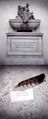 Niccolò Machiavelli's cenotaph
 -
 An Animus projection of Niccolò Machiavelli
 -
 Machiavelli as he appears in Rebellion
 -
 Machiavelli's avatar in Rebellion's character menu


Appearances[edit | edit source]
- Assassin's Creed II (first appearance)
- Assassin's Creed: Renaissance
- Assassin's Creed: Brotherhood
- Assassin's Creed: Brotherhood novel
- Assassin's Creed: Revelations novel
- Assassin's Creed: Embers (mentioned only)
- Assassin's Creed: Recollection
- Assassin's Creed: Initiates (mentioned in Database entry only)
- Assassin's Creed: Identity
- Forlì – A Crimson Sunset (Non-canon)
- Assassin's Creed: Reflections (mentioned only)
- Assassin's Creed: Rebellion
- Assassin's Creed: Brotherhood of Venice
- Echoes of History – Ragnarök (mentioned only)
- Assassin's Creed: Forgotten Temple (Animus projection only)
- Assassin's Creed: Mirage (mentioned in Database entry only)
References[edit | edit source]

| |||||||||||||||||||||||||||||||||||||
| |||||||||||||||||||||||||||||||
| |||||||||||||||||||||||||
| |||||||||||||||||||||||||||||||
| |||||||||||||||||||||||||||||||||||||||||||||||||||||||||||
| ||||||||||||||||||||||||||||
de:Niccolò di Bernardo dei Machiavelli es:Nicolás Maquiavelo fr:Niccolò Machiavelli hu:Niccolò Machiavelli it:Niccolò Machiavelli lt:Niccolò Machiavelli nl:Niccolò Machiavelli pl:Niccolò Machiavelli pt-br:Nicolau Maquiavel ru:Никколо Макиавелли zh:尼可罗·马基亚维利