

Ankh

- "This cross is like a key which allowed a Traveler to pass through the Gates of Eternity..."
- ―Lucius talking about the Ankh to his son.
The Ankh was a Piece of Eden capable of healing the sick and temporarily resurrecting the dead.
History
Egypt
The Ankh was originally owned by Isis, who used its mystical powers to protect the kings of Egypt from harm. At a certain moment Osiris passed away, and Isis used the Ankh to resurrect him for one night. From the sexual intercourse that happened during that night Horus was born.[1]
Roman Empire
200 years later, the Ankh was recovered from a pyramid by Roman plunderers, who sold it to a merchant. The Ankh switched hands many times before eventually ending up in Rome.[1]
At one point, the Ankh came into the hands of the Alaman Assassin, Accipiter. He then passed it on to Aquilus, who brought it back home to his father Lucius. Lucius locked it in a box, but the very same day, Lucius was killed by his associate and secret Templar Caius Fulvus Vultur, who took the Ankh from the box.[2]
Aquilus later retook the Ankh from Vultur when he killed him in Rome. Later, when Aquilus was studying the Ankh with his wife Valeria, they were arrested by Roman soldiers who also took the Ankh from the couple. After an assault on the convoy by Accipiter, Valeria was able to take the Ankh from one of the dead soldiers. She then left for Monteriggioni were she hid the Ankh.[1]
Trivia
- The Ankh, also known as the Key of Life or Crux Ansata, was the ancient Egyptian hieroglyphic character which meant "eternal life". It was often worn by Egyptian gods and pharaohs.
- During the 14th century, the Assassin Lukas Zurburg suspected that the Brothers of the Cross were after the Ankh, as it was said to be located somewhere in Central Europe.
- The Ankh was said to carry the Mark of the Messenger inscribed on it.
Gallery
-
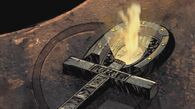 The Ankh and its powers.
 -
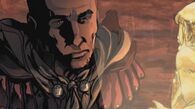 Aquilus speaking with his father.


References
- ↑ 1.0 1.1 1.2 Assassin's Creed (French comic): Tome 3, Accipiter
- ↑ Assassin's Creed (French comic): Tome 2, Aquilus

| ||||||||||||||||||||||||||||||||||||||||||||||||||||||||||||||||||