


House of Borgia: Difference between revisions
imported>Darman36 |
imported>Darman36 No edit summary |
||
| Line 1: | Line 1: | ||
{{Era|Organizations|Templars}}{{WP-REAL}} | {{Era|Organizations|Templars}}{{WP-REAL}} | ||
{{Expand}} | {{Expand}} | ||
{{Quote|I should have stayed in the stables. | {{Quote|I should have stayed in the stables. What a family this Pope has.|Toffana, a servant to the Borgia, 1503.|Assassin's Creed: Brotherhood|Requiem}} | ||
{{Faction Infobox | {{Faction Infobox | ||
|name = House of Borgia | |name = House of Borgia | ||
| Line 19: | Line 19: | ||
During the reign of Alexander VI, the Borgia family was suspected of many crimes, including adultery, simony, theft, bribery, incest, and murder – especially by arsenic poisoning. Because of their constant grasp for power, the Borgia made enemies of the [[House of Medici|Medici]], the [[House of Sforza|Sforza]], and the Dominican friar [[Girolamo Savonarola]], among others. Despite this, they were also patrons of the arts who contributed to the Renaissance. | During the reign of Alexander VI, the Borgia family was suspected of many crimes, including adultery, simony, theft, bribery, incest, and murder – especially by arsenic poisoning. Because of their constant grasp for power, the Borgia made enemies of the [[House of Medici|Medici]], the [[House of Sforza|Sforza]], and the Dominican friar [[Girolamo Savonarola]], among others. Despite this, they were also patrons of the arts who contributed to the Renaissance. | ||
[[Ezio Auditore da Firenze]] became a steadfast resistance against the Borgia in the early 16th century, and [[Assassin | [[Ezio Auditore da Firenze]] became a steadfast resistance against the Borgia in the early 16th century, and [[Assassin apprentice|recruited citizens]] to the [[Assassins|Assassin Order]]'s [[Liberation of Rome|cause]]. As the power of the Borgias declined into disarray, the city of Rome experienced a change, in that the benefits of art and culture finally arrived and its people discovered the prosperity of the Renaissance. | ||
In 1503, with the murder of Rodrigo – courtesy of his son, Cesare – the Borgia family took an instant downfall, and Cesare, the former Captain General of the Papal armies, was arrested and exiled to Spain in 1504. Subsequently, the family lost all of its influence upon the death of Rodrigo, after [[Pius III]] and later [[Julius II]] succeeded him as Pope. | In 1503, with the murder of Rodrigo – courtesy of his son, Cesare – the Borgia family took an instant downfall, and Cesare, the former Captain General of the Papal armies, was arrested and exiled to Spain in 1504. Subsequently, the family lost all of its influence upon the death of Rodrigo, after [[Pius III]] and later [[Julius II]] succeeded him as Pope. | ||
| Line 50: | Line 50: | ||
<gallery captionalign="center" position="center" spacing="small" widths="180"> | <gallery captionalign="center" position="center" spacing="small" widths="180"> | ||
AC2CallixtusIII.jpg|Alfons de Borja | AC2CallixtusIII.jpg|Alfons de Borja | ||
ACB Rodrigo Borgia portrait.jpg|Rodrigo Borgia | |||
ACB Juan Borgia the Elder portrait.jpg|Juan Borgia the Elder | |||
Juan Borgia the Younger.png|Juan Borgia the Younger | Juan Borgia the Younger.png|Juan Borgia the Younger | ||
ACB Cesare Borgia portrait.jpg|Cesare Borgia | |||
ACB Lucrezia Borgia portrait.jpg|Lucrezia Borgia | |||
GiovanniBorgia.jpg|Giovanni Borgia | GiovanniBorgia.jpg|Giovanni Borgia | ||
A Glass of Wine with Caesar Borgia - John Collier.jpg|''A Glass of Wine with Caesar Borgia'' by {{Wiki|John Collier (painter)|John Collier}} | A Glass of Wine with Caesar Borgia - John Collier.jpg|''A Glass of Wine with Caesar Borgia'' by {{Wiki|John Collier (painter)|John Collier}} | ||
Revision as of 22:15, 25 April 2022

|
Ezio, my friend! How may I be of service? This article has a lot of room for expansion. Please improve it with additional information in accordance with the Manual of Style |
The House of Borgia, or Borja, was an Italo-Spanish noble family that came to prominence during the Renaissance, when they acted as a most striking embodiment of the Templar Order. Notable members include Cardinal Rodrigo Borgia and his illegitimate children, Lucrezia and Cesare. In 1492, Rodrigo was elected Pope Alexander VI; as a result of his rule, the city of Rome declined into corruption, theft, murder and oppression.
During the reign of Alexander VI, the Borgia family was suspected of many crimes, including adultery, simony, theft, bribery, incest, and murder – especially by arsenic poisoning. Because of their constant grasp for power, the Borgia made enemies of the Medici, the Sforza, and the Dominican friar Girolamo Savonarola, among others. Despite this, they were also patrons of the arts who contributed to the Renaissance.
Ezio Auditore da Firenze became a steadfast resistance against the Borgia in the early 16th century, and recruited citizens to the Assassin Order's cause. As the power of the Borgias declined into disarray, the city of Rome experienced a change, in that the benefits of art and culture finally arrived and its people discovered the prosperity of the Renaissance.
In 1503, with the murder of Rodrigo – courtesy of his son, Cesare – the Borgia family took an instant downfall, and Cesare, the former Captain General of the Papal armies, was arrested and exiled to Spain in 1504. Subsequently, the family lost all of its influence upon the death of Rodrigo, after Pius III and later Julius II succeeded him as Pope.
Notable members
- Alfons de Borja
- Rodrigo Borgia
- Francisco de Borja
- Juan Borgia the Elder
- Juan Borgia the Younger
- Cesare Borgia
- Lucrezia Borgia
- Jofré Borgia
- Giovanni Borgia
- Battista Borgia
- Francis Borgia
Family tree
| Jofré Llançol i Escrivá | Isabel de Borja | ||||||||||||||||||||||||||||||||||||||||||||||||||
| Rodrigo Borgia | Vannozza dei Cattanei | ||||||||||||||||||||||||||||||||||||||||||||||||||
| Juan Borgia the Younger | Cesare Borgia | Lucrezia Borgia | Perotto Calderon | Jofré Borgia | |||||||||||||||||||||||||||||||||||||||||||||||
| Giovanni Borgia | Maria Amiel | ||||||||||||||||||||||||||||||||||||||||||||||||||
Gallery
-
 Alfons de Borja
 -
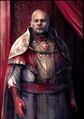 Rodrigo Borgia
 -
 Juan Borgia the Elder
 -
 Juan Borgia the Younger
 -
 Cesare Borgia
 -
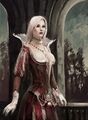 Lucrezia Borgia
 -
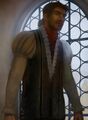 Giovanni Borgia
 -
 A Glass of Wine with Caesar Borgia by John Collier
 -
 Saint Francis Borgia Helping a Dying Impenitent by Francisco Goya


Appearances
- Assassin's Creed II (first appearance)
- Assassin's Creed: Renaissance
- Assassin's Creed: Brotherhood
- Assassin's Creed: Brotherhood novel
- Assassin's Creed: Project Legacy
- Assassin's Creed: Revelations (mentioned only)
- Assassin's Creed: Revelations novel (mentioned only)
- Assassin's Creed: Brotherhood of Venice (non-canon)
- Creed vs Crows (non-canon)


| |||||||||||||||||||||||||||||||||||||
| |||||||||||||||||||||||||||||||||||||
de:Borgia es:Casa de Borgia fr:Famille Borgia hu:Borgia-ház it:Famiglia Borgia ja:ボルジア家 nl:Huis Borgia pl:Rodzina Borgiów pt-br:Casa dos Bórgia ru:Семья Борджиа uk:Сім'я Борджіа zh:博吉亚家族