Welcome to Assassin's Creed Wiki! Log in and join the community.


Heb Sed: Difference between revisions
Jump to navigation
Jump to search
imported>RebeccaAWB m Heading fix, replaced: ==Appearance== → ==Appearances==, ==Reference== → ==References== |
imported>Andrewh7 No edit summary |
||
| Line 2: | Line 2: | ||
{{Stub}} | {{Stub}} | ||
{{Imageneed}} | {{Imageneed}} | ||
[[File: | [[File:ACO CotP Heb Sed.jpg|thumb|250px]] | ||
'''Heb Sed''' was a realm of the [[Egypt]]ian afterlife occupied by the disembodied spirit of [[Ramesses II]]. Depicted as a harsh, war-torn desert filled with countless gigantic pharaonic busts. | '''Heb Sed''' was a realm of the [[Egypt]]ian afterlife occupied by the disembodied spirit of [[Ramesses II]]. Depicted as a harsh, war-torn desert filled with countless gigantic pharaonic busts. | ||
In 38 BCE, the [[Hidden Ones|Hidden One]] [[Mentor]], [[Bayek]], traveled to Heb Sed via the gateway in [[Tomb of Ramesses the Great|tomb]] of Ramesses II, in the [[Valley of the Kings]], having been directed by [[Nefertari (Wife of Ramesses II)|Nefertari]], the wife of Ramesses who manifested as a {{Wiki|Ancient Egyptian concept of the soul#Bâ (personality)|Ba}}. | In 38 BCE, the [[Hidden Ones|Hidden One]] [[Mentor]], [[Bayek]], traveled to Heb Sed via the gateway in [[Tomb of Ramesses the Great|tomb]] of Ramesses II, in the [[Valley of the Kings]], having been directed by [[Nefertari (Wife of Ramesses II)|Nefertari]], the wife of Ramesses who manifested as a {{Wiki|Ancient Egyptian concept of the soul#Bâ (personality)|Ba}}. | ||
==Gallery== | |||
<gallery> | |||
ACO CotP Heb Sed 2.jpg | |||
ACO CotP Heb Sed 3.jpg | |||
ACO Heb Sed Concept Art.jpg|Concept Art of Heb Sed | |||
</gallery> | |||
==Trivia== | ==Trivia== | ||
*Heb Sed refers to the Sed festival, named after the Egyptian deity Wepwawet also known as Sed. Traditionally it was observed on the thirtieth year of a | *Heb Sed refers to the Sed festival, named after the Egyptian deity Wepwawet also known as Sed. Traditionally it was observed on the thirtieth year of a Pharaoh's reign and then every few years after that to celebrate his or her continued rule. Ramesses II, as one of the longest reigning pharaohs, celebrated 14 Sed festivals, more than any other ruler. | ||
==Appearances== | ==Appearances== | ||
Revision as of 08:42, 11 June 2020


|
Where are the paintings? This article is in need of more images and/or better quality pictures from official media in order to achieve a higher status. You can help the Assassin's Creed Wiki by uploading better images on this page. |

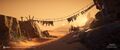
Heb Sed was a realm of the Egyptian afterlife occupied by the disembodied spirit of Ramesses II. Depicted as a harsh, war-torn desert filled with countless gigantic pharaonic busts.
In 38 BCE, the Hidden One Mentor, Bayek, traveled to Heb Sed via the gateway in tomb of Ramesses II, in the Valley of the Kings, having been directed by Nefertari, the wife of Ramesses who manifested as a Ba.
Gallery
-
-

-
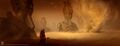 Concept Art of Heb Sed


Trivia
- Heb Sed refers to the Sed festival, named after the Egyptian deity Wepwawet also known as Sed. Traditionally it was observed on the thirtieth year of a Pharaoh's reign and then every few years after that to celebrate his or her continued rule. Ramesses II, as one of the longest reigning pharaohs, celebrated 14 Sed festivals, more than any other ruler.
Appearances
References