


Kanien'kehá:ka: Difference between revisions
imported>Kennyannydenny Removing spoilerHD template |
imported>Darman36 Found info saying Mohawk is from Dutch mangling of Algonquin for "bear people"?? Expanded sources. Can't tell if "Awesomenot" is Q&A dev or fan |
||
| Line 4: | Line 4: | ||
The '''Kanien'kehá:ka''' (English: ''People of the Flint''), also known as the '''Mohawk''', are one of the five original nations that make up the [[Iroquois|Haudenosaunee]], or Iroquois Confederacy. | The '''Kanien'kehá:ka''' (English: ''People of the Flint''), also known as the '''Mohawk''', are one of the five original nations that make up the [[Iroquois|Haudenosaunee]], or Iroquois Confederacy. | ||
Originally from the area that would later become upstate [[New York]] and [[Quebec]], the nation is known as the "elder brothers" and "keepers of the eastern door | Originally from the area that would later become upstate [[New York]] and [[Quebec]], the nation is known as the ''"elder brothers"'' and ''"keepers of the eastern door [of the longhouse]"'' to the other nations of the confederacy. | ||
Due to their overwhelming support of the [[British Army]] during [[French and Indian War|French and Indian]] and the [[American Revolutionary War]]s, they were often subjected to slander, and were nicknamed "Mohawk". This insult originated from the Algonquian language, which means "flesh-eater". | Due to their overwhelming support of the [[British Army]] during [[French and Indian War|French and Indian]] and the [[American Revolutionary War]]s, they were often subjected to slander, and were nicknamed "Mohawk". This insult originated from the Algonquian language, which means "flesh-eater".{{Cite|26 Feb 2021. Translation disputed}} | ||
During the 18th century, the Kanien'kehá:ka village of [[Kanatahséton]] was situated by a lakeside in the Diamond Basin region of the [[Frontier]]. | During the 18th century, the Kanien'kehá:ka village of [[Kanatahséton]] was situated by a lakeside in the Diamond Basin region of the [[Frontier]]. | ||
| Line 13: | Line 13: | ||
At least one of their members, [[Ratonhnhaké:ton]], joined the [[Assassins|Assassin Order]]. His mother, [[Kaniehtí:io]], brought him up alone, until she died underneath burning rubble when he was four years old. Also, one of Ratonhnhaké:ton's childhood friends was [[Kanen'tó:kon]], with which their bond remained together into later life. Meanwhile, [[Oiá:ner]] was the Clan Mother of the Kanien'kehá:ka village of [[Kanatahséton]], and showed Ratonhnhaké:ton the [[Crystal Balls|Crystal Ball]] where he learned of his destiny with the [[Assassins]]. | At least one of their members, [[Ratonhnhaké:ton]], joined the [[Assassins|Assassin Order]]. His mother, [[Kaniehtí:io]], brought him up alone, until she died underneath burning rubble when he was four years old. Also, one of Ratonhnhaké:ton's childhood friends was [[Kanen'tó:kon]], with which their bond remained together into later life. Meanwhile, [[Oiá:ner]] was the Clan Mother of the Kanien'kehá:ka village of [[Kanatahséton]], and showed Ratonhnhaké:ton the [[Crystal Balls|Crystal Ball]] where he learned of his destiny with the [[Assassins]]. | ||
At an undisclosed time, [[Atasá:ta]] was born into the Kanien'kehá:ka, but was trained separately by his Assassin father. After a Templar [[raid]] killed his father, Atasá:ta sought revenge and roamed the cities searching for on those responsible.<ref>''[[Assassin's Creed III]]'' – [[Abstergo Story]]: "Avatar biographies #15: THE SILENT SHADOW_Hack"</ref> In 2012, his [[Genetic memory|genetic memories]] were used by the [[Abstergo Entertainment|entertainment branch]] of the Templar front-company [[Abstergo Industries]] as the basis for the [[Animi Avatars (third stage)|tertiary stage Animi Avatar]] known as the "[[Silent Shadow]]", in order to [[New World Order|influence]] the general public via the [[Animus]] games console.<ref>''Assassin's Creed III'' – [[Multiplayer]]</ref> | |||
==History== | ==History== | ||
===Viking Age=== | ===Viking Age=== | ||
In 876 CE, [[Gorm Kjotvesson]], | In 876 CE, [[Gorm Kjotvesson]], the [[Maegester]] of the [[Wardens of War]] sect the [[Order of the Ancients]], led an expedition in search of the [[Isu]], taking the crystal ball from the Mohawk in [[Karonhiakèn:iate]]<ref>''[[Assassin's Creed: Valhalla]]'' - [[The Hunting Grounds]]</ref> After [[Eivor Varinsdottir]] killed Gorm outside the [[Grand Temple]]<ref>''[[Assassin's Creed: Valhalla]]'' - [[Hunter of Beasts]]</ref>, she returned to Karonhiakèn:iate, where [[Karonhiaktátie']] invited them to recite a [[Norsemen|Norse]] story to the tribe. Before departing, Eivor returned the crystal ball to [[Konwahawíhshon]], the leader of the tribe.<ref>''[[Assassin's Creed: Valhalla]]'' - [[Hunters Repast]]</ref> | ||
===American Revolutionary War=== | ===American Revolutionary War=== | ||
During the American Revolutionary War, due to unresolved conflicts with settlers encroaching into the Mohawk Valley, and outstanding treaty obligations to the [[United Kingdom|British]] Crown, the Mohawk fought against the [[Continental Army]]. However, Ratonhnhaké:ton's village remained neutral to the fighting, as they were ordered by the [[Isu|First Civilization]] member [[Juno]] to protect the [[Grand Temple]].<ref | During the American Revolutionary War, due to unresolved conflicts with settlers encroaching into the Mohawk Valley, and outstanding treaty obligations to the [[United Kingdom|British]] Crown, the Mohawk fought against the [[Continental Army]]. However, Ratonhnhaké:ton's village remained neutral to the fighting, as they were ordered by the [[Isu|First Civilization]] member [[Juno]] to protect the [[Grand Temple]].<ref>''Assassin's Creed III'' – [[Something to Remember]]</ref> | ||
== | ==Behind the scenes== | ||
While no official reason was given for why the Kanien'kehá:ka speak English throughout all episodes of ''[[The Tyranny of King Washington]]'', it was suggested in a 2013 Q&A session on ''{{Wiki|Raptr}}'' that the developers felt the Kanien'kéha language took too long to translate and present on screen, and that the primary game had already presented the language in an authentic manner, so it was unnecessary for them to do it again.<ref>{{Cite web|accessdate=27 February 2021|archivedate=11 September 2015|archiveurl=https://web.archive.org/web/20150911015135/http://raptr.com/UbiGabe/news/5125780515d40ed291/raptr-q-a-assassins-creed|author="Awesomenot"|date=20 February 2013|publisher=''{{Wiki|Raptr}}''|title=Raptr Q&A: Assassin's Creed III and The Tyranny of King Washington|url=http://raptr.com/UbiGabe/news/5125780515d40ed291/raptr-q-a-assassins-creed|quote=I don't claim to know the truth on this matter, but I would say it was probably to save a little time and money. The first episode they probably went a little overboard on graphics and storytelling(I think they made the right choice), and probably didn't have much budget left.}}</ref> | |||
==Gallery== | ==Gallery== | ||
Revision as of 05:00, 27 February 2021

The Kanien'kehá:ka (English: People of the Flint), also known as the Mohawk, are one of the five original nations that make up the Haudenosaunee, or Iroquois Confederacy.
Originally from the area that would later become upstate New York and Quebec, the nation is known as the "elder brothers" and "keepers of the eastern door [of the longhouse]" to the other nations of the confederacy.
Due to their overwhelming support of the British Army during French and Indian and the American Revolutionary Wars, they were often subjected to slander, and were nicknamed "Mohawk". This insult originated from the Algonquian language, which means "flesh-eater". [citation needed]
During the 18th century, the Kanien'kehá:ka village of Kanatahséton was situated by a lakeside in the Diamond Basin region of the Frontier.
Notable members
At least one of their members, Ratonhnhaké:ton, joined the Assassin Order. His mother, Kaniehtí:io, brought him up alone, until she died underneath burning rubble when he was four years old. Also, one of Ratonhnhaké:ton's childhood friends was Kanen'tó:kon, with which their bond remained together into later life. Meanwhile, Oiá:ner was the Clan Mother of the Kanien'kehá:ka village of Kanatahséton, and showed Ratonhnhaké:ton the Crystal Ball where he learned of his destiny with the Assassins.
At an undisclosed time, Atasá:ta was born into the Kanien'kehá:ka, but was trained separately by his Assassin father. After a Templar raid killed his father, Atasá:ta sought revenge and roamed the cities searching for on those responsible.[1] In 2012, his genetic memories were used by the entertainment branch of the Templar front-company Abstergo Industries as the basis for the tertiary stage Animi Avatar known as the "Silent Shadow", in order to influence the general public via the Animus games console.[2]
History
Viking Age
In 876 CE, Gorm Kjotvesson, the Maegester of the Wardens of War sect the Order of the Ancients, led an expedition in search of the Isu, taking the crystal ball from the Mohawk in Karonhiakèn:iate[3] After Eivor Varinsdottir killed Gorm outside the Grand Temple[4], she returned to Karonhiakèn:iate, where Karonhiaktátie' invited them to recite a Norse story to the tribe. Before departing, Eivor returned the crystal ball to Konwahawíhshon, the leader of the tribe.[5]
American Revolutionary War
During the American Revolutionary War, due to unresolved conflicts with settlers encroaching into the Mohawk Valley, and outstanding treaty obligations to the British Crown, the Mohawk fought against the Continental Army. However, Ratonhnhaké:ton's village remained neutral to the fighting, as they were ordered by the First Civilization member Juno to protect the Grand Temple.[6]
Behind the scenes
While no official reason was given for why the Kanien'kehá:ka speak English throughout all episodes of The Tyranny of King Washington, it was suggested in a 2013 Q&A session on Raptr that the developers felt the Kanien'kéha language took too long to translate and present on screen, and that the primary game had already presented the language in an authentic manner, so it was unnecessary for them to do it again.[7]
Gallery
-
 Kaniehtí:io
 -
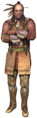 Kanen'tó:kon
 -
 Ratonhnhaké:ton
 -
 Oiá:ner
 -
 Atasá:ta
 -
 Io:nhiòte


Appearances
- Assassin's Creed III (first appearance)
- Assassin's Creed: Valhalla
References
- ↑ Assassin's Creed III – Abstergo Story: "Avatar biographies #15: THE SILENT SHADOW_Hack"
- ↑ Assassin's Creed III – Multiplayer
- ↑ Assassin's Creed: Valhalla - The Hunting Grounds
- ↑ Assassin's Creed: Valhalla - Hunter of Beasts
- ↑ Assassin's Creed: Valhalla - Hunters Repast
- ↑ Assassin's Creed III – Something to Remember
- ↑ "Awesomenot" (20 February 2013). Raptr Q&A: Assassin's Creed III and The Tyranny of King Washington. Raptr. Archived from the original on 11 September 2015. Retrieved on 27 February 2021. "I don't claim to know the truth on this matter, but I would say it was probably to save a little time and money. The first episode they probably went a little overboard on graphics and storytelling(I think they made the right choice), and probably didn't have much budget left."
| |||||||||||||||||||||||||||||||||||||||||||||||||||||||||
es:Kanien'kehá:ka
fr:Mohawks
hu:Kanien'kehá:ka
it:Kanien'kehá:ka
nl:Kanien'kehá:ka
pl:Kanien'kehá:ka
pt-br:Kanien'kehá:ka
ru:Ганьягэха