

Afghanistan: Difference between revisions
imported>Jasca Ducato mNo edit summary |
imported>Sol Pacificus Rewrite. The former version confusingly seemed to conflate the establishment of the Emirate with the founding of the state which took place under an earlier dynasty in 1709 |
||
| Line 1: | Line 1: | ||
{{Era|Locations}} | {{Era|Locations}} | ||
{{WP-REAL}} | {{WP-REAL}} | ||
'''Afghanistan''' is a landlocked country located in south central [[Asia]] between [[Iran]] and [[India]] prior to [[Pakistan]] splintering off from the latter. The region was historically the crossroads between West, Central, South, and East Asia and served as the frontier of [[Alexander the Great]]'s empire in 330 BCE upon his conquest of the [[Achaemenid Empire]]. | |||
Although various peoples including the Iranians, the {{wiki|Bactria|Bactrians}}, the [[Greece|Greeks]], the {{wiki|Kushan Empire|Kushan}}, and the Scythians settled and forged kingdoms in the region over the millennia, the modern nation of the Afghans did not arise until 1709 with the {{wiki|Hotak dynasty}}. Subsequently, the country was embroiled in a {{wiki|Great Game|heated contest}} between the European empires of [[Russia]] and the [[United Kingdom]] during the reign of the {{wiki|Barakzai dynasty}} in the 19th century. As a result of the Afghans' fierce resistance in the [[First Anglo-Afghan War]], the state developed a reputation as the "unconquerable" "graveyard of empires", a status it would carry into successive centuries to the present day. | |||
==History== | ==History== | ||
In 1838, the Emirate of Afghanistan was invaded by the [[British Empire|British]] [[East India Company]] under the auspices of the Governor-General of India, [[George Eden, 1st Earl of Auckland]] in what would be the first of three Anglo-Afghan Wars. Although the technologically superior British expected a swift and decisive conquest, the conflict proved to be a bloodbath.<ref name="Database: First Anglo-Afghan War">''[[Assassin's Creed Chronicles: India]]'' – [[Database: The First Anglo-Afghan War]]</ref> | |||
Simultaneously, the expedition also served as a medium through which the [[British Rite of the Templar Order|British Rite]] of the [[Templars|Templar Order]] could uncover more [[Isu]] sites in their quest for power. This was the chief motivation of Major General [[William Sleeman]] in capturing the [[Herat Citadel|Citadel]] of [[Herat]] in 1841, having located a [[Herat Temple|Precursor temple]] beneath it through a [[Precursor box]].<ref name="The Enemy Revealed">''[[Assassin's Creed Chronicles: India]]'' – [[The Enemy Revealed]]</ref> An attempt by the [[Assassins|Assassin]] [[Arbaaz Mir]] of the [[Indian Brotherhood of Assassins|Indian Brotherhood]] to thwart his discovery in the midst of an Afghan [[Siege of Herat|siege]] to retake the castle failed when he was captured by Sleeman's troops.<ref name="The Silent Assist">''[[Assassin's Creed Chronicles: India]]''</ref><ref name="What Lies Beneath">''[[Assassin's Creed Chronicles: India]]''</ref> | |||
Regardless, the First Anglo-Afghan War ended in the catastrophic destruction of the [[British Army]] during a retreat from the capital city of [[Kabul]] to {{wiki|Jalalabad}} led by Major General {{wiki|William George Keith Elphinstone|William Elphinstone}}. The future [[Templars|Templar]] [[Cavanagh]] was serving as a corporal in this detachment at the time but deserted a day into the conflict alongside Colonel [[Walter Lavelle]] to ensure his own survival.<ref name="Underworld">''[[Assassin's Creed: Underworld]]''</ref> | |||
==Gallery== | ==Gallery== | ||
| Line 16: | Line 17: | ||
</gallery> | </gallery> | ||
== | ==Appearances== | ||
*''[[Assassin's Creed Chronicles: India]]'' | *''[[Assassin's Creed Chronicles: India]]'' | ||
*''[[Assassin's Creed: Underworld]]'' | *''[[Assassin's Creed: Underworld]]'' | ||
==References== | |||
{{Reflist}} | |||
{{ACC}} | {{ACC}} | ||
{{ACUW}} | {{ACUW}} | ||
Revision as of 15:21, 15 December 2018
Afghanistan is a landlocked country located in south central Asia between Iran and India prior to Pakistan splintering off from the latter. The region was historically the crossroads between West, Central, South, and East Asia and served as the frontier of Alexander the Great's empire in 330 BCE upon his conquest of the Achaemenid Empire.
Although various peoples including the Iranians, the Bactrians, the Greeks, the Kushan, and the Scythians settled and forged kingdoms in the region over the millennia, the modern nation of the Afghans did not arise until 1709 with the Hotak dynasty. Subsequently, the country was embroiled in a heated contest between the European empires of Russia and the United Kingdom during the reign of the Barakzai dynasty in the 19th century. As a result of the Afghans' fierce resistance in the First Anglo-Afghan War, the state developed a reputation as the "unconquerable" "graveyard of empires", a status it would carry into successive centuries to the present day.
History
In 1838, the Emirate of Afghanistan was invaded by the British East India Company under the auspices of the Governor-General of India, George Eden, 1st Earl of Auckland in what would be the first of three Anglo-Afghan Wars. Although the technologically superior British expected a swift and decisive conquest, the conflict proved to be a bloodbath.[1]
Simultaneously, the expedition also served as a medium through which the British Rite of the Templar Order could uncover more Isu sites in their quest for power. This was the chief motivation of Major General William Sleeman in capturing the Citadel of Herat in 1841, having located a Precursor temple beneath it through a Precursor box.[2] An attempt by the Assassin Arbaaz Mir of the Indian Brotherhood to thwart his discovery in the midst of an Afghan siege to retake the castle failed when he was captured by Sleeman's troops.[3][4]
Regardless, the First Anglo-Afghan War ended in the catastrophic destruction of the British Army during a retreat from the capital city of Kabul to Jalalabad led by Major General William Elphinstone. The future Templar Cavanagh was serving as a corporal in this detachment at the time but deserted a day into the conflict alongside Colonel Walter Lavelle to ensure his own survival.[5]
Gallery
-
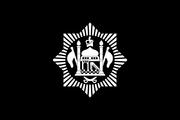 Flag of the Emirate
.svg.png)
Appearances
References
| |||||||||||||||||||||||||