


Venice
- "Ah, Venezia! What other place is as beautiful, as stable, as perfect?"
- ―Alvise da Vilandino to Ezio Auditore and Leonardo da Vinci regarding the city, 1481.[src]
Venice (Italian: Venezia) is a city located in northern Italy. During the 15th century, Venice was the capital and largest city of the Most Serene Republic of Venice, and consisted of five districts: San Polo, San Marco, Dorsoduro, Castello, and Cannaregio.
Historically founded by refugees from the Hunnic and Germanic invasion of Padua, Aquileia, and Altino, Venice developed into a major trade and naval power in southern Europe, becoming one of the wealthiest cities in the world, and by the year 1499 was engaged in sporadic conflict with the Ottoman Empire.[1]
History
Establishment
Likely established sometime around the late 7th century, Venice's lagoon-locked location was the result of Byzantine settlers attempting to hide from Lombard invaders. By the Middle Ages, the city had grown into a great naval power. Its strategic position at the top of the Adriatic meant that ships taking goods inland had to go through Venice, filling its coffers with money and commerce.

Entering the late Middle Ages, Venice exercised influence over both its neighboring states and the Church. When the Fourth Crusade rolled around in 1202, the crusaders required transport on Venice's ships, which the Venetian Doge, Enrico Dandolo, agreed on the condition that the crusaders retake the Dalmatian city of Zadar and then capture Constantinople.
As Venice's wealth grew, so did its fleet. Through sea battles Venice gained Byzantine territory, Hungarian territory, and destroyed the Genoese fleet. Venice's fortunes were so entwined with the sea that every year the Doge would throw a ring into the lagoon while saying in Latin: "We wed thee, sea, in the sign of the true and everlasting Lord." Despite much eye-raising about the godliness of sea-human relations, the Pope sanctioned the marriage.
Early Assassin presence
As early as the 13th century, Venice had a notable Assassin presence; the area surrounding Venice was home to an Assassin and his son – Domenico Auditore. Both enjoyed the patronage of the famed explorer Marco Polo, an ally of the Assassins.[2] Assassins remained present in the city up into the 15th century, occupying positions of command amongst the thieves, mercenaries, and courtesans of the city.[1]
Renaissance
Templar underground
- "What are your masters plotting? Speak! As God is my witness I will cut your throat!"
- ―Giovanni threatening the Barbarigo courier.[src]

After the Templar orchestrated assassination of Galeazzo Maria Sforza in 1476, Giovanni Auditore da Firenze departed for Venice after finding a Venetian coin in Giovanni Andrea Lampugnani's possession. Arriving in Venice, Giovanni Auditore assassinated a guard at the Doge's residential palace, the Palazzo Ducale, and made his way inside the building. Once inside, Giovanni spied on a meeting between two members of the Barbarigo family, and a courier, who was set to carry a letter to their master. Giovanni tailed the courier through the city streets, eventually attacking him in a deserted square. Giovanni fought fiercely with the courier, and eventually pressed his hidden blade to the courier's neck, demanding to know what his masters were plotting. However, the courier claimed that his life was not Giovanni's to take, and that his secrets would be gone with himself. He then told Giovanni to "go to Hell", before being impaled by the latter's blade. Giovanni then took the letter the courier had in his possession, and departed from the city.[3]
Templar allegiances
- "I am two steps from the Doge himself. I am beside him day and night! You WISH you could be where I am!"
- ―Carlo to Silvio about his powerful influence.[src]

Following the Templar failure to usurp control of Florence during the Pazzi conspiracy in 1478, Grand Master Rodrigo Borgia and his allies – the Barbarigo family – stepped up their plans to take control of Venice. Influencing powerful members of the Venetian government, such as Carlo Grimaldi, the Templars built up a network of allegiances in the city. However, these allegiances were severed as the Assassin, Ezio Auditore da Firenze, began to hunt these members of the Templar Order throughout Venice.[1]
Hunting the Templars
- "There are still others I must hunt, Signore. They're already digging their claws into the heart of Venezia."
- ―Ezio to Lorenzo de' Medici after the events of the Pazzi Conspiracy.[src]

Ezio Auditore arrived in the city in 1481, and quickly allied himself with the Thieves Guild based in Venice. Ezio and the thieves gradually proceeded with a plan to assassinate the powerful Venetian merchant, Emilio Barbarigo. Once their preparations had been completed, Ezio left for the Palazzo della Seta, the residence of Emilio. Before slaying the corrupt merchant, however, Ezio observed Emilio meeting with a government official, who informed the former of a Templar meeting to take place in three days at Santo Stefano.[1]
After assassinating Emilio, Ezio tailed the Templar meeting, and overheard discussions of a plan to assassinate the Doge of Venice, Giovanni Mocenigo. Confused and worried, Ezio decided to meet with Antonio de Magianis, leader of the Thieves in Venice, and the two attempted to get Ezio inside of the Doge's palace using a flying machine created by Leonardo da Vinci. However, the Assassin was unable to reach the Doge in time and prevent his death, but Ezio did manage to assassinate a fleeing Carlo Grimaldi. After this ordeal, the Templars placed one of their own, Marco Barbarigo, on the Venetian throne.[1]
Once brought in as the new Doge, Marco was remarked as a terrible leader, and one who never left his Palazzo, for fear of the Assassin, Ezio Auditore.

Marco could not evade the Assassin forever, though, and in 1486 he hosted the annual private ball on Carnevale for select guests chosen by the Doge. However, there was a golden mask that allowed one person entrance to the private party, as long as they were able to win it through a series of games.[1]
With this in mind, another one of Ezio's allies in the city, Teodora Contanto, brought Ezio to the Carnevale games, where he competed in four different games, utilizing his special skills to win each game. Despite his victory, Silvio Barbarigo and his bodyguard, Dante Moro knew of Ezio's plan, and bribed the host of the games to give the mask to Dante. Angry and desperate, Ezio then headed back and met with Teodora and Antonio, who advised him to steal the mask off of Dante, rather than Ezio's idea of killing him. After stealing the golden mask, Ezio headed for the Doge's party, and was allowed in without any hesitation by the guards. However, Dante arrived just after Ezio, and searched the crowd, unsuccessfully, for the Assassin. Ezio then emerged as Marco spoke on a boat offshore, and shot him with his hidden gun.[1]

Following the assassination of Marco Barbarigo and the ascension to power of his brother, Agostino Barbarigo, an ally of the Assassins, Ezio began to search for Silvio Barbarigo, cousin to Agostino, and his bodyguard Dante Moro. Ezio learned that the two had barricaded themselves within a shipyard with two hundred mercenaries accompanying them. In need of support and an ally, Ezio freed the notorious Venetian fighter and strategist, Bartolomeo d'Alviano, from a small prison in the military district, and the two plotted to rid the city of Silvio and Dante.[1]
After discussing a plan to kill both Silvio and Dante, Ezio liberated Bartolomeo's captured mercenaries, and then set them up in strategic points around the city in order to create chaos to cause Silvio to dispatch some of his men. With Silvio's mercenaries engaged in battles around the city, Bartolomeo and Ezio attacked Arsenale, with Bartolomeo battling Dante and Ezio fending off the guards at the gates. Eventually, Silvio ordered Dante back to the shipyard and sent out his reinforcements, as their Templar ship was about to set sail. However, Bartolomeo and his men fought off Silvio's reinforcements, and bought Ezio enough time to assassinate the two Templars.[1]
Although Venice was finally freed from its Templar oppression, Ezio learned from a dying Dante that the Templar plot to acquire Venice had merely been a distraction for the Assassins', so that the Templars might safely dispatch their vessel to Cyprus.[1]
Removal of Agostino
Between 1502 and 1503 Francesco Vecellio and his team of Assassins traveled to Venice to poison the corrupted and Borgia-influenced Agostino Barbarigo. Before they left, he made sure that Agostino's successor was on the Assassins' side.[4]
Carnevale
Venice hosted the famed Carnevale celebrations annually in the southern section of the city. Traditionally, the citizens of Venice would don masks, allowing them to indulge in a variety of entertainments wilder than would normally be socially acceptable. Typically, Carnevale was celebrated with fireworks, carnival performers, and a series of games, with the winner of these games being awarded a golden mask that granted entrance to the Doge's personal ball.[1]
Ezio's Wedding
After Ezio's departure from Altair's library, he retired from the front lines of the Assassin Order and went to Venice with Sofia Sartor to be married.
Modern Times
By 2012, the centre of the San Marco district was used as a simulated training ground by Abstergo Industries, in order to train their recruits.
Landmarks
- Cannaregio District
- San Polo District

- San Marco District
- Santo Stefano
- Torre dell'Orologio
- Campanile di San Marco
- Palazzo Ducale di Venezia
- Basilica di San Marco
- Castello District
- Scuola Grande di San Marco
- San Giovanni e Paolo
- Arsenale di Venezia
- San Zaccaria
- San Pietro di Castello
- Dorsoduro District
Trivia
- Even after the events of the Carnevale, the citizens will continue to celebrate it for the remainder of the game, albeit without fireworks, in the district of Dorsoduro.
- The guards in Venice are far more skilled than those in Florence, and are also better equipped.
- Venice is the only city where horses are unable to be used in Assassin's Creed II.
- On the border of the San Polo and San Marco districts, there are two painters who are looking out across the river, yet are both painting a portrait of a person.
- The heart of the San Marco district in the city is host to a multiplayer map in Assassin's Creed: Brotherhood and Assassin's Creed: Revelations.
- Along the many canals, there are many free running opportunities due to the pieces of wood jutting out of the buildings.
Gallery
-
An in-game map of Venice.
-
 The Grand Canal concept art during Carnevale.
 -
Piazza San Marco, the principal square of Venice.
-
The Arsenale di Venezia.
-
Ezio on the Rialto Bridge overlooking the Grand Canal.
-
Ezio silently takes out a guard.
-
Ezio diving into the water near the Palazzo Ducale.
-
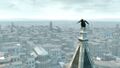 Venice, as viewed from a tower viewpoint.
 -
 Venice, as it appears in Assassin's Creed: Brotherhood.
 -
A map of Venice in the Assassin's Creed: Brotherhood multiplayer.
-
A skirmish in Venice.
-
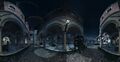 Panoramic view of the marketplace in Venice.
 -
 Venetian waterways at night.
 -
 A panoramic view of the Basilica di San Marco.


References
| ||||||||||||||||||||||||||||
| |||||||||||||||||||||||||||||||||||||
- Italy
- Venice
- Cities of Europe
- Assassin's Creed: Lineage Locations
- Assassin's Creed II Locations
- Assassin's Creed II: Discovery Locations
- Assassin's Creed: Brotherhood Multiplayer Locations
- Assassin's Creed: Project Legacy Locations
- Assassin's Creed: Revelations Multiplayer Locations
- Assassin's Creed: Revelations (Novel) Locations