


Venice

|
"Information learned is more valuable than information given" This article is currently being reworked by Nostalgia AC as part of their apprenticeship. We ask that edits to this article are only minor or grammatical in nature until this warning is removed in order to not disrupt the major revamp. Should you have any questions regarding the revamp, please contact the apprentice at work's Mentor. |
- "Ah, Venezia! What other place is as beautiful, as stable, as perfect?"
- ―Alvise da Vilandino to Ezio and Leonardo regarding the city.[src]
Venice (Italian: Venezia) is a city located in northern Italy. During the 15th century, Venice was the capital and largest city of the Most Serene Republic of Venice, and consisted of five districts: San Polo, San Marco, Dorsoduro, Castello, and Cannaregio.
Historically founded by refugees from the Hunnic and Germanic invasion of Padua, Aquileia, and Altino, Venice developed into a major trade and naval power in southern Europe, becoming one of the wealthiest cities in the world, and by the year 1499 was engaged in sporadic conflict with the Ottoman Empire.[1]
History
13th century
Even during the 13th century, Venice had a notable Assassin presence; the area surrounding Venice was home to an Assassin and his son – Domenico Auditore. Both enjoyed the patronage of the famed explorer Marco Polo, an ally of the Assassins.[2] Assassins remained present in the city up into the 15th century, occupying positions of command amongst the thieves, mercenaries, and courtesans of the city.[1]
Renaissance
Templar allegiances
Following the Templar failure to usurp control of Florence during the Pazzi conspiracy, Grand Master Rodrigo Borgia and his allies – the Barbarigo family – stepped up their plans to take control of Venice. Influencing powerful members of the Venetian government, such as Carlo Grimaldi, the Templars built up a network of allegiances in the city. However, these allegiances were severed as the Assassin, Ezio Auditore da Firenze, began to hunt members of the Templar Order.
Hunting the Templars in Venice
- Main article: Hunt in Venice
Ezio Auditore arrived in the city in 1481, and quickly allied himself with the Thieves Guild based in Venice. Ezio and the thieves gradually proceeded with a plan to assassinate the powerful Venetian merchant, Emilio Barbarigo. Before slaying the corrupt merchant, however, Ezio observed Emilio meeting with a government official, who informed Emilio of a Templar meeting to take place in three days at Santo Stefano. After assassinating Emilio, Ezio stalked the Templar meeting, and overheard discussions of a plan to assassinate the Doge of Venice, Giovanni Mocenigo. Ezio met with Antonio de Magianis, leader of the Thieves in Venice, and the two attempted to get Ezio inside of the Doge's palace, the Palazzo Ducale using a Flying Machine created by Leonardo da Vinci. However, the Assassin was unable to reach the Doge in time and prevent his death, but Ezio did manage to assassinate a fleeing Carlo Grimaldi. After this ordeal, the Templars placed one of their own, Marco Barbarigo, on the Venetian throne. [1]
Following the assassination of Marco Barbarigo and the ascension of his brother Agostino, an ally to the Assassins, Ezio Auditore chased down the last remaining Barbarigos Silvio, cousin to Agostino, and his bodyguard Dante Moro to L'Arsenale di Venezia and liberated the city's military district. It was here that the Assassin learned that the Templar plot to acquire Venice had merely been a distraction for the Assassins', so that the Templars might safely dispatch their vessel to Cyprus.[1] Between 1502 and 1503 Francesco Vecellio and his team of Assassins traveled to Venice to poison the now corrupt and Borgia-influenced Agostino Barbarigo. Before they left he made sure that Agostino's successor was on the Assassins' side.
Landmarks

The following list comprises all the Venetian landmarks of significance:
- Cannaregio District
- San Polo District
- San Marco District
- Castello District
- San Pietro di Castello
- Dorsoduro District
Carnevale
Venice hosted the famed Carnevale celebrations annually in the southern section of the city. Traditionally, the citizens of Venice would don masks, allowing them to indulge in a variety of entertainments wilder than would normally be socially acceptable. Typically Carnevale was celebrated with fireworks, carnival performers, and a series of games, with the winner of these games being awarded a Golden Mask that granted entrance to the Doge's personal ball.
Assassination targets
- Emilio Barbarigo; Corrupt merchant of Venice (DNA Sequence 7)
- Carlo Grimaldi; Member of the Council of Ten (DNA Sequence 8)
- Marco Barbarigo; Doge of Venice (DNA Sequence 9)
- Silvio Barbarigo; Member of the Supreme Tribunal of Venice (DNA Sequence 10)
- Dante Moro; Personal bodyguard of Marco and Silvio Barbarigo (DNA Sequence 10)
Database entry
Likely established sometime around the late 7th Century, Venice's lagoon-locked location was the result of Byzantine settlers attempting to hide from Lombard invaders. By the Middle Ages, the city had grown into a great naval power. Its strategic position at the top of the Adriatic meant that ships taking goods inland had to go through Venice, filling its coffers with money and commerce.
Entering the late Middle Ages, Venice exercised influence over both its neighbouring states and the Church. When the Fourth Crusade rolled around in 1202, the crusaders required transport on Venice's ships, which the Venetian Doge, Enrico Dandolo, agreed on the condition that the crusaders retake the Dalmatian city of Zadar and then capture Constantinople.
When Constantinople fell, the city was sacked by the Venetian fleet, which stole, among other things, four bronze horses as ornaments for the Basilica San Marco. Now, that's what I call a faith-based initiative.
As Venice's wealth grew, so did its fleet. Through sea battles she gained Byzantine territory, Hungarian territory and destroyed the Genoese fleet. Venice's fortunes were so entwined with the sea that every year the Doge would through a ring into the lagoon while saying in Latin: "We wed thee, sea, in the sign of the true and everlasting Lord". Despite much eye-raising about the godliness of sea-human relations, the Pope sanctioned the marriage.
By the end of the 15th Century, Venice was quite possibly the wealthiest city in the world and the second-largest city in Europe after Paris, but the rest of Europe had had enough. France, Spain, Austria and Hungary joined together in the League of Cambrai, partnering with Pope Julius II to crush Venice.
But Venice was able to weather the storm, ultimately keeping her territories even after several disastrous defeats. But she would never expand again. Turkey attacked in the 18th Century, and Venice began a long decline which ultimately ended in 1797, when Austria took control of the Republic.[1]
Trivia
- Even after the events of the Carnevale, the citizens will continue to celebrate it for the remainder of the game, albeit without fireworks, in the district of Dorsoduro.
- The enemies in Venice are far more skilled than the enemies in Florence, and are better equipped.
- Venice is the only city where horses are not able to be used in Assassin's Creed II.
- On the border of the San Polo and San Marco districts, there are two painters who are looking out across the river, yet are both painting a portrait of a person.
- The heart of the San Marco district in the city is host to a multiplayer map.
Appearances
- Assassin's Creed: Lineage
- Assassin's Creed II
- Assassin's Creed: Renaissance
- Assassin's Creed: Brotherhood (flashback only)
References
Gallery
-
Map of Venice
-
Piazza San Marco, the principal square of Venice
-
 The Grand Canal, concept art during the Venetian Masquerade Carnival
 -
Inside of the Basilica di San Marco
-
The Arsenal Shipyard of Venice
-
 Basilica di San Marco, principally used as the 'chapel' for the Venetian rulers
 -
Ezio on the Rialto Bridge looking at the Grand Canal
-
Ezio performing a leap of faith beside a canal.
-
Ezio silently takes out a guard
-
Concept art of Venice with the Bascilia di San Marco in the background
-
Ezio diving into the water near the Palazzo Ducale
-
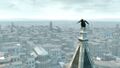 Venice viewed from a tower viewpoint
 -
 Venice as it appears in Assassin's Creed: Brotherhood.
 -
Map of Venice in Assassin's Creed: Brotherhood multiplayer.
-
A skirmish in Venice(ACB Multiplayer)
-
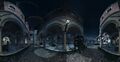 Panoramic view of the marketplace in Venice.
 -
Panoramic view of the waterways around Venice.
-
 Venice waterways at night.
 -
Panoramic view of Carnevale.
-
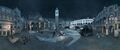 Basilica di San Marco Square Panoramic.


| ||||||||||||||||||||||||||||
| |||||||||||||||||||||||||||||||||||||