


Chrétien Lafrenière: Difference between revisions
imported>Bovkaffe No edit summary |
imported>LoudHouseFan19 No edit summary |
||
| Line 27: | Line 27: | ||
Shortly afterwards, Lafrenière discovered that a faction of Templars was planning to kill de la Serre and take over in a coup on the night of Élise's induction into the Order. He wrote a letter of warning and sent his messenger, [[Perrault]], to deliver it to the Grand Master in person. However, the letter was passed on to de la Serre's adoptive son, Arno Dorian, who did not know of the letter's true importance and merely left it in the Grand Master's office. During the induction party at the [[Palace of Versailles]], Lafrenière spoke with fellow Templars Lévesque and [[Louis-Michel le Peletier]], remarking that they had not seen each other in a long time. Later that night, de la Serre, not having been warned, was murdered in the palace gardens by Sivert and the [[Roi des Thunes]].<ref name="ACU"/> | Shortly afterwards, Lafrenière discovered that a faction of Templars was planning to kill de la Serre and take over in a coup on the night of Élise's induction into the Order. He wrote a letter of warning and sent his messenger, [[Perrault]], to deliver it to the Grand Master in person. However, the letter was passed on to de la Serre's adoptive son, Arno Dorian, who did not know of the letter's true importance and merely left it in the Grand Master's office. During the induction party at the [[Palace of Versailles]], Lafrenière spoke with fellow Templars Lévesque and [[Louis-Michel le Peletier]], remarking that they had not seen each other in a long time. Later that night, de la Serre, not having been warned, was murdered in the palace gardens by Sivert and the [[Roi des Thunes]].<ref name="ACU"/> | ||
===Opposing=== | ===Opposing the radical Templars=== | ||
The French Revolution broke out shortly afterwards, and Lafrenière was forced into hiding from the radical faction of the Templar Order. He learned that it was headed by François-Thomas Germain, a silversmith who had been expelled from the Order by de la Serre years earlier. Sivert, Lévesque and le Peletier were also supporters of Germain, advancing the revolution in the hopes of steering France towards a [[Capitalism|capitalist]] society in which the Templars would be able to control the populace in a subtle manner.<ref name="ACU"/> | The French Revolution broke out shortly afterwards, and Lafrenière was forced into hiding from the radical faction of the Templar Order. He learned that it was headed by François-Thomas Germain, a silversmith who had been expelled from the Order by de la Serre years earlier. Sivert, Lévesque and le Peletier were also supporters of Germain, advancing the revolution in the hopes of steering France towards a [[Capitalism|capitalist]] society in which the Templars would be able to control the populace in a subtle manner.<ref name="ACU"/> | ||
Revision as of 02:06, 6 January 2018
Chrétien Lafrenière (1730 – 1791) was a member of the Parisian Rite of the Templar Order, active during the final years of the Ancien Régime and the early part of the French Revolution. An advisor and a staunch supporter of Grand Master François de la Serre, he tried to prevent his murder by François-Thomas Germain and later resisted Germain's takeover of the Order.
In March 1791, Lafrenière prepared to attack Germain and his radical faction of the Order at the Hôtel de Beauvais. However, Germain had manipulated the Assassin Arno Dorian into believing that Lafrenière was behind the death of de la Serre, the adoptive father of Arno. He subsequently assassinated Lafrenière at the Holy Innocents' Cemetery of Paris as the latter was rallying his supporters.
Biography
Early life and service to the Templars
Lafrenière was born as the third son of a rich spice importer in 1730, and was destined to become a priest. He studied at the College of Sorbonne and entered the seminary school in 1750. However, Lafrenière was forced to leave the seminary and take over the family business when his father and brothers died in a shipwreck off the coast of Mauritius.[1]
Lafrenière spent most of his income joining and founding various religious groups and secret societies. Around this time, he became a member of the Templar Order, serving as an advisor to Grand Master François de la Serre.[1] Lafrenière and the other advisors, including Charles Gabriel Sivert and Marie Lévesque, were referred to as "the Crows" by the Grand Master's daughter, Élise, for their long black coats, dark felt hats and "eyes that never smiled".[2]
They held meetings with de la Serre at his estate in Versailles, but rarely agreed with the Grand Master on the Order's course of action, especially when it came to the Assassin Brotherhood and the political situation in France. During meetings, only the Grand Master's wife, Julie, would support him. Nonetheless, while the other advisors generally held de la Serre in low regard and secretly coveted the position of Grand Master for themselves and their families, Lafrenière was always loyal to the Grand Master despite their disagreements.[2]
In the spring of 1774, Julie and Élise were attacked on a visit to Paris by Bernard Ruddock and another assailant, and upon returning to Versailles, the Templars convened to discuss a response. Lafrenière and the other advisors were convinced that the Assassins were responsible, and urged de la Serre to strike back at them and start open conflict with the Brotherhood. Unbeknownst to them, Ruddock was a former Assassin hired by the British Templar Peter Carroll and his wife, and the attack was not related to the Assassins. Though de la Serre himself also believed that the Assassins were responsible, he refused to acknowledge this, not wanting to initiate a war with the Brotherhood.[2]
Templar coup
When the Estates-General convened in 1789 to resolve France's financial crisis, de la Serre organized a truce with the Assassins and their Mentor, the Comte de Mirabeau. Though de la Serre did not believe the truce could last permanently, he realized that he and Mirabeau held common ground in their wishes for the future of France, each wishing to avoid a violent and bloody revolution.[2] Lafrenière was strongly opposed to this, believing Mirabeau to be untrustworthy and immoral. Despite this, the Grand Master stood firm, reminding Lafrenière that the decision was ultimately up to him.[1]
Shortly afterwards, Lafrenière discovered that a faction of Templars was planning to kill de la Serre and take over in a coup on the night of Élise's induction into the Order. He wrote a letter of warning and sent his messenger, Perrault, to deliver it to the Grand Master in person. However, the letter was passed on to de la Serre's adoptive son, Arno Dorian, who did not know of the letter's true importance and merely left it in the Grand Master's office. During the induction party at the Palace of Versailles, Lafrenière spoke with fellow Templars Lévesque and Louis-Michel le Peletier, remarking that they had not seen each other in a long time. Later that night, de la Serre, not having been warned, was murdered in the palace gardens by Sivert and the Roi des Thunes.[1]
Opposing the radical Templars
The French Revolution broke out shortly afterwards, and Lafrenière was forced into hiding from the radical faction of the Templar Order. He learned that it was headed by François-Thomas Germain, a silversmith who had been expelled from the Order by de la Serre years earlier. Sivert, Lévesque and le Peletier were also supporters of Germain, advancing the revolution in the hopes of steering France towards a capitalist society in which the Templars would be able to control the populace in a subtle manner.[1]
After being manipulated by Germain, Arno assassinated Lafrenière in the Holy Innocents' Cemetery in Les Halles, during a meeting between his faction of the conservatives and the Templars from other European countries, while trying to gain support in order to oppose Germain and his plans.[1]
Trivia
- "Chrétien" is a French variant of the Latin name "Christian".
Gallery
-
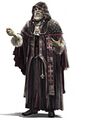 Concept art of Lafrenière
 -
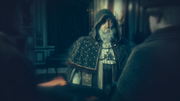 Lafrenière being inducted into the Templar Order
 -
 Lafrenière confronting de la Serre about Mirabeau
 -
 Lafrenière passing the letter to Perrault
 -
 Lafrenière ordering the attack on the Hôtel de Beauvais
 -
 Lafrenière speaking to his followers


References