


Vlad Tepes: Difference between revisions
imported>Kaikai947 mNo edit summary |
mNo edit summary |
||
| (6 intermediate revisions by 4 users not shown) | |||
| Line 10: | Line 10: | ||
*[[Templars]] | *[[Templars]] | ||
}} | }} | ||
'''Vlad III Tepes''' (1431 – 1476), also known by the title of '''Vlad the Impaler'''; his birth name, '''Vlad Draculesti'''; and the patronymic name '''Dracula''', was a {{Wiki|Voivode}} of [[Wallachia]] who ruled the region intermittently from 1448 to 1476. | '''Vlad III Tepes''' (1431 – 1476), also known by the title of '''Vlad the Impaler'''; his birth name, '''Vlad Draculesti'''; and the patronymic name '''Dracula''', was a {{Wiki|Voivode}} of [[Wallachia]] who ruled the region intermittently from 1448 to 1476. He was also, secretly, a member of the [[Templars|Templar Order]]. | ||
==Biography== | ==Biography== | ||
===Reign=== | |||
Vlad served as Voivode of Wallachia three times during the mid-15th century and fought against invasions by the [[Ottoman Empire]]. In 1476, the Ottoman Grand Vizier [[Ishak Pasha]], who incidentally was also the [[Mentor]] of the [[Ottoman Brotherhood of Assassins|Ottoman Assassins]], defeated Vlad when he tried to spark an uprising in [[Hungary]].<ref>''[[Assassin's Creed: Rebellion]]'' – [[Database: Ishak Pasha]]</ref> | |||
After Vlad's death, the Ottomans conquered Wallachia,<ref name="Vali DB">''[[Assassin's Creed: Revelations]]'' – [[Database: Vali cel Tradat]]</ref> while Vlad's decapitated head was brought back to [[Constantinople]] as a trophy. His head and [[Vlad Tepes' Sword|sword]] were later deposited in a specially-made [[Vlad the Impaler's Prison|prison]] just outside the Constantinian Walls.<ref name="Impaler's Tomb">''Assassin's Creed: Revelations'' – [[The Impaler's Tomb]]</ref> | |||
===Legacy and influence=== | ===Legacy and influence=== | ||
The Wallachian noble and [[Assassins|Assassin]] [[Vali cel Tradat]] idolized Vlad and believed the Ottomans were responsible for his death because they had brokered a truce with the Assassins. This grievance eventually led to Vali betraying the Brotherhood and joining the [[Byzantine Rite of the Templar Order|Byzantine Templars]].<ref | The Wallachian noble and [[Assassins|Assassin]] [[Vali cel Tradat]] idolized Vlad and believed the Ottomans were responsible for his death because they had brokered a truce with the Assassins. This grievance eventually led to Vali betraying the Brotherhood and joining the [[Byzantine Rite of the Templar Order|Byzantine Templars]].<ref name="Vali DB" /> Years after Vali's defection, in 1511, the [[Italian Brotherhood of Assassins|Italian Assassins]]' Mentor [[Ezio Auditore da Firenze|Ezio Auditore]] recovered Vlad's sword from his former prison.<ref name="Impaler's Tomb" /> | ||
Vlad later became the inspiration behind many [[vampire]] legends and stories surrounding him.<ref name="WiYB">''[[Who's In Your Blood?]]''</ref> According to said tales, some people believed that Vlad was a vampire because of his pale white skin and the fact that he rarely went outside. This folklore, combined with his ruthless acts during his reign, was the beginning of the vampiric mythology attached to the Wallachian Voivode.<ref name="WP">{{WP|Vlad the Impaler}}</ref> As if to give credence to the rumors of Vlad's supernatural nature, his tomb conspicuously contained a lone skull bearing long canine fangs.<ref name="Impaler's Tomb" /> | Vlad later became the inspiration behind many [[vampire]] legends and stories surrounding him.<ref name="WiYB">''[[Who's In Your Blood?]]''</ref> According to said tales, some people believed that Vlad was a vampire because of his pale white skin and the fact that he rarely went outside. This folklore, combined with his ruthless acts during his reign, was the beginning of the vampiric mythology attached to the Wallachian Voivode.<ref name="WP">{{WP|Vlad the Impaler}}</ref> As if to give credence to the rumors of Vlad's supernatural nature, his tomb conspicuously contained a lone skull bearing long canine fangs.<ref name="Impaler's Tomb" /> | ||
| Line 28: | Line 29: | ||
==Behind the scenes== | ==Behind the scenes== | ||
Vlad the Impaler is a historical character introduced in the 2011 game ''[[Assassin's Creed: Revelations]]''. The memory description for "[[The Impaler's Tomb]]" incorrectly lists his year of death as 1485. | Vlad the Impaler is a historical character introduced in the 2011 video game ''[[Assassin's Creed: Revelations]]''. The memory description for "[[The Impaler's Tomb]]" incorrectly lists his year of death as 1485. | ||
Historically, Vlad perished in battle against the forces of {{Wiki|Basarab the Old}} in either late December 1476 or early January 1477. Basarab, who had been overthrown by Vlad when the latter became Voivode of Wallachia for the third time, sought to reclaim his throne with Ottoman support, and engaged Vlad's army near {{Wiki|Snagov}}. The exact circumstances of Vlad's death are unknown, with conflicting reports suggesting that the Voivode was killed by a Turkish assassin, or perished at the hands of his own men after they mistook him for a Turk.<ref name="WP" /> | Historically, Vlad perished in battle against the forces of {{Wiki|Basarab the Old}} in either late December 1476 or early January 1477. Basarab, who had been overthrown by Vlad when the latter became Voivode of Wallachia for the third time, sought to reclaim his throne with Ottoman support, and engaged Vlad's army near {{Wiki|Snagov}}. The exact circumstances of Vlad's death are unknown, with conflicting reports suggesting that the Voivode was killed by a Turkish assassin, or perished at the hands of his own men after they mistook him for a Turk.<ref name="WP" /> | ||
| Line 43: | Line 44: | ||
==Appearances== | ==Appearances== | ||
*''[[Assassin's Creed: Revelations]]'' {{c|appears as a corpse and Animi Avatar only}} | *''[[Assassin's Creed: Revelations]]'' {{c|appears as a corpse and Animi Avatar only}} | ||
*[[Assassin's Creed (film)|''Assassin's Creed'' film]] {{ | *[[Assassin's Creed (film)|''Assassin's Creed'' film]] {{promo}} | ||
*''[[Assassin's Creed: Rebellion]]'' {{ | *''[[Assassin's Creed: Rebellion]]'' {{Mo}} | ||
*''[[Assassin's Creed Roleplaying Game]] – [[Forging History]]'' {{Mo}} | |||
==References== | ==References== | ||
| Line 51: | Line 53: | ||
{{MPChars}} | {{MPChars}} | ||
{{DEFAULTSORT:Tepes, Vlad}} | {{DEFAULTSORT:Tepes, Vlad}} | ||
<!--[de:Vlad III. Drăculea] | |||
[es:Vlad Tepes] | |||
[fr:Vlad Tepes] | |||
[hu:Vlad Tepes] | |||
[it:Vlad Tepes] | |||
[ko:블라드 체페슈] | |||
[nl:Vlad Tepes] | |||
[pl:Vlad III Țepeș] | |||
[pt-br:Vlad o Empalador] | |||
[ru:Влад III Цепеш] | |||
[zh:“穿刺者”弗拉德三世·德拉库尔斯蒂]--> | |||
[[Category:1431 births]] | [[Category:1431 births]] | ||
[[Category:1476 deaths]] | [[Category:1476 deaths]] | ||
| Line 69: | Line 71: | ||
[[Category:Templars]] | [[Category:Templars]] | ||
[[Category:Legends]] | [[Category:Legends]] | ||
[[Category:Individuals who held Pieces of Eden]] | |||
Latest revision as of 00:54, 20 May 2026
Vlad III Tepes (1431 – 1476), also known by the title of Vlad the Impaler; his birth name, Vlad Draculesti; and the patronymic name Dracula, was a Voivode of Wallachia who ruled the region intermittently from 1448 to 1476. He was also, secretly, a member of the Templar Order.
Biography[edit | edit source]
Reign[edit | edit source]
Vlad served as Voivode of Wallachia three times during the mid-15th century and fought against invasions by the Ottoman Empire. In 1476, the Ottoman Grand Vizier Ishak Pasha, who incidentally was also the Mentor of the Ottoman Assassins, defeated Vlad when he tried to spark an uprising in Hungary.[1]
After Vlad's death, the Ottomans conquered Wallachia,[2] while Vlad's decapitated head was brought back to Constantinople as a trophy. His head and sword were later deposited in a specially-made prison just outside the Constantinian Walls.[3]
Legacy and influence[edit | edit source]
The Wallachian noble and Assassin Vali cel Tradat idolized Vlad and believed the Ottomans were responsible for his death because they had brokered a truce with the Assassins. This grievance eventually led to Vali betraying the Brotherhood and joining the Byzantine Templars.[2] Years after Vali's defection, in 1511, the Italian Assassins' Mentor Ezio Auditore recovered Vlad's sword from his former prison.[3]
Vlad later became the inspiration behind many vampire legends and stories surrounding him.[4] According to said tales, some people believed that Vlad was a vampire because of his pale white skin and the fact that he rarely went outside. This folklore, combined with his ruthless acts during his reign, was the beginning of the vampiric mythology attached to the Wallachian Voivode.[5] As if to give credence to the rumors of Vlad's supernatural nature, his tomb conspicuously contained a lone skull bearing long canine fangs.[3]
In 2012, the Templar company Abstergo Industries used Vlad's genetic memories to create the Animi Avatar known as "the Count" for the second stage of their recruits' Animi Training Program. Despite historically possessing a sword, his avatar in the program used a mace.[6]
Personality and traits[edit | edit source]
Known as brutally violent among his enemies, Vlad actions quickly garnered the reputation of being a monster.[4] He was given the epithet of "The Impaler" as a result of the way he tortured his victims, wherein he would put lard or another lubricant on a large wooden spike and place it between their legs to eventually impale the subject. Afterwards, the spikes were arranged in a circular barricade around Vlad's fortresses as macabre displays and also to threaten any who opposed him.[5]
Behind the scenes[edit | edit source]
Vlad the Impaler is a historical character introduced in the 2011 video game Assassin's Creed: Revelations. The memory description for "The Impaler's Tomb" incorrectly lists his year of death as 1485.
Historically, Vlad perished in battle against the forces of Basarab the Old in either late December 1476 or early January 1477. Basarab, who had been overthrown by Vlad when the latter became Voivode of Wallachia for the third time, sought to reclaim his throne with Ottoman support, and engaged Vlad's army near Snagov. The exact circumstances of Vlad's death are unknown, with conflicting reports suggesting that the Voivode was killed by a Turkish assassin, or perished at the hands of his own men after they mistook him for a Turk.[5]
Etymology[edit | edit source]
The name Vlad is usually thought to be shortened from names beginning with the Slavic element volod, "to rule". Tepes is Romanian for "impaler".
Gallery[edit | edit source]
-
 Vlad's purported skull inside his coffin
 -
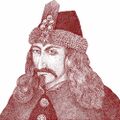 Vlad Tepes in Who's In Your Blood?


Appearances[edit | edit source]
- Assassin's Creed: Revelations (appears as a corpse and Animi Avatar only)
- Assassin's Creed film (promotional material only)
- Assassin's Creed: Rebellion (mentioned only)
- Assassin's Creed Roleplaying Game – Forging History (mentioned only)
References[edit | edit source]
- ↑ Assassin's Creed: Rebellion – Database: Ishak Pasha
- ↑ 2.0 2.1 Assassin's Creed: Revelations – Database: Vali cel Tradat
- ↑ 3.0 3.1 3.2 Assassin's Creed: Revelations – The Impaler's Tomb
- ↑ 4.0 4.1 Who's In Your Blood?
- ↑ 5.0 5.1 5.2
 Vlad the Impaler on Wikipedia
- ↑ Assassin's Creed: Revelations – Multiplayer
| |||||||||||||||||||||||||||||||||||||
| |||||||||||||||||||