|
|
| (154 intermediate revisions by 77 users not shown) |
| Line 1: |
Line 1: |
| {{WP-REAL}} | | {{Era|Locations}}{{WP-REAL}} |
| {{Location Infobox | | {{Location Infobox |
| |image = Damascus.jpg | | |name = Damascus |
| |icon = Damascus.svg | | |image = AC1 Bab Tuma.jpg |
| |heldby = Saracens | | |state = {{Wiki|Syria}} |
| |factions = [[Templars]] | | |rulers = |
| |targets = [[Tamir]]<br>[[Abu'l Nuqoud]]<br>[[Jubair al Hakim]] | | |factions = [[Assassins]] |
| |flags = Saracens flags | | *[[Levantine Brotherhood of Assassins|Levantine Brotherhood]] |
| |seenin = ''[[Assassin's Creed]]'' | | [[Templars]] |
| }}'''Damascus''' is the capital and largest city of Syria, and also the first city [[Altaïr]] visits in order to carry out an assassination. Damascus is home to three of the his assassination targets. The city is under the control of Salah al-Din's Saracen army at the time of ''Assassin's Creed''. During the Second Crusade around about 1148 the city repelled attacks, finally being acquired by Salah al-Din in the late 1150s. Salah al-Din granted scholars from far and wide the chance to study in one of the many Madrasahs scattered throughout the city's neighbourhoods. Almost unaffected entirely by the war, the city remains an extremely gorgeous site to the eyes. Altair visited the city in 1190 and 1191. During 1190, Altair wasn't exploring the city districts properly, as he had a straight forward task. He first had a mission in the local Souk, where he interrogated a merchant [[Misbah]] and killed a man named [[Tamir (Altaïr's Chronicles)]]. He later made his way to the local circus where he gained more information on his current task of gaining an entrance to the [[Temple of the Sand]]. He also assassinated the local Templars member, [[Alaat]]. | | *[[Levantine Rite of the Templar Order|Levantine Rite]] |
| | |founded = |
| | |date = 3rd millennium BCE |
| | |abandoned = |
| | |landmark = [[Umayyad Mosque]]<br>[[Citadel of Saladin|Citadel of Damascus]]<br>[[Souk Al-Silaah]]<br>[[Souk Sarouja]]<br>[[Sinan Pasha Mosque]]<br>[[Madrasah Al-Kallāsah]]<br>[[Bab Tuma]] |
| | |flags = [[Saracens|Saracen]] flags |
| | }} |
| | '''Damascus''' is the capital and largest city of {{Wiki|Syria}}, believed to have been founded in the third millennium BCE. Damascus is located in the eastern foothills of the {{Wiki|Anti-Lebanon Mountains|Eastern Lebanon Mountain Range}}, near the delta of the [[Barada]] River. |
|
| |
|
| In 1191, the city is split into three major districts. North-east within the Poor District area is considered to be a very busy section packed with citizens. This can be explained by the presence of the very impressive and sprawling Souk Al-Silaah. Unexpected security is rather light given the heavy traffic that was constant in the area. The Souk is a major trading spot within the city and dominates the area as a major landmark, with its impressive ceremonial courtyard situated in the centre, the site of where this District's Assassination Target conducted his daily business, guards were positioned in the narrow corridors attentively watching the crowd. The south-central area features the Pasha Mosque and Formal Gardens, and features larger east-west thoroughfares connecting the different areas. Tamir the Black Market Merchant held power and influence within the district. The southeastern section of Damascus featured many places of learning until Jubair Al Hakim arrived and began a city quest to destroy all written text. The central feature is Jubair's Madraasah where knowledge was quashed. Destroying knowledge and blinding the people to outside information of the world is aimed at preventing them from repeating past mistakes of their ancestors. Due to the Assassins continued success security in the district is at an all time high once access to it is granted. The district's east side is tight, somewhat slightly difficult to navigate but has a large Mosque and Hospital in the far southeastern corner. Almost half the city in terms of size, it is the Rich District that possesses many of the structural landmarks that attract outsiders to the city. The partially rebuilt Citadel of Salah al-Din is a key fortification that demands planning for a successful infiltration. The most impressive feature of the district and probably the city is the Omayyad Mosque of the Merchant King's Palace. Believe it or not the interior of The Palace is lightly secured, unless one of the Merchant King's lavish parties is in full swing. Traffic around palace grounds is rather light given the location. Slightly north is the Sarouja Souk Market Quarter, where traffic is moderate and so is security. Sarouja Souk holds the reputation of being the largest market in the Holy Land. It is split into two separate large structures that run from east to west. The Omayyad Mosque and Grand Courtyard dominate the district, the Grand Courtyard north of the Mosque is an interesting place. Here within the impressive district Abu'l Nuquoud held immense power over the people.
| | ==History== |
| | ===Middle Ages=== |
| | ====Umayyad Caliphate==== |
| | Between the 7th and the 8th centuries, Damascus was the capital of the [[Umayyad Caliphate]] where a [[Umayyad Mosque|great mosque]] was built in their honor. In 750, the Umayyads were overthrown by the [[Abbasid Revolution]] and Damascus lost its status of capital over the newly-founded [[Baghdad]] near the [[Tigris]].<ref>''[[Assassin's Creed: Mirage]]'' – [[Database: Founding of Baghdad]]</ref> |
|
| |
|
| ==Assassination Target in Damascus== | | ====Crusades==== |
| In Damascus, Altaïr is ordered to assassinate the following people.
| | During the [[Second Crusade]], around 1148, the city repelled multiple attacks until being acquired by [[Saladin]] in the year 1174. Upon gaining control of the city, he granted scholars from far and wide the chance to study in one of the many Madrasahs scattered throughout the city's neighborhoods. During the [[Third Crusade]], it had an approximate population of 45,323. Since the city was virtually unaffected by the war, it remained an extremely clean and gorgeous site. During the same period, two factions brought [[Assassin-Templar War|their secret war]] to Damascus: the [[Templars]], seeking to bring peace through total control; and the [[Assassins]], defending the free will of the common people.<ref name="AC">''[[Assassin's Creed]]''</ref> |
| ===1190=== | |
| *[[Tamir (Altaïr's Chronicles)|Tamir]], a pompous, greedy merchant.
| |
| *[[Alaat]], a Templar knight.
| |
| ===1191===
| |
| *[[Tamir]] (different person from 1190 target), an arms dealer and a merchant who runs the largest black market in Damascus.
| |
| *[[Abu'l Nuqoud]], the Merchant King who resides in his palace in Rich District.
| |
| *[[Jubair al Hakim]], The Chief Scholar in Damascus. Despite being a scholar, he is a ruthless and rude man.
| |
|
| |
|
| ==Map==
| | In 1189, a Templar known as "[[the Hideout]]" was located in Damascus and safeguarded [[Vejovis' dagger]], a [[Piece of Eden]]. The [[Levantine Brotherhood of Assassins|Levantine Assassin]] and [[Vejovis]]' [[Sage]] [[Faisal]], seeking to recover the dagger, met with the Hideout and posed as a Templar to gain his trust. However, their meeting was interrupted by the Assassin [[Rafee]], who believed that Faisal had betrayed the Brotherhood. Faisal was forced to kill Rafee but explained that his act would ultimately benefit the Assassins. He then took the dagger and left Damascus, delivering the artifact to [[Constantinople]].<ref>''[[Assassin's Creed: Escape Room Puzzle Book]]'' – Chapter 4: Deceiving the Assassins</ref> |
| {|cellspacing="0" cellpadding="1" width="100%" border="1" style="text-align:center"
| |
| |-bgcolor="#000000"
| |
| |[[File:Damascus Rich District.png|300px]]
| |
| |[[File:Damascus Middle District.PNG|300px]]
| |
| |[[File:Damascus Poor District.PNG|300px]]
| |
| |-
| |
| |Rich District
| |
| |Middle District
| |
| |Poor District
| |
| |}
| |
|
| |
|
| | [[File:ACAC - Misbah hanging on rope.jpg|thumb|250px|left|Altaïr interrogating Misbah for Tamir's whereabouts]] |
| | In 1190, the Templar [[Tamir (merchant)|Tamir]] was based in Damascus, where he worked with the Order to find the [[Adha|Chalice]], a mysterious artifact that could supposedly unify the [[Kingdom|Holy Land]]. The circus dancer [[Fajera]] also lived in the city and held one of the three keys of the [[Temple of Sand]], where the Chalice was rumored to be located. Tasked with preventing the Templars from acquiring the artifact, the [[Master Assassin]] [[Altaïr Ibn-La'Ahad]] traveled to Damascus and tracked Tamir, who told him about the Temple and Fajera.<ref>''[[Assassin's Creed: Altaïr's Chronicles]]'' – [[The Hunt Begins]]</ref> |
|
| |
|
| | After killing Tamir, Altaïr met Fajera, who asked him to assassinate a man named [[Alaat]] in exchange for her key. The Assassin did so, killing Alaat inside a public bathhouse, after which he received Fajera's key and left Damascus to continue his [[Quest for the Chalice|quest]].<ref>''[[Assassin's Creed: Altaïr's Chronicles]]'' – [[The Dancer]]</ref> |
|
| |
|
| | By the summer of 1191, the city was still under the influence of three high-ranking Templars: the arms dealer [[Tamir]]; the merchant king [[Abu'l Nuqoud]], who ruled Damascus in Saladin's absence; and the Chief Scholar [[Jubair al Hakim]]. Under the leadership of [[Grand Master of the Templar Order|Grand Master]] [[Robert de Sablé]], they worked to conquer the Holy Land for the Order. They planned to use an [[Apple of Eden 2|Apple of Eden]] to control a great army, with Tamir using his connections to supply weapons while Abu'l financed the operation.<ref name="Assassination II">''[[Assassin's Creed]]'' – [[Assassination II (Robert de Sablé)]]</ref> |
|
| |
|
| | [[File:Abul2.png|thumb|250px|Altaïr attending Abu'l's party]] |
| | The Levantine Assassins' Mentor, Al Mualim, surreptitiously collaborated with the Templars to recover the Apple, deploying Altaïr to terminate any connection between himself and the Order's leadership.<ref name="Assassination II"/> While Tamir inspected his collaborators at the [[Souk Al-Silaah]], the Templar was executed by Altaïr.<ref name="Assassination Tamir">''[[Assassin's Creed]]'' – [[Assassination (Tamir)]]</ref> Later, Abu'l organized a party at [[Merchant King's Palace|his palace]] and poisoned the wine to eliminate the nobles of the city who financed Saladin's army. While the last guests were being slaughtered by his archers, Abu'l was confronted and killed by Altaïr.<ref name="Assassination Abu'l">''[[Assassin's Creed]]'' – [[Assassination (Abu'l Nuqoud)]]</ref> |
|
| |
|
| | Finally, Jubair commanded his fellow scholars to seize the city's written records and destroy them in public pyres, based on the conviction that knowledge served only as a catalyst for civil discord. During one of the bonfires, the Chief Scholar was tracked and ultimately assassinated by Altaïr, effectively dismantling the Templar influence within Damascus.<ref name="Assassination Jubair">''[[Assassin's Creed]]'' – [[Assassination (Jubair al Hakim)]]</ref> |
|
| |
|
| | ===Mamluk Sultanate=== |
| | By the 16th century, Damascus was controlled by the [[Mamluk Sultanate]]. Around 1511, the roads north of Damascus were blocked by [[Ottoman Empire|Ottoman troops]], crippling many of the city's northern trade routes. In spite of the Brotherhood's truce with the Ottoman Empire, the [[Italian Brotherhood of Assassins|Italian Assassins]]' Mentor [[Ezio Auditore da Firenze]] sent [[Ottoman Brotherhood of Assassins|Ottoman]] [[Assassin apprentice|apprentices]] to draw the army away from their position by any means necessary.<ref>''[[Assassin's Creed: Revelations]]'' – [[Mediterranean Defense]]: "The Hydra's Head, Part I"</ref> |
|
| |
|
| | After the Assassins succeeded in their mission, a detachment of [[Safavid Empire|Safavid]] soldiers filled the power vacuum north of the city, the [[Mamluks]] Sultan [[Al-Ashraf Qansuh al-Ghawri]] making an alliance with them to attack [[Bursa]]. As they suspected an alliance between the two factions, the Assassins infiltrated the Safavid camp and discovered their plan.<ref>''[[Assassin's Creed: Revelations]]'' – [[Mediterranean Defense]]: "The Hydra's Head, Part II"</ref> After learning that the Safavid high command was stationed in Damascus as the personal guest of the Sultan, the Assassins eliminated the Safavid generals and crippled their command structure.<ref>''[[Assassin's Creed: Revelations]]'' – [[Mediterranean Defense]]: "The Hydra's Head, Part III"</ref> |
|
| |
|
| | As the Brotherhood's training facilities in Damascus were of middling quality, the Assassins stole Templar resources to upgrade their headquarters, increasing Assassin influence in the city while diminishing that of the Templars.<ref>''[[Assassin's Creed: Revelations]]'' – [[Mediterranean Defense]]: "Level Up"</ref> |
|
| |
|
| ==Damascus Real History== | | ===Ottoman Empire=== |
| | By the 18th century, Damascus was part of the Ottoman Empire. In 1757, the [[British Rite of the Templar Order|British Templar]] [[Haytham Kenway]] journeyed to Damascus to locate his half-sister [[Jennifer Scott|Jennifer]], who had been sold into slavery in the [[Qasr al-Azm|palace]] of governor [[As'ad Pasha al-Azm]]. Haytham and [[Jim Holden]] disguised themselves as [[eunuch]]s to infiltrate the palace and successfully rescued Jennifer, although Holden was captured while fending off incoming guards to buy the siblings time to escape.<ref>''[[Assassin's Creed: Forsaken]]''</ref> |
|
| |
|
| | ==Districts== |
| | ===Poor District=== |
| | The Poor District was considered to be a very busy section and constantly packed with [[civilian]]s. This resulted in congested thoroughfares, as a constant flow of citizens moved through the district's narrow streets.<ref name="AC"/> |
|
| |
|
| '''Damascus''' ([http://en.wikipedia.org/wiki/Arabic_language Arabic]: دِمَشقُ, ''Dimashq'', commonly known as الشام ''ash-Shām'' also known as the "City of Jasmin" [http://en.wikipedia.org/wiki/Arabic_language Arabic]: مدينة الياسمين) is the capital and largest city of [http://en.wikipedia.org/wiki/Syria Syria] as well as one of the country's 14 [http://en.wikipedia.org/wiki/Governorates_of_Syria governorates]. The [http://en.wikipedia.org/wiki/Damascus_Governorate Damascus Governorate] is ruled by a governor appointed by the Minister of Interior. In addition to being widely known as [http://en.wikipedia.org/wiki/List_of_oldest_continuously_inhabited_cities the oldest continuously inhabited city in the world], Damascus is a major cultural and religious center of the [http://en.wikipedia.org/wiki/Levant Levant].
| | [[File:AC1 Souk Al-Silaah.png|thumb|250px|left|The Souk Al-Silaah in the Poor District]] |
| | The district was home to the [[Sinan Pasha Mosque]] and the sprawling and very impressive [[Souk Al-Silaah]], which was a major trading point in Damascus and dominated the surrounding area. Due to its eloquent ceremonial courtyard, situated in the center, the Souk was the site where the Templar and arms dealer Tamir conducted his daily business. Despite Tamir stationing guards within the surrounding passageways, the central area of the Souk remained relatively accessible to those capable of navigating the market unnoticed. Altaïr utilized this oversight to infiltrate the market and assassinate the Templar during his public display of authority.<ref name="Assassination Tamir"/> |
|
| |
|
| Currently, the city has an estimated population of about 1,669,000.<sup class="reference" id="cite_ref-Syrian_Population_0-1">[http://en.wikipedia.org/wiki/Damascus#cite_note-Syrian_Population-0 [1]]</sup> Unofficial estimates often assume a much larger population<sup class="Template-Fact" style="white-space: nowrap" title="This claim needs references to reliable sources from December 2009">[''[http://en.wikipedia.org/wiki/Wikipedia:Citation_needed citation needed]'']</sup>. Located in southwestern Syria, it is the center of a large metropolitan area of four million people.<sup class="Template-Fact" style="white-space: nowrap" title="This claim needs references to reliable sources from December 2009">[''[http://en.wikipedia.org/wiki/Wikipedia:Citation_needed citation needed]'']</sup> Geographically embedded on the eastern foothills of the [http://en.wikipedia.org/wiki/Anti-Lebanon Anti-Lebanon] mountain range 80 km (50 mi) inland from the eastern shore of the [http://en.wikipedia.org/wiki/Mediterranean_Sea Mediterranean Sea] on a plateau 680 metres (2,200 ft) above sea-level. Damascus experiences a semi-arid climate due to the [http://en.wikipedia.org/wiki/Rain_shadow_effect rain shadow effect]. The [http://en.wikipedia.org/wiki/Barada Barada River] flows through Damascus.
| | ===Middle District=== |
| | The Middle District contained schools and formal gardens. These featured larger east-west thoroughfares connecting the different areas. This section of Damascus included many places of learning, until Jubair al Hakim arrived and began a quest to destroy all written knowledge in the city. The central feature was Jubair's [[Madrasah Al-Kallāsah|Madrasah]], where he and his fellow scholars burnt all books and scrolls they had seized. By the time Altaïr arrived to confront Jubair, the city's defenses had been significantly bolstered in response to the recent assassinations of other Templars.<ref name="Assassination Jubair"/> |
|
| |
|
| First settled in the 2nd millennium BC, it was chosen as the capital of the [http://en.wikipedia.org/wiki/Umayyad_Caliphate Umayyad Caliphate] from 661-750. After the victory of the [http://en.wikipedia.org/wiki/Abbasid_dynasty Abbasid dynasty], the seat of Islamic power was moved to [http://en.wikipedia.org/wiki/Baghdad Baghdad]. Damascus saw a political decline throughout the Abbasid era, only to regain significant importance in the [http://en.wikipedia.org/wiki/Ayyubid Ayyubid] and [http://en.wikipedia.org/wiki/Mamluk Mamluk] periods. During [http://en.wikipedia.org/wiki/Ottoman_Empire Ottoman] rule, the city decayed completely while maintaining a certain cultural prestige. Today, it is the seat of the [http://en.wikipedia.org/wiki/Central_government central government] and all of the [http://en.wikipedia.org/wiki/Government_ministries government ministries]. Damascus was chosen as the [http://en.wikipedia.org/wiki/2008_Arab_Capital_of_Culture 2008 Arab Capital of Culture].<sup class="reference" id="cite_ref-2">[http://en.wikipedia.org/wiki/Damascus#cite_note-2 [3]]</sup>
| | ===Rich District=== |
| | [[File:AC1 Umayyad Mosque.png|thumb|250px|The Umayyad Mosque in the Rich District]] |
| | The Rich District stretched across almost half of Damascus, possessing many of the structural landmarks that attracted outsiders to the city. The partially rebuilt [[Citadel of Saladin]] served as a formidable fortification, its defenses necessitating careful strategy for any who sought entry. The most impressive feature of the district, and probably the entire city, was the [[Umayyad Mosque]]. Built by {{Wiki|Al-Walid I}} in 715 CE, the mosque sat atop the ruins of the Roman Temple of [[Jupiter]].<ref name="Knowledge Abu'l">''[[Assassin's Creed]]'' – [[Knowledge (Abu'l Nuqoud)]]</ref> |
|
| |
|
| | Another renowned landmark in the district was the [[Merchant King's Palace]], the personal residence of the Templar Abu'l Nuqoud. While the palace's interior was often accessible, its guard presence was significantly increased during the lavish parties hosted by Abu'l. The grounds surrounding the palace remained relatively quiet, a stark contrast to the city's more crowded quarters. Slightly north lay the [[Souk Sarouja|Sarouja Souk]] Market Quarter, an area characterized by steady activity and a visible presence of city guards. Sarouja Souk held the reputation of being the largest market in the [[Kingdom|Holy Land]]. It was split into two separate structures that ran from west to east and north to south.<ref name="Knowledge Abu'l"/> |
|
| |
|
| ==[[http://en.wikipedia.org/w/index.php?title=Damascus&action=edit§ion=1 edit]] Etymology==
| | Though the Umayyad Mosque and Merchant King's Palace dominated the district, the Grand Courtyard north of the Mosque was equally an interesting place. Here, within the impressive district, Abu'l Nuqoud held immense power over the people.<ref name="Knowledge Abu'l"/> |
|
| |
|
| [http://en.wikipedia.org/wiki/File:Damascus_overview1.jpg ][http://en.wikipedia.org/wiki/File:Damascus_overview1.jpg ]Damascus cityscapeThe name of Damascus first appeared in the geographical list of [http://en.wikipedia.org/wiki/Thutmose_III Thutmose III] as T-m-ś-q in the 15th century BCE.<sup class="reference" id="cite_ref-3">[http://en.wikipedia.org/wiki/Damascus#cite_note-3 [4]]</sup> In [http://en.wikipedia.org/wiki/Arabic_language Arabic], the city is called دمشق الشام (''Dimashq al-Shām''), although this is often shortened to either ''Dimashq'' or ''al-Shām'' by the citizens of Damascus, of Syria and other Arab neighbors. ''Al-Shām'' is an Arabic term for [http://en.wikipedia.org/wiki/North north] and for Syria (Syria—particularly historical [http://en.wikipedia.org/wiki/Greater_Syria Greater Syria]—is called ''Bilād al-Shām''—بلاد الشام, "land of the north"—in Arabic.) The [http://en.wikipedia.org/wiki/Etymology etymology] of the ancient name "T-m-ś-q" is uncertain, but it is suspected to be pre-[http://en.wikipedia.org/wiki/Semitic_languages Semitic]. It is attested as 𒁲𒈠𒊭𒅗 ''Dimašqa'' in [http://en.wikipedia.org/wiki/Akkadian_language Akkadian], 𒁲𒈠𒊭𒅗''T-ms-ḳw'' in [http://en.wikipedia.org/wiki/Egyptian_language Egyptian], ''Dammaśq'' (דמשק) in [http://en.wikipedia.org/wiki/Aramaic_language Old Aramaic] and ''Dammeśeq'' (דמשק) in [http://en.wikipedia.org/wiki/Biblical_Hebrew_language Biblical Hebrew]. The Akkadian spelling is the earliest attestation, found in the [http://en.wikipedia.org/wiki/Amarna_letters Amarna letters], from the 14th century BCE. Later [http://en.wikipedia.org/wiki/Aramaic_language Aramaic] spellings of the name often include an intrusive ''[http://en.wikipedia.org/wiki/Resh resh]'' (letter ''r''), perhaps influenced by the root ''dr'', meaning "dwelling". Thus, the [http://en.wikipedia.org/wiki/Qumran Qumranic] ''Darmeśeq'' (דרמשק), and ''Darmsûq'' (ܕܪܡܣܘܩ) in [http://en.wikipedia.org/wiki/Syriac_language Syriac].<sup class="reference" id="cite_ref-4">[http://en.wikipedia.org/wiki/Damascus#cite_note-4 [5]]</sup><sup class="reference" id="cite_ref-5">[http://en.wikipedia.org/wiki/Damascus#cite_note-5 [6]]</sup> The [http://en.wikipedia.org/wiki/English_language English] and [http://en.wikipedia.org/wiki/Latin Latin] name of the city is "Damascus" which was imported from [http://en.wikipedia.org/wiki/Greek_language Greek]: Δαμασκός, which originated in [http://en.wikipedia.org/wiki/Semitic Semitic].<sup class="reference" id="cite_ref-6">[http://en.wikipedia.org/wiki/Damascus#cite_note-6 [7]]</sup>
| | ==Industry== |
| ==[[http://en.wikipedia.org/w/index.php?title=Damascus&action=edit§ion=2 edit]] History==
| | Damascus was renowned for the forged [[steel]] produced there, which was accordingly known as [[Damascus steel]] and was characterized by its unique and distinctive wavy pattern reminiscent of flowing water.<ref>''[[Assassin's Creed: Rebellion]]''</ref> |
|
| |
|
| {| class="infobox vcard" style="line-height: 1.5em; width: 250px; max-width: 285px; font-size: 88%" | | ==Animus simulated maps== |
| ! colspan="2" style="text-align: center; background: #eee; font-size: 125%"|Ancient City of Damascus*
| | {|cellspacing="0" cellpadding="1" width="100%" border="1" style="text-align:center" |
| | |-bgcolor="#000000" |
| | |[[File:Damascus Rich District.png|200px]] |
| | |[[File:Damascus Middle District.PNG|200px]] |
| | |[[File:Damascus Poor District.PNG|200px]] |
| |- | | |- |
| ! class="category" colspan="2" style="text-align: center; padding-bottom: 0.4em; font-size: 110%"|[http://en.wikipedia.org/wiki/World_Heritage_Site UNESCO World Heritage Site]
| | |Rich District |
| |- | | |Middle District |
| | align="middle" colspan="2" style="padding-bottom: 0.3em"|---- | | |Poor District |
| [http://en.wikipedia.org/wiki/File:Eagle_Dome2(js).jpg ]
| |
| |-
| |
| |'''[http://en.wikipedia.org/wiki/Table_of_World_Heritage_Sites_based_on_State_Parties State Party]'''
| |
| | [http://en.wikipedia.org/wiki/Syria Syria]
| |
| |-
| |
| |'''Type'''
| |
| | class="category"|Cultural
| |
| |-
| |
| |'''[http://en.wikipedia.org/wiki/World_Heritage_Site#Selection_criteria Criteria]'''
| |
| | class="category"|i, ii, iii, iv, vi
| |
| |-
| |
| |'''Reference'''
| |
| |[http://whc.unesco.org/en/list/20 20]
| |
| |-
| |
| |'''Region'''**
| |
| | class="label" style="line-height: 150%; white-space: nowrap"|[http://en.wikipedia.org/wiki/List_of_World_Heritage_Sites_in_the_Arab_States Arab States]
| |
| |-
| |
| | align="middle" colspan="2" style="background: #eee; font-size: 110%"|'''Inscription history'''
| |
| |-
| |
| |'''Inscription'''
| |
| | style="line-height: 150%"|1979 (3rd [http://en.wikipedia.org/wiki/World_Heritage_Committee Session])
| |
| |-
| |
| | colspan="2" style="text-align: left; line-height: 150%; font-size: 80%; border-top: #aaa 1px solid; font-weight: lighter; padding-top: 0.8em"|* [http://whc.unesco.org/en/list Name as inscribed on World Heritage List.]
| |
| ** [http://whc.unesco.org/en/list/?search=&search_by_country=&type=&media=®ion=&order=region Region as classified by UNESCO.]
| |
| |} | | |} |
| ===[[http://en.wikipedia.org/w/index.php?title=Damascus&action=edit§ion=3 edit]] Early settlement===
| |
| [http://en.wikipedia.org/wiki/Carbon-14 Carbon-14] dating at [http://en.wikipedia.org/w/index.php?title=Tell_Ramad&action=edit&redlink=1 Tell Ramad] on the outskirts of Damascus suggests that the site may have been occupied since the second half of the seventh millennium BC, possibly around 6300 BC.<sup class="reference" id="cite_ref-7">[http://en.wikipedia.org/wiki/Damascus#cite_note-7 [8]]</sup> However, evidence of settlement in the wider [http://en.wikipedia.org/w/index.php?title=Barada_basin&action=edit&redlink=1 Barada basin] dating back to 9000 BC exists, although no large-scale settlement was present within Damascus walls until the second millennium BC. The city is considered by some to be the [http://en.wikipedia.org/wiki/List_of_oldest_continuously_inhabited_cities oldest continuously inhabited city] in the world.<sup class="reference" id="cite_ref-Burns2_8-0">[http://en.wikipedia.org/wiki/Damascus#cite_note-Burns2-8 [9]]</sup>
| |
|
| |
| The Damascus region, as well as the rest of Syria, became a battleground between the [http://en.wikipedia.org/wiki/Hittites Hittites] from the north and the [http://en.wikipedia.org/wiki/Ancient_Egyptians Egyptians] from the south,<sup class="reference" id="cite_ref-Burns5_9-0">[http://en.wikipedia.org/wiki/Damascus#cite_note-Burns5-9 [10]]</sup> ending with a signed treaty between [http://en.wikipedia.org/wiki/Hattusili Hattusili] and [http://en.wikipedia.org/wiki/Ramsis_II Ramsis II] where the former handed over control of the Damascus area to [http://en.wikipedia.org/wiki/Ramesses_II Ramesses II] in 1259 BC.<sup class="reference" id="cite_ref-Burns5_9-1">[http://en.wikipedia.org/wiki/Damascus#cite_note-Burns5-9 [10]]</sup> The arrival of the [http://en.wikipedia.org/wiki/Sea_Peoples Sea Peoples] around 1200 BC marked the end of the [http://en.wikipedia.org/wiki/Bronze_Age Bronze Age] in the region and brought about new development of warfare.<sup class="reference" id="cite_ref-Burns7_10-0">[http://en.wikipedia.org/wiki/Damascus#cite_note-Burns7-10 [11]]</sup> Damascus was only the peripheral part of this picture which mostly affected the larger population centers of ancient Syria. However, these events had contributed to the development of Damascus as a new influential center that emerged with the transition from the Bronze Age to the [http://en.wikipedia.org/wiki/Iron_Age Iron Age].<sup class="reference" id="cite_ref-Burns7_10-1">[http://en.wikipedia.org/wiki/Damascus#cite_note-Burns7-10 [11]]</sup>
| |
|
| |
| Damascus is mentioned in [http://en.wikipedia.org/wiki/Book_of_Genesis Genesis] 14:15 as existing at the time of the [http://en.wikipedia.org/wiki/Chedorlaomer War of the Kings].<sup class="reference" id="cite_ref-11">[http://en.wikipedia.org/wiki/Damascus#cite_note-11 [12]]</sup> (However, the verse can also be understood to mean that Damascus existed when Genesis was written - by tradition around the 13th century BC, and several centuries later according to some scholars - regardless of whether Damascus existed at the time of the War of the Kings.) According to the 1st century Jewish historian [http://en.wikipedia.org/wiki/Flavius_Josephus Flavius Josephus] in his twenty-one volume ''[http://en.wikipedia.org/wiki/Antiquities_of_the_Jews Antiquities of the Jews]'', Damascus (along with [http://en.wikipedia.org/wiki/Trachonitis Trachonitis]), was founded by [http://en.wikipedia.org/wiki/Uz_(son_of_Aram) Uz], the son of [http://en.wikipedia.org/wiki/Aram,_son_of_Shem Aram]. Elsewhere, he stated:
| |
| [http://en.wikipedia.org/wiki/Nicolaus_of_Damascus Nicolaus of Damascus], in the fourth book of his History, says thus: "[http://en.wikipedia.org/wiki/Abraham Abraham] reigned at Damascus, being a foreigner, who came with an army out of the land above Babylon, called the land of the Chaldeans: but, after a long time, he got him up, and removed from that country also, with his people, and went into the land then called the land of Canaan, but now the land of Judea, and this when his posterity were become a multitude; as to which posterity of his, we relate their history in another work. Now the name of Abraham is even still famous in the country of Damascus; and there is shown a village named from him, The Habitation of Abraham.
| |
| Damascus was part of the ancient [http://en.wikipedia.org/wiki/Province province] of [http://en.wikipedia.org/wiki/Amurru Amurru] in the [http://en.wikipedia.org/wiki/Hyksos Hyksos] Kingdom, from 1720 to 1570 BC.<sup class="reference" id="cite_ref-12">[http://en.wikipedia.org/wiki/Damascus#cite_note-12 [13]]</sup> Some of the earliest [http://en.wikipedia.org/wiki/Ancient_Egypt Egyptian] records are from the 1350 BC [http://en.wikipedia.org/wiki/Amarna_letters Amarna letters], when Damascus-(called ''Dimasqu'') was ruled by king [http://en.wikipedia.org/wiki/Biryawaza Biryawaza].
| |
| ===[[http://en.wikipedia.org/w/index.php?title=Damascus&action=edit§ion=4 edit]] Aram-Damascus===
| |
| Main article: [http://en.wikipedia.org/wiki/Aram-Damascus Aram-Damascus]Damascus is not documented as an important city until the arrival of the [http://en.wikipedia.org/wiki/Aramaeans Aramaeans], [http://en.wikipedia.org/wiki/Semitic Semitic] nomads from [http://en.wikipedia.org/wiki/Mesopotamia Mesopotamia], in the 11th century BCE. By the start of the 1st millennium BC, several Aramaic kingdoms were formed, as Aramaeans abandoned their nomadic lifestyle and formed federated tribal states. One of these kingdoms was [http://en.wikipedia.org/wiki/Aram-Damascus Aram-Damascus] centered around its capital Damascus.<sup class="reference" id="cite_ref-Burns9_13-0">[http://en.wikipedia.org/wiki/Damascus#cite_note-Burns9-13 [14]]</sup> The Aramaeans who entered the city without battle, adopted the name "Dimashqu" for their new home. Noticing the agricultural potential of the still-undeveloped and sparsely populated area,<sup class="reference" id="cite_ref-Burns10_14-0">[http://en.wikipedia.org/wiki/Damascus#cite_note-Burns10-14 [15]]</sup> they established the water distribution system of Damascus by constructing canals and tunnels which maximized the efficiency of the river Barada. The same network was later improved by the Romans and the Umayyads, and still forms the basis of the water system of the old part of the city today.<sup class="reference" id="cite_ref-Burns13_15-0">[http://en.wikipedia.org/wiki/Damascus#cite_note-Burns13-15 [16]]</sup> The Aramaeans initially turned Damascus into an outpost of a loose federation of Aramaean tribes, known as Aram-Zobah, based in the [http://en.wikipedia.org/wiki/Beqaa_Valley Beqaa Valley].<sup class="reference" id="cite_ref-Burns10_14-1">[http://en.wikipedia.org/wiki/Damascus#cite_note-Burns10-14 [15]]</sup>
| |
|
| |
|
| |
| [http://en.wikipedia.org/wiki/File:Maktab_Anbar_Damascus.jpg ][http://en.wikipedia.org/wiki/File:Maktab_Anbar_Damascus.jpg ]The courtyard of [http://en.wikipedia.org/wiki/Maktab_Anbar Maktab Anbar]The city would gain preeminence in southern Syria when Ezron, the claimant to Aram-Zobah's throne who was denied kingship of the federation, fled Beqaa and captured Damascus by force in 965 BC. Ezron overthrew the city's tribal governor and founded the independent entity of Aram-Damascus. As this new state expanded south, it prevented the [http://en.wikipedia.org/wiki/Kingdom_of_Israel_(united_monarchy) Kingdom of Israel] from spreading north and the two kingdoms soon clashed as they both sought to dominate trading hegemony in the east.<sup class="reference" id="cite_ref-Burns10_14-2">[http://en.wikipedia.org/wiki/Damascus#cite_note-Burns10-14 [15]]</sup> Under Ezron's grandson, [http://en.wikipedia.org/wiki/Ben-Hadad_I Ben-Hadad I] (880-841 BC), and his successor [http://en.wikipedia.org/wiki/Hazael Hazael], Damascus annexed [http://en.wikipedia.org/wiki/Bashan Bashan] (modern-day [http://en.wikipedia.org/wiki/Hauran Hauran] region), and went on the offensive with Israel. This conflict continued until the early 8th century BC when [http://en.wikipedia.org/wiki/Ben-Hadad_II Ben-Hadad II] was captured by Israel after unsuccessfully besieging [http://en.wikipedia.org/wiki/Sebastia,_Nablus Samaria]. As a result, he granted Israel trading rights in Damascus.<sup class="reference" id="cite_ref-Burns11_16-0">[http://en.wikipedia.org/wiki/Damascus#cite_note-Burns11-16 [17]]</sup>
| |
|
| |
| Another possible reason for the treaty between Aram-Damascus and Israel was the common threat of the [http://en.wikipedia.org/wiki/Neo-Assyrian_Empire Neo-Assyrian Empire] which was attempting to expand into the [http://en.wikipedia.org/wiki/Mediterranean Mediterranean] coast. In 853 BC, King [http://en.wikipedia.org/wiki/Hadadezer Hadadezer] of Damascus led a [http://en.wikipedia.org/wiki/Levant Levantine] coalition, that included forces from the northern Aram-Hamath kingdom and troops supplied by [http://en.wikipedia.org/wiki/King_Ahab King Ahab] of Israel, in the [http://en.wikipedia.org/wiki/Battle_of_Qarqar Battle of Qarqar] against the Neo-Assyrian army. Aram-Damascus came out victorious, temporarily preventing the Assyrians from encroaching into Syria. However, after Hadadzezer was killed by his successor, Hazael II, the Levantine alliance collapsed. Aram-Damascus attempted to invade Israel, but was interrupted by the renewed Assyrian invasion. Hazael ordered a retreat to the walled part of Damascus while the Assyrians plundered the remainder of the kingdom. Unable to enter the city, they declared their supremacy in the Hauran and Beqa'a valleys.<sup class="reference" id="cite_ref-Burns11_16-1">[http://en.wikipedia.org/wiki/Damascus#cite_note-Burns11-16 [17]]</sup>
| |
|
| |
| By the 8th century BC, Damascus was practically engulfed by the Assyrians and entered a dark age. Nonetheless, it remained the economic and cultural center of the Near East as well as the Arameaen resistance. In 727, a revolt took place in the city, but was put down by Assyrian forces. After Assyria went on a wide-scale campaign of quelling revolts throughout Syria, Damascus became totally subjugated by their rule. A positive effect of this was stability for the city and benefits from the spice and incense trade with [http://en.wikipedia.org/wiki/Arabia Arabia]. However, Assyrian authority was dwindling by 609-605 BC and Syria-[http://en.wikipedia.org/wiki/Palestine Palestine] was falling into the orbit of Pharaoh [http://en.wikipedia.org/wiki/Necho_II Necho II]'s Egypt. In 572, all of Syria had been conquered by the [http://en.wikipedia.org/wiki/Neo-Babylonian Neo-Babylonians], but the status of Damascus under [http://en.wikipedia.org/wiki/Babylon Babylon] is relatively unknown.<sup class="reference" id="cite_ref-Burns2123_17-0">[http://en.wikipedia.org/wiki/Damascus#cite_note-Burns2123-17 [18]]</sup>
| |
| ===[[http://en.wikipedia.org/w/index.php?title=Damascus&action=edit§ion=5 edit]] Antiquity===
| |
|
| |
| [http://en.wikipedia.org/wiki/File:The_Jupiter_temple_in_Damascus.jpg ][http://en.wikipedia.org/wiki/File:The_Jupiter_temple_in_Damascus.jpg ]Ruins of the Jupiter Temple at the entrance of [http://en.wikipedia.org/wiki/Al-Hamidiyah_Souq Al-Hamidiyah Souq]Damascus first came under western control with the campaign of [http://en.wikipedia.org/wiki/Alexander_the_Great Alexander the Great] that swept through the Near East. After the death of Alexander in 323 BCE, Damascus became the site of a struggle between the [http://en.wikipedia.org/wiki/Seleucid_Empire Seleucid] and [http://en.wikipedia.org/wiki/Ptolemaic_dynasty Ptolemaic] empires. The control of the city passed frequently from one empire to the other. [http://en.wikipedia.org/wiki/Seleucus_I_Nicator Seleucus I Nicator], one of Alexander's generals, made [http://en.wikipedia.org/wiki/Antioch Antioch] the capital of his vast empire, which led to the decline of Damascus' importance compared with new Seleucid cities such as [http://en.wikipedia.org/wiki/Latakia Latakia] in the north. Later, Demetrius III Philopator rebuilt the city according to the Greek hippodamian system and renamed it Demetrias.
| |
|
| |
| In 64 BCE, the [http://en.wikipedia.org/wiki/Ancient_Rome Roman] general [http://en.wikipedia.org/wiki/Pompey Pompey] annexed the western part of Syria. The Romans occupied Damascus and subsequently incorporated it into the league of ten cities known as the [http://en.wikipedia.org/wiki/Decapolis Decapolis] because it was considered such an important center of Greco-Roman culture. According to the [http://en.wikipedia.org/wiki/New_Testament New Testament], [http://en.wikipedia.org/wiki/Saint_Paul Saint Paul] was on the road to Damascus when he received a vision, was struck blind and as a result converted to [http://en.wikipedia.org/wiki/Christianity Christianity]. In the year 37, [http://en.wikipedia.org/wiki/Roman_Emperor Roman Emperor] [http://en.wikipedia.org/wiki/Caligula Caligula] transferred Damascus to [http://en.wikipedia.org/wiki/Nabateans Nabataean] control by decree.<sup class="Template-Fact" style="white-space: nowrap" title="This claim needs references to reliable sources from March 2008">[''[http://en.wikipedia.org/wiki/Wikipedia:Citation_needed citation needed]'']</sup> The Nabataean king [http://en.wikipedia.org/wiki/Aretas_IV_Philopatris Aretas IV Philopatris] ruled Damascus from his capital [http://en.wikipedia.org/wiki/Petra Petra]. However, around the year 106, Nabataea was conquered by the Romans, and Damascus returned to Roman control.
| |
|
| |
| Damascus became a metropolis by the beginning of the second century and in 222 it was upgraded to a ''colonia'' by the Emperor [http://en.wikipedia.org/wiki/Septimius_Severus Septimius Severus]. During the ''[http://en.wikipedia.org/wiki/Pax_Romana Pax Romana]'', Damascus and the Roman province of Syria in general began to prosper. Damascus's importance as a caravan city was evident with the trade routes from southern [http://en.wikipedia.org/wiki/Arabian_Peninsula Arabia], [http://en.wikipedia.org/wiki/Palmyra Palmyra], [http://en.wikipedia.org/wiki/Petra Petra], and the silk routes from China all converging on it. The city satisfied the Roman demands for eastern luxuries.
| |
|
| |
| Little remains of the architecture of the Romans, but the town planning of the old city did have a lasting effect. The Roman architects brought together the Greek and Aramaean foundations of the city and fused them into a new layout measuring approximately 1,500 metres (4,900 ft) by 750 metres (2,500 ft), surrounded by a city wall. The city wall contained seven gates, but only the eastern gate (Bab Sharqi) remains from the Roman period. Roman Damascus lies mostly at depths of up to five meters (16.4 ft) below the modern city.
| |
|
| |
| The old borough of [http://en.wikipedia.org/wiki/Bab_Tuma Bab Tuma] was developed at the end of the Roman/Byzantine era by the local [http://en.wikipedia.org/wiki/Eastern_Orthodox_Church Eastern Orthodox] community. According to the [http://en.wikipedia.org/wiki/Acts_of_the_Apostles Acts of the Apostles], Saint Paul and [http://en.wikipedia.org/wiki/Thomas_the_Apostle Saint Thomas] both lived in that neighborhood. [http://en.wikipedia.org/wiki/Roman_Catholic_Church Roman Catholic] historians also consider Bab Tuma to be the birthplace of several [http://en.wikipedia.org/wiki/Popes Popes] such as [http://en.wikipedia.org/wiki/Pope_John_V John V] and [http://en.wikipedia.org/wiki/Pope_Gregory_III Gregory III].
| |
| ===[[http://en.wikipedia.org/w/index.php?title=Damascus&action=edit§ion=6 edit]] Islamic Arab era===
| |
|
| |
| [http://en.wikipedia.org/wiki/File:Courtyard2(js).jpg ][http://en.wikipedia.org/wiki/File:Courtyard2(js).jpg ]Courtyard of the [http://en.wikipedia.org/wiki/Umayyad_Mosque Umayyad Mosque]After most of the Syrian countryside was annexed by the [http://en.wikipedia.org/wiki/Rashidun_Caliphate Rashidun Caliphate] during the reign of Caliph [http://en.wikipedia.org/wiki/Umar Umar], Damascus itself was [http://en.wikipedia.org/wiki/Siege_of_Damascus_(634) conquered] by the [http://en.wikipedia.org/wiki/Arab Arab] general [http://en.wikipedia.org/wiki/Khalid_ibn_al-Walid Khalid ibn al-Walid] in September-August 635 CE. His [http://en.wikipedia.org/wiki/Rashidun_army Arabian army] had previously attempted to capture the city in April 634, but without success.<sup class="reference" id="cite_ref-Burns99_18-0">[http://en.wikipedia.org/wiki/Damascus#cite_note-Burns99-18 [19]]</sup> With Damascus now in Arab hands, the Byzantines, alarmed at the loss of their most prestigious city in the Near East, had decided to wrest back control of it. Under Emperor [http://en.wikipedia.org/wiki/Heraclius Heraclius], the Byzantines fielded an army superior to that of the Rashidun in manpower. They advanced into southern Syria during the spring of 636 and consequently Khalid ibn al-Walid's forces withdrew from Damascus to prepare for renewed confrontation.<sup class="reference" id="cite_ref-Burns100_19-0">[http://en.wikipedia.org/wiki/Damascus#cite_note-Burns100-19 [20]]</sup> In August, the two powers met along the [http://en.wikipedia.org/wiki/Yarmouk_River Yarmouk River] where they a fought a [http://en.wikipedia.org/wiki/Battle_of_Yarmouk major battle] which ended in a decisive Arab victory, solidifying the latter's rule in Syria and Palestine.<sup class="reference" id="cite_ref-Burns104_20-0">[http://en.wikipedia.org/wiki/Damascus#cite_note-Burns104-20 [21]]</sup>
| |
|
| |
| While Arabs administrated the city, the population of Damascus remained mostly Christian—[http://en.wikipedia.org/wiki/Eastern_Orthodox Eastern Orthodox] and [http://en.wikipedia.org/wiki/Monophysite Monophysite]—with a growing community of [http://en.wikipedia.org/wiki/Arab_Muslims Arab Muslims] from [http://en.wikipedia.org/wiki/Mecca Mecca], [http://en.wikipedia.org/wiki/Medina Medina], and the [http://en.wikipedia.org/wiki/Syrian_Desert Syrian Desert].<sup class="reference" id="cite_ref-Burns105_21-0">[http://en.wikipedia.org/wiki/Damascus#cite_note-Burns105-21 [22]]</sup> The governor assigned to the city which had been chosen as the capital of [http://en.wikipedia.org/wiki/Bilad_al-Sham Islamic Syria] was [http://en.wikipedia.org/wiki/Mu%27awiya_I Mu'awiya I]. After the murder of Caliph [http://en.wikipedia.org/wiki/Ali Ali] in 661, Mu'awiya installed himself as the caliph of the expanding Islamic empire. Because of the vast amounts of assets his clan, the [http://en.wikipedia.org/wiki/Ummayad Ummayads], owned in the city and because of its traditional economic and social links with the [http://en.wikipedia.org/wiki/Hijaz Hijaz] as well as the [http://en.wikipedia.org/wiki/Arab_Christian Arab Christian] tribes of the region, Mu'awiya established Damascus as the capital of the entire [http://en.wikipedia.org/wiki/Caliphate Caliphate].<sup class="reference" id="cite_ref-Burns107_22-0">[http://en.wikipedia.org/wiki/Damascus#cite_note-Burns107-22 [23]]</sup> With the ascension of Caliph [http://en.wikipedia.org/wiki/Abd_al-Malik Abd al-Malik] in 685, an Islamic coinage system was introduced and all of the surplus revenue of the Caliphate's provinces were forwarded to the treasury of Damascus. [http://en.wikipedia.org/wiki/Arabic_language Arabic] was also established as the official language, giving the Arab minority of the city an advantage over the Greek-speaking Christians in administrative affairs.<sup class="reference" id="cite_ref-Burns110_23-0">[http://en.wikipedia.org/wiki/Damascus#cite_note-Burns110-23 [24]]</sup>
| |
|
| |
| Abd al-Malik's successor, al-Walid initiated construction of the [http://en.wikipedia.org/wiki/Grand_Mosque_of_Damascus Grand Mosque of Damascus] (known as the Umayyad Mosque) in 706. The site originally had been the Christian Cathedral of St. John and the Muslims maintained the building's dedication to [http://en.wikipedia.org/wiki/John_the_Baptist John the Baptist].<sup class="reference" id="cite_ref-Burns113_24-0">[http://en.wikipedia.org/wiki/Damascus#cite_note-Burns113-24 [25]]</sup> By 715, the mosque was complete. Al-Walid died that same year and he was succeeded at first by [http://en.wikipedia.org/wiki/Suleiman_ibn_Abd_al-Malik Suleiman ibn Abd al-Malik] and then by [http://en.wikipedia.org/wiki/Umar_II Umar II], who each ruled for brief periods before the reign of [http://en.wikipedia.org/wiki/Hisham Hisham] in 724. With these successions, the status of Damascus was gradually weakening as Suleiman had chosen [http://en.wikipedia.org/wiki/Ramla Ramla] as his residence and later Hisham chose [http://en.wikipedia.org/wiki/Rusafa Rusafa]. Following the murder of the latter in 743, the Caliphate of the Umayyads — which by then stretched from [http://en.wikipedia.org/wiki/Spain Spain] to [http://en.wikipedia.org/wiki/India India]— was crumbling as a result of widespread revolts. During the reign of [http://en.wikipedia.org/wiki/Marwan_II Marwan II] in 744, the capital of the empire was relocated to [http://en.wikipedia.org/wiki/Harran Harran] in the northern [http://en.wikipedia.org/wiki/Jazira Jazira] region.<sup class="reference" id="cite_ref-Burns122_25-0">[http://en.wikipedia.org/wiki/Damascus#cite_note-Burns122-25 [26]]</sup>
| |
|
| |
|
| |
| [http://en.wikipedia.org/wiki/File:Umayyad_Mosque-Dome_of_the_Treasury211099.jpg ][http://en.wikipedia.org/wiki/File:Umayyad_Mosque-Dome_of_the_Treasury211099.jpg ]The dome of Damascus' treasury in the Umayyad MosqueOn August 25, 750, the [http://en.wikipedia.org/wiki/Abbasid Abbasids], having already beaten the Umayyads in the [http://en.wikipedia.org/wiki/Battle_of_the_Zab Battle of the Zab] in Iraq, conquered Damascus after facing little resistance. With the heralding of the Abbasid Caliphate, Damascus became eclipsed and subordinated by [http://en.wikipedia.org/wiki/Baghdad Baghdad], the new Islamic capital. Within the first six months of Abbasid rule, revolts began erupting in the city, albeit too isolated and unfocused to present a viable threat. Nonetheless, the last of the prominent Umayyads were executed, the traditional officials of Damascus ostracized, and army generals from the city were dismissed. Afterward, the Umayyad family cemetery was desecrated and the city walls were torn down, reducing Damascus into a provincial town of little importance. It roughly disappeared from written records for the next century and the only significant improvement of the city was the Abbasid-built treasury dome in the Umayyad Mosque in 789. In 811, distant remnants of the Umayyad dynasty staged a strong uprising in Damascus that was eventually put down.<sup class="reference" id="cite_ref-Burns132_26-0">[http://en.wikipedia.org/wiki/Damascus#cite_note-Burns132-26 [27]]</sup>
| |
|
| |
| [http://en.wikipedia.org/wiki/Ahmad_ibn_Tulun Ahmad ibn Tulun], a dissenting Turkish governor appointed by the Abbasids, conquered Syria, including Damascus, from his overlords in 878-79. In an act of respect for the previous Umayyad rulers, he erected a shrine on the site of Mu'awiya's grave in the city. [http://en.wikipedia.org/wiki/Tulunid Tulunid] rule of Damascus was brief, lasting only until 906 before being replaced by the [http://en.wikipedia.org/wiki/Qarmatians Qarmatians] who were adherents of [http://en.wikipedia.org/wiki/Shia_Islam Shia Islam]. Due to their inability to control the vast amount of land they occupied, the Qarmatians withdrew from Damascus and a new dynasty, the [http://en.wikipedia.org/wiki/Ikhshidid Ikhshidids], took control of the city. They maintained the independence of Damascus from the Arab [http://en.wikipedia.org/wiki/Hamdanid Hamdanid] dynasty of Aleppo and the Baghdad-based Abbasids until 967. A period of instability in the city followed, with a Qarmatian raid in 968, a Byzantine raid in 970, and increasing pressures from the [http://en.wikipedia.org/wiki/Fatimid Fatimids] in the south and the Hamdanids in the north.<sup class="reference" id="cite_ref-Burns135_27-0">[http://en.wikipedia.org/wiki/Damascus#cite_note-Burns135-27 [28]]</sup>
| |
|
| |
| The Shia Fatimids gained control in 970, inflaming hostilities between them and the Sunni Arabs of the city who frequently revolted. A Turk, [http://en.wikipedia.org/w/index.php?title=Alp_Takin&action=edit&redlink=1 Alp Takin] drove out the Fatimids five years later, and through diplomacy, prevented the Byzantines from attempting to annex the city. However, by 777, the Fatimids under Caliph [http://en.wikipedia.org/wiki/Al-Aziz al-Aziz], wrested back control of the city and tamed Sunni dissidents. The Arab geographer, [http://en.wikipedia.org/wiki/Al-Muqaddasi al-Muqaddasi], visited Damascus in 985, remarking that the architecture and infrastructure of the city was "magnificent," but living conditions were awful. Under al-Aziz, the city saw a brief period of stability that ended with the reign of [http://en.wikipedia.org/wiki/Al-Hakim al-Hakim] (996-1021). In 998, Hundreds of Damascene leaders were rounded up and executed by him for incitement. Three years after al-Hakim's mysterious disappearance, the Arab tribes of southern Syria formed an alliance to stage a massive rebellion against the Fatimids, but they were crushed by the Fatimid Turkish governor of Syria and Palestine, [http://en.wikipedia.org/w/index.php?title=Anushtakin&action=edit&redlink=1 Anushtakin al-Duzbari], in 1029. This victory gave the latter mastery over Syria, displeasing his Fatimid overlords, but gaining the admiration of Damascus' citizens. He was exiled by Fatimid authorities to Aleppo where he died in 1041.<sup class="reference" id="cite_ref-Burns138_28-0">[http://en.wikipedia.org/wiki/Damascus#cite_note-Burns138-28 [29]]</sup> From that date to 1063, there are no known records of the city's history. By then, Damascus lacked a city administration, had an enfeebled economy, and a greatly reduced population.<sup class="reference" id="cite_ref-Burns139_29-0">[http://en.wikipedia.org/wiki/Damascus#cite_note-Burns139-29 [30]]</sup>
| |
| ===[[http://en.wikipedia.org/w/index.php?title=Damascus&action=edit§ion=7 edit]] Seljuk and Ayyubid rule===
| |
|
| |
| [http://en.wikipedia.org/wiki/File:Damascus_domes.jpg ][http://en.wikipedia.org/wiki/File:Damascus_domes.jpg ]The dome of the mausoleum of [http://en.wikipedia.org/wiki/Nur_ad-Din_Zangi Nur ad-Din]With the arrival of the [http://en.wikipedia.org/wiki/Seljuk_Turks Seljuk Turks] in the late 11th century, Damascus again became the capital of independent states. It was ruled by [http://en.wikipedia.org/wiki/Tutush_I Abu Sa'id Taj ad-Dawla Tutush I] starting in 1079 and he was succeeded by his son [http://en.wikipedia.org/wiki/Duqaq Abu Nasr Duqaq] in 1095. The Seljuks established a court in Damascus and a systematic reversal of Shia inroads in the city. The city also saw an expansion of religious life through private endowments financing religious institutions (''[http://en.wikipedia.org/wiki/Madrasa madrasas]'') and hospitals (''maristans''). Damascus soon became one of the most important centers of propagating Islamic thought in the Muslim world. After Duqaq's death in 1104, his mentor (''[http://en.wikipedia.org/wiki/Atabeg atabeg]''), [http://en.wikipedia.org/wiki/Tughtekin Tughtekin], took control of Damascus and the [http://en.wikipedia.org/wiki/Burid_Dynasty Burid line] of the Seljuk dynasty. Under Duqaq and Tughtekin, Damascus experienced stability, elevated status and a revived role in commerce. In addition, the city's Sunni majority enjoyed being a part of the larger Sunni framework effectively governed by various Turkic dynasties who in turn were under the moral authority of the Baghdad-based Abbasids.<sup class="reference" id="cite_ref-Burns142_30-0">[http://en.wikipedia.org/wiki/Damascus#cite_note-Burns142-30 [31]]</sup>
| |
|
| |
| While the rulers of Damascus were preoccupied in conflict with their fellow Seljuks in Aleppo and [http://en.wikipedia.org/wiki/Diyarbakir Diyarbakir], the Crusaders—who arrived in the [http://en.wikipedia.org/wiki/Levant Levant] in 1097—conquered [http://en.wikipedia.org/wiki/Jerusalem Jerusalem], [http://en.wikipedia.org/wiki/Mount_Lebanon Mount Lebanon] and [http://en.wikipedia.org/wiki/Palestine Palestine]. Duqaq seemed to have been content with Crusader rule as a buffer between his dominion and the Fatimid Caliphate of Egypt. Tughtekin, however, saw the Western invaders as a viable threat to Damascus which, at the time, nominally included [http://en.wikipedia.org/wiki/Hims Hims], the Beqaa Valley, Hauran, and the Golan Heights a part of its territories. With military support from Sharaf al-Din Mawdud of [http://en.wikipedia.org/wiki/Mosul Mosul], Tugthekin managed to halt Crusader raids in the Golan and Hauran. Mawdud was assassinated in the Umayyad Mosque in 1109, depriving Damascus of northern Muslim backing and forcing Tughtekin to agree to a truce with the Crusaders in 1110.<sup class="reference" id="cite_ref-Burns147_31-0">[http://en.wikipedia.org/wiki/Damascus#cite_note-Burns147-31 [32]]</sup>
| |
|
| |
| Following Tughtakin's death in 1128, his son, Taj al-Din Buri, became the nominal ruler of Damascus. Coincidentally, the Seljuk prince of [http://en.wikipedia.org/wiki/Mosul Mosul], [http://en.wikipedia.org/wiki/Zengi Imad al-Din Zengi], took power in Aleppo and gained a mandate from the Abbasids to extend his authority to Damascus. In 1129, around 6,000 [http://en.wikipedia.org/wiki/Isma%27ili Isma'ili Muslims] were killed in the city along with their leaders. The Sunnis were provoked by rumors alleging there was a plot by the Isma'ilis, who controlled the strategic fort at [http://en.wikipedia.org/wiki/Baniyas Baniyas], to aid the Crusaders in capturing Damascus in return for control of [http://en.wikipedia.org/wiki/Tyre,_Lebanon Tyre]. Soon after the massacre, the Crusaders aimed to take advantage of the unstable situation and launch an assault against Damascus with nearly 60,000 troops. However, Buri allied with Zengi and managed to prevent their army from reaching the city.<sup class="reference" id="cite_ref-Burns148-9_32-0">[http://en.wikipedia.org/wiki/Damascus#cite_note-Burns148-9-32 [33]]</sup> Buri was assassinated by Isma'ili agents in 1132; he was succeeded by his son, Shams al-Mulk Isma'il who ruled tyrannically until he himself was murdered in 1135 on secret orders from his mother, Safwat al-Mulk Zumurrud; Isma'il's brother, Shihab al-Din Mahmud, replaced him. Meanwhile, Zengi, intent on putting Damascus under his control, married Safwat al-Mulk in 1138. Mahmud's reign then ended in 1139 after he was killed for relatively unknown reasons by members of his family. Mu'in al-Din Unur, his ''[http://en.wikipedia.org/wiki/Mamluk mamluk]'' ("slave soldier") took effective power of the city, prompting Zengi—with Safwat al-Mulk's backing—to lay siege against Damascus the same year. In response, Damascus allied with the Crusader [http://en.wikipedia.org/wiki/Kingdom_of_Jerusalem Kingdom of Jerusalem] to resist Zengi's forces. Consequently, Zengi withdrew his army and focused on campaigns against northern Syria.<sup class="reference" id="cite_ref-Burns151_33-0">[http://en.wikipedia.org/wiki/Damascus#cite_note-Burns151-33 [34]]</sup>
| |
|
| |
|
| |
| [http://en.wikipedia.org/wiki/File:Standbeeld_Saladin_Damascus.JPG ][http://en.wikipedia.org/wiki/File:Standbeeld_Saladin_Damascus.JPG ]The [http://en.wikipedia.org/wiki/Statue_of_Saladin Statue of Saladin] in front of Damascus citadelIn the years following Saladin's death in 1193, there were frequent conflicts between different [http://en.wikipedia.org/wiki/Ayyubid_dynasty Ayyubid sultans] ruling in Damascus and Cairo. Damascus was the capital of independent Ayyubid rulers between 1193 and 1201, from 1218 to 1238, from 1239 to 1245, and from 1250 to 1260. At other times it was ruled by the Ayyubid rulers of Egypt. [http://en.wikipedia.org/wiki/Damascus_steel Damascus steel] gained a legendary reputation among the [http://en.wikipedia.org/wiki/Crusade Crusaders], and patterned steel is still "damascened". The patterned Byzantine and Chinese silks available through Damascus, one of the Western termini of the [http://en.wikipedia.org/wiki/Silk_Road Silk Road], gave the English language "damask".
| |
| ===[[http://en.wikipedia.org/w/index.php?title=Damascus&action=edit§ion=8 edit]] Mamluk period===
| |
| Ayyubid rule (and independence) came to an end with the Mongol invasion of Syria in 1260, and following the Mongol defeat at [http://en.wikipedia.org/wiki/Battle_of_Ain_Jalut Ain Jalut] in the same year, Damascus became a provincial capital of the [http://en.wikipedia.org/wiki/Mamelukes Mamluk Empire], ruled from Egypt, following the Mongol withdrawal. The [http://en.wikipedia.org/wiki/Black_Death Black Death] of 1348-1349 wiped out perhaps as much as half of the city’s population.<sup class="reference" id="cite_ref-34">[http://en.wikipedia.org/wiki/Damascus#cite_note-34 [35]]</sup>
| |
|
| |
| In 1400 [http://en.wikipedia.org/wiki/Timur Timur], the [http://en.wikipedia.org/wiki/Turco-Mongol Turco-Mongol] conqueror, besieged Damascus. The Mamluk sultan dispatched a deputation from Cairo, including [http://en.wikipedia.org/wiki/Ibn_Khaldun Ibn Khaldun], who negotiated with him, but after their withdrawal he put the city to sack. The [http://en.wikipedia.org/wiki/Umayyad_Mosque Umayyad Mosque] was burnt and men and women taken into slavery. A huge number of the city's artisans were taken to Timur's capital at [http://en.wikipedia.org/wiki/Samarkand Samarkand]. These were the luckier citizens: many were slaughtered and their heads piled up in a field outside the north-east corner of the walls, where a city square still bears the name ''burj al-ru'us'', originally "the tower of heads".
| |
|
| |
| Rebuilt, Damascus continued to serve as a Mamluk provincial capital until 1516.
| |
| ===[[http://en.wikipedia.org/w/index.php?title=Damascus&action=edit§ion=9 edit]] Ottoman rule===
| |
|
| |
| [http://en.wikipedia.org/wiki/File:Takkia_Damascus.jpg ][http://en.wikipedia.org/wiki/File:Takkia_Damascus.jpg ][http://en.wikipedia.org/wiki/Tekkiye_Mosque Tekkiye Mosque].
| |
| [http://en.wikipedia.org/wiki/File:Azem_Palace_02.jpg ][http://en.wikipedia.org/wiki/File:Azem_Palace_02.jpg ][http://en.wikipedia.org/wiki/Azem_Palace Azem Palace].
| |
| [http://en.wikipedia.org/wiki/File:Damascus_Khan_asad_Pacha.JPG ][http://en.wikipedia.org/wiki/File:Damascus_Khan_asad_Pacha.JPG ][http://en.wikipedia.org/wiki/Khan_As%27ad_Pasha Khan As'ad Pasha] was built in 1752 under the patronage of governor [http://en.wikipedia.org/wiki/As%27ad_Pasha_al-Azm As'ad Pasha al-Azm]In early 1516, the [http://en.wikipedia.org/wiki/Ottoman_Empire Ottoman Turks], wary of the danger of an alliance between the Mamluks and the Persian [http://en.wikipedia.org/wiki/Safavids Safavids], started a campaign of conquest against the Mamluk sultanate. On 21 September, the Mamluk governor of Damascus fled the city, and on 2 October the [http://en.wikipedia.org/wiki/Khutba khutba] in the Umayyad mosque was pronounced in the name of [http://en.wikipedia.org/wiki/Selim_I Selim I]. The day after, the victorious sultan entered the city, staying for three months. On 15 December, he left Damascus by Bab al-Jabiya, intent on the conquest of Egypt. Little appeared to have changed in the city: one army had simply replaced another. However, on his return in October 1517, the sultan ordered the construction of a mosque, [http://en.wikipedia.org/wiki/Khanqah tekkiye] and mausoleum at the shrine of Shaikh [http://en.wikipedia.org/wiki/Ibn_Arabi Muhi al-Din ibn Arabi] in [http://en.wikipedia.org/wiki/Al-Salihiyah al-Salihiyah]. This was to be the first of Damascus' great Ottoman monuments.
| |
|
| |
| The Ottomans remained for the next 400 years, except for a brief occupation by [http://en.wikipedia.org/wiki/Ibrahim_Pasha Ibrahim Pasha] of [http://en.wikipedia.org/wiki/Egypt Egypt] from 1832 to 1840. Because of its importance as the point of departure for one of the two great [http://en.wikipedia.org/wiki/Hajj Hajj] caravans to [http://en.wikipedia.org/wiki/Mecca Mecca], Damascus was treated with more attention by the [http://en.wikipedia.org/wiki/Porte Porte] than its size might have warranted — for most of this period, [http://en.wikipedia.org/wiki/Aleppo Aleppo] was more populous and commercially more important. In 1560 the [http://en.wikipedia.org/wiki/Tekkiye_Mosque Tekkiye al-Sulaimaniyah], a mosque and [http://en.wikipedia.org/wiki/Caravanserai khan] for pilgrims on the road to Mecca, was completed to a design by the famous Ottoman architect [http://en.wikipedia.org/wiki/Sinan Sinan], and soon afterwards a [http://en.wikipedia.org/wiki/Al-Salimiyah_Madrasa madrasa] was built adjoining it.
| |
|
| |
|
| |
| [http://en.wikipedia.org/wiki/File:DamasChristianQuarter1860.jpg ][http://en.wikipedia.org/wiki/File:DamasChristianQuarter1860.jpg ]The destroyed [http://en.wikipedia.org/wiki/Christian Christian] quarter of Damascus, 1860.Under [http://en.wikipedia.org/wiki/Ottoman_rule Ottoman rule], [http://en.wikipedia.org/wiki/Christians Christians] and [http://en.wikipedia.org/wiki/Jews Jews] were considered [http://en.wikipedia.org/wiki/Dhimmi dhimmis] and were allowed to practice their religious precepts. The [http://en.wikipedia.org/wiki/Damascus_affair Damascus affair] that took place in 1840 was an incident in which the accusation of [http://en.wikipedia.org/wiki/Ritual_murder ritual murder] was brought against members of the Jewish community of Damascus. In addition the [http://en.wikipedia.org/wiki/1860_Druze-Christian_conflict_in_Lebanon massacre of Christians in 1860] was also one of the most notorious incident of these centuries, when fighting between [http://en.wikipedia.org/wiki/Druze Druze] and [http://en.wikipedia.org/wiki/Maronites Maronites] in [http://en.wikipedia.org/wiki/Mount_Lebanon Mount Lebanon] spilled over into the city. Several thousand Christians were killed, with many more being saved through the intervention of the Algerian exile [http://en.wikipedia.org/wiki/Abd_al-Qadir Abd al-Qadir] and his soldiers (three days after the massacre started), who brought them to safety in Abd al-Qadir's residence and the citadel. The Christian quarter of the old city (mostly inhabited by Catholics), including a number of churches, was burnt down. The Christian inhabitants of the notoriously poor and refractory Midan district outside the walls (mostly Orthodox) were, however, protected by their Muslim neighbours.
| |
|
| |
| American Missionary E.C. Miller records that in 1867 the population of the city was 'about' 140,000, of whom 30,000 where Christians, 10,000 Jews and 100,000 'Mohammedans' with fewer than 100 Protestant Christians.<sup class="reference" id="cite_ref-35">[http://en.wikipedia.org/wiki/Damascus#cite_note-35 [36]]</sup>
| |
| ===[[http://en.wikipedia.org/w/index.php?title=Damascus&action=edit§ion=10 edit]] Modern===
| |
|
| |
| [http://en.wikipedia.org/wiki/File:4ALHinDamascus.jpg ][http://en.wikipedia.org/wiki/File:4ALHinDamascus.jpg ]The Turkish Hospital in Damascus on 1 October 1918, shortly after the entry of the 4th Australian Light Horse Regiment.In the early years of the twentieth century, nationalist sentiment in Damascus, initially cultural in its interest, began to take a political colouring, largely in reaction to the [http://en.wikipedia.org/wiki/Turkicisation turkicisation] programme of the [http://en.wikipedia.org/wiki/Committee_of_Union_and_Progress Committee of Union and Progress] government established in Istanbul in 1908. The hanging of a number of patriotic intellectuals by [http://en.wikipedia.org/wiki/Jamal_Pasha Jamal Pasha], governor of Damascus, in Beirut and Damascus in 1915 and 1916 further stoked nationalist feeling, and in 1918, as the forces of the [http://en.wikipedia.org/wiki/Arab_Revolt Arab Revolt] and the [http://en.wikipedia.org/wiki/British_army British army] approached, residents fired on the retreating Turkish troops.
| |
|
| |
|
| |
| [http://en.wikipedia.org/wiki/File:Damas_en_flamme.jpg ][http://en.wikipedia.org/wiki/File:Damas_en_flamme.jpg ]Damascus in flames as the result of the French air raid on October 18, 1925.On 1 October 1918, [http://en.wikipedia.org/wiki/T._E._Lawrence T. E. Lawrence] entered Damascus, the third arrival of the day, the first being the 3rd Australian Light Brigade, led by Major A.C.N. 'Harrry' Olden.<sup class="reference" id="cite_ref-36">[http://en.wikipedia.org/wiki/Damascus#cite_note-36 [37]]</sup>. Two days later, October 3, 1918, the forces of the [http://en.wikipedia.org/wiki/Arab_revolt Arab revolt] led by [http://en.wikipedia.org/wiki/Faisal_I_of_Iraq Prince Faysal] also entered Damascus.<sup class="reference" id="cite_ref-37">[http://en.wikipedia.org/wiki/Damascus#cite_note-37 [38]]</sup> A military government under [http://en.wikipedia.org/w/index.php?title=Shukri_Pasha&action=edit&redlink=1 Shukri Pasha] was named and [http://en.wikipedia.org/wiki/Faisal_I_of_Iraq Faisal ibn Hussein] was proclaimed king of Syria. Political tension rose in November 1917, when the new [http://en.wikipedia.org/wiki/Bolshevik Bolshevik] government in [http://en.wikipedia.org/wiki/Russia Russia] revealed the [http://en.wikipedia.org/wiki/Sykes-Picot_Agreement Sykes-Picot Agreement] whereby Britain and France had arranged to partition the Arab east between them. A new Franco-British proclamation on 17 November promised the "complete and definitive freeing of the peoples so long oppressed by the Turks." The [http://en.wikipedia.org/wiki/Syrian_National_Congress Syrian National Congress] in March adopted a democratic constitution. However, the [http://en.wikipedia.org/wiki/Versailles_Conference Versailles Conference] had granted [http://en.wikipedia.org/wiki/France France] a [http://en.wikipedia.org/wiki/League_of_Nations_mandate mandate] over Syria, and in 1920 a French army commanded by the General [http://en.wikipedia.org/wiki/Mariano_Goybet Mariano Goybet] crossed the Anti-Lebanon Mountains, defeated a small Syrian defensive expedition at the [http://en.wikipedia.org/wiki/Battle_of_Maysalun Battle of Maysalun] and entered Damascus. The French made Damascus capital of their [http://en.wikipedia.org/wiki/League_of_Nations League of Nations] Mandate of Syria.
| |
|
| |
| When in 1925 the [http://en.wikipedia.org/wiki/Druze_revolt Druze revolt] in the [http://en.wikipedia.org/wiki/Hauran Hauran] spread to Damascus, the French suppressed it brutally, bombing and shelling the city on May 9, 1926. As a result the area of the old city between [http://en.wikipedia.org/wiki/Al-Hamidiyah_Souq Al-Hamidiyah Souq] and [http://en.wikipedia.org/wiki/Medhat_Pasha_Souq Medhat Pasha Souq] was burned to the ground, with many deaths, and has since then been known as ''[http://en.wikipedia.org/wiki/Al-Hariqa al-Hariqa]'' ("the fire"). The old city was surrounded with barbed wire to prevent rebels infiltrating from the [http://en.wikipedia.org/wiki/Ghouta Ghouta], and a new road was built outside the northern ramparts to facilitate the movement of armored cars.
| |
|
| |
| On 21 June 1941, Damascus was captured from the [http://en.wikipedia.org/wiki/Vichy_French Vichy French] forces by the Allies during the [http://en.wikipedia.org/wiki/Syria-Lebanon_campaign Syria-Lebanon campaign]. In 1945 the French once more bombed Damascus, but on this occasion British forces intervened and the French agreed to withdraw, thus leading to the full independence of Syria in 1946 . Damascus remained the capital.
| |
| ==[[http://en.wikipedia.org/w/index.php?title=Damascus&action=edit§ion=11 edit]] Geography==
| |
|
| |
| [http://en.wikipedia.org/wiki/File:Damascus_SPOT_1363.jpg ][http://en.wikipedia.org/wiki/File:Damascus_SPOT_1363.jpg ]Damascus in spring seen from [http://en.wikipedia.org/wiki/Spot_(satellites) Spot satellite]Damascus lies about 80 km (50 mi) inland from the [http://en.wikipedia.org/wiki/Mediterranean_Sea Mediterranean Sea], sheltered by the [http://en.wikipedia.org/wiki/Anti-Lebanon Anti-Lebanon] Mountains. It lies on a plateau 680 metres (2,200 ft) above sea-level.
| |
|
| |
|
| |
| [http://en.wikipedia.org/wiki/File:Barada_river_in_Damascus_(April_2009).jpg ][http://en.wikipedia.org/wiki/File:Barada_river_in_Damascus_(April_2009).jpg ]One of the rare periods the [http://en.wikipedia.org/wiki/Barada Barada] river is high, seen here next to the [http://en.wikipedia.org/wiki/Four_Seasons_Hotel_Damascus Four Seasons] hotel in downtown DamascusThe old city of Damascus, enclosed by the city walls, lies on the south bank of the river [http://en.wikipedia.org/wiki/Barada Barada] which is almost dry(3 cm left). To the south-east, north and north-east it is surrounded by suburban areas whose history stretches back to the Middle Ages: [http://en.wikipedia.org/w/index.php?title=Midan&action=edit&redlink=1 Midan] in the south-west, [http://en.wikipedia.org/wiki/Sarouja Sarouja] and [http://en.wikipedia.org/w/index.php?title=Imara&action=edit&redlink=1 Imara] in the north and north-west. These districts originally arose on roads leading out of the city, near the tombs of religious figures. In the nineteenth century outlying villages developed on the slopes of [http://en.wikipedia.org/wiki/Jabal_Qasioun Jabal Qasioun], overlooking the city, already the site of the al-Salihiyah district centred around the important shrine of Sheikh [http://en.wikipedia.org/wiki/Ibn_Arabi Muhi al-Din ibn Arabi]. These new districts were initially settled by Kurdish soldiery and Muslim refugees from the European regions of the Ottoman Empire which had fallen under Christian rule. Thus they were known as ''al-Akrad'' ''(the Kurds)'' and ''[http://en.wikipedia.org/w/index.php?title=Al-Muhajirin_(district)&action=edit&redlink=1 al-Muhajirin]'' ''(the migrants)''. They lay two to three kilometres (2 mi) north of the old city.
| |
|
| |
| From the late nineteenth century on, a modern administrative and commercial centre began to spring up to the west of the old city, around the Barada, centred on the area known as ''[http://en.wikipedia.org/wiki/Marjeh_Square al-Marjeh]'' or ''the meadow''. ''Al-Marjeh'' soon became the name of what was initially the central square of modern Damascus, with the city hall on it. The courts of justice, post office and railway station stood on higher ground slightly to the south. A Europeanised residential quarter soon began to be built on the road leading between [http://en.wikipedia.org/wiki/Marjeh_Square al-Marjeh] and [http://en.wikipedia.org/wiki/Al-Salihiyah al-Salihiyah]. The commercial and administrative centre of the new city gradually shifted northwards slightly towards this area.
| |
|
| |
| In the twentieth century, newer suburbs developed north of the Barada, and to some extent to the south, invading the Ghouta oasis. From 1955 the new district of [http://en.wikipedia.org/wiki/Yarmouk_(camp) Yarmouk] became a second home to thousands of Palestinian refugees. City planners preferred to preserve the Ghouta as far as possible, and in the later twentieth century some of the main areas of development were to the north, in the western [http://en.wikipedia.org/wiki/Mezzeh Mezzeh] district and most recently along the Barada valley in Dummar in the northwest and on the slopes of the mountains at Berze in the north-east. Poorer areas, often built without official approval, have mostly developed south of the main city.
| |
|
| |
|
| |
| [http://en.wikipedia.org/wiki/File:Damascus-snow-%D8%AB%D9%84%D8%AC-%D8%A7%D9%84%D8%B4%D8%A7%D9%85.jpg ][http://en.wikipedia.org/wiki/File:Damascus-snow-%D8%AB%D9%84%D8%AC-%D8%A7%D9%84%D8%B4%D8%A7%D9%85.jpg ]Snow in DamascusDamascus used to be surrounded by an [http://en.wikipedia.org/wiki/Oasis oasis], the [http://en.wikipedia.org/wiki/Ghouta Ghouta] region (الغوطة ''al-ġūṭä''), watered by the Barada river. The Fijeh spring, west along the Barada valley, used to provide the city with drinking water. The Ghouta oasis has been decreasing in size with the rapid expansion of housing and industry in the city and it is almost dry. It has also become polluted due to the city's traffic, industry, and sewage.
| |
| ===[[http://en.wikipedia.org/w/index.php?title=Damascus&action=edit§ion=12 edit]] Climate===
| |
| Damascus has a [http://en.wikipedia.org/wiki/Semi-arid_climate semi-arid climate], due to the [http://en.wikipedia.org/wiki/Rain_shadow_effect rain shadow effect] of the Anti-Lebanon mountains.<sup class="reference" id="cite_ref-38">[http://en.wikipedia.org/wiki/Damascus#cite_note-38 [39]]</sup> Summers are dry and hot with less humidity. Winters are cool and rainy or snowy. January maximum and minimum temperatures are 11 °C (52 °F) and 0 °C (32 °F), lowest ever recorded being −13.5 °C (8 °F). The summer August maximum and minimum temperature are 35 °C (95 °F) and 17 °C (63 °F), with the highest ever recorded being 45.5 °C (113.9 °F). Annual rainfall is around 20 cm (8 in), occurring from November to March.<sup class="reference" id="cite_ref-Weatherbase_39-0">[http://en.wikipedia.org/wiki/Damascus#cite_note-Weatherbase-39 [40]]</sup>
| |
|
| |
|
| |
|
| |
|
| |
|
| |
| {| class="wikitable collapsible" id="collapsibleTable0" style="text-align: center; line-height: 1.1em; margin: auto; width: 90%; font-size: 90%"
| |
| ! colspan="14" style="font-weight: bold"|[hide]Climate data for Damascus
| |
| |-
| |
| !Month
| |
| ! abbr="January"|Jan
| |
| ! abbr="February"|Feb
| |
| ! abbr="March"|Mar
| |
| ! abbr="April"|Apr
| |
| ! abbr="May"|May
| |
| ! abbr="June"|Jun
| |
| ! abbr="July"|Jul
| |
| ! abbr="August"|Aug
| |
| ! abbr="September"|Sep
| |
| ! abbr="October"|Oct
| |
| ! abbr="November"|Nov
| |
| ! abbr="December"|Dec
| |
| ! style="border-left-width: medium"|Year
| |
| |-
| |
| ! height="16"|Average high °C (°F)
| |
| | style="text-align: center; background: #ffcc66; color: #000000; font-size: 85%"|11
| |
| (53)
| |
| | style="text-align: center; background: #ffa500; color: #000000; font-size: 85%"|13
| |
| (57)
| |
| | style="text-align: center; background: #ff9900; color: #000000; font-size: 85%"|17
| |
| (64)
| |
| | style="text-align: center; background: #ff6400; color: #000000; font-size: 85%"|23
| |
| (74)
| |
| | style="text-align: center; background: #ff3c00; color: #000000; font-size: 85%"|28
| |
| (84)
| |
| | style="text-align: center; background: #ff1400; color: #000000; font-size: 85%"|33
| |
| (92)
| |
| | style="text-align: center; background: #ff0000; color: #000000; font-size: 85%"|36
| |
| (96)
| |
| | style="text-align: center; background: #ff0000; color: #000000; font-size: 85%"|36
| |
| (96)
| |
| | style="text-align: center; background: #ff1400; color: #000000; font-size: 85%"|33
| |
| (91)
| |
| | style="text-align: center; background: #ff3c00; color: #000000; font-size: 85%"|27
| |
| (81)
| |
| | style="text-align: center; background: #ff8c00; color: #000000; font-size: 85%"|19
| |
| (67)
| |
| | style="text-align: center; background: #ffa500; color: #000000; font-size: 85%"|13
| |
| (56)
| |
| | style="text-align: center; background: #ff5000; color: #000000; font-size: 85%; border-left-width: medium"|24
| |
| (76)
| |
| |-
| |
| ! height="16"|Average low °C (°F)
| |
| | style="text-align: center; background: #ffffff; color: #000000; font-size: 85%"|0
| |
| (33)
| |
| | style="text-align: center; background: #ffffff; color: #000000; font-size: 85%"|2
| |
| (36)
| |
| | style="text-align: center; background: #ffffcc; color: #000000; font-size: 85%"|4
| |
| (40)
| |
| | style="text-align: center; background: #ffff99; color: #000000; font-size: 85%"|7
| |
| (46)
| |
| | style="text-align: center; background: #ffcc66; color: #000000; font-size: 85%"|11
| |
| (52)
| |
| | style="text-align: center; background: #ffa500; color: #000000; font-size: 85%"|14
| |
| (58)
| |
| | style="text-align: center; background: #ff9900; color: #000000; font-size: 85%"|16
| |
| (62)
| |
| | style="text-align: center; background: #ff9900; color: #000000; font-size: 85%"|17
| |
| (63)
| |
| | style="text-align: center; background: #ffa500; color: #000000; font-size: 85%"|13
| |
| (57)
| |
| | style="text-align: center; background: #ffcc66; color: #000000; font-size: 85%"|9
| |
| (49)
| |
| | style="text-align: center; background: #ffffcc; color: #000000; font-size: 85%"|4
| |
| (40)
| |
| | style="text-align: center; background: #ffffff; color: #000000; font-size: 85%"|1
| |
| (35)
| |
| | style="text-align: center; background: #ffff99; color: #000000; font-size: 85%; border-left-width: medium"|8
| |
| (48)
| |
| |-
| |
| ! height="16"|[http://en.wikipedia.org/wiki/Precipitation_(meteorology) Precipitation] cm (inches)
| |
| | style="text-align: center; background: #b4c8ff; color: #000000; font-size: 85%"|3
| |
| (1.5)
| |
| | style="text-align: center; background: #b4c8ff; color: #000000; font-size: 85%"|3
| |
| (1.3)
| |
| | style="text-align: center; background: #c8dcff; color: #000000; font-size: 85%"|2
| |
| (0.9)
| |
| | style="text-align: center; background: #dcf0ff; color: #000000; font-size: 85%"|1
| |
| (0.5)
| |
| | style="text-align: center; background: #f0ffff; color: #000000; font-size: 85%"|0
| |
| (0.2)
| |
| | style="text-align: center; background: #f0ffff; color: #000000; font-size: 85%"|0
| |
| (0)
| |
| | style="text-align: center; background: #f0ffff; color: #000000; font-size: 85%"|0
| |
| (0)
| |
| | style="text-align: center; background: #f0ffff; color: #000000; font-size: 85%"|0
| |
| (0)
| |
| | style="text-align: center; background: #f0ffff; color: #000000; font-size: 85%"|0
| |
| (0)
| |
| | style="text-align: center; background: #dcf0ff; color: #000000; font-size: 85%"|1
| |
| (0.4)
| |
| | style="text-align: center; background: #c8dcff; color: #000000; font-size: 85%"|2
| |
| (1)
| |
| | style="text-align: center; background: #a0b4ff; color: #000000; font-size: 85%"|4
| |
| (1.7)
| |
| | style="text-align: center; background: #dcf0ff; color: #000000; font-size: 85%; border-left-width: medium"|19
| |
| (7.6)
| |
| |-
| |
| | colspan="14" style="text-align: center; font-size: 88%"|''Source: Weatherbase<sup class="reference" id="cite_ref-Weatherbase_39-1">[http://en.wikipedia.org/wiki/Damascus#cite_note-Weatherbase-39 [40]]</sup> 2008''
| |
| |}
| |
| ==[[http://en.wikipedia.org/w/index.php?title=Damascus&action=edit§ion=13 edit]] Economy==
| |
|
| |
| [http://en.wikipedia.org/wiki/File:Four_Seasons_Hotel_Damascus.jpg ][http://en.wikipedia.org/wiki/File:Four_Seasons_Hotel_Damascus.jpg ]Four Seasons HotelThe historical role that Damascus played as an important trade center has changed in recent years due to political development in the region as well as the development of modern trade.<sup class="reference" id="cite_ref-Damascus_40-0">[http://en.wikipedia.org/wiki/Damascus#cite_note-Damascus-40 [41]]</sup> Most goods produced in Damascus, as well as in Syria, are distributed to Countries of the Arabian peninsula.<sup class="reference" id="cite_ref-Damascus_40-1">[http://en.wikipedia.org/wiki/Damascus#cite_note-Damascus-40 [41]]</sup> Damascus also holds an annual international trade exposition in the fall since 1955.<sup class="reference" id="cite_ref-41">[http://en.wikipedia.org/wiki/Damascus#cite_note-41 [42]]</sup>
| |
| Damascus has the potential for a highly successful tourism industry. The abundance of cultural wealth in Damascus has been modestly employed since the late 1980s with the development of many accommodation and transportation establishments and other related investments.<sup class="reference" id="cite_ref-Damascus_40-2">[http://en.wikipedia.org/wiki/Damascus#cite_note-Damascus-40 [41]]</sup> Since the early 2000s, numerous boutique hotels and bustling cafes opened in the old city which attract plenty of European tourists and Damascenes alike.<sup class="reference" id="cite_ref-The_Wall_Street_Journal_42-0">[http://en.wikipedia.org/wiki/Damascus#cite_note-The_Wall_Street_Journal-42 [43]]</sup>
| |
| The real-estate sector is booming in Damascus. Real-estate adviser [http://en.wikipedia.org/wiki/Cushman_%26_Wakefield Cushman & Wakefield] listed Damascus office space as the eighth most expensive in the world in 2009.<sup class="reference" id="cite_ref-The_Wall_Street_Journal_42-1">[http://en.wikipedia.org/wiki/Damascus#cite_note-The_Wall_Street_Journal-42 [43]]</sup> The office market in Damascus is rather immature and the demand for premium office space surpasses supply. However, new supply of office space is expected to be delivered in 2009.<sup class="reference" id="cite_ref-43">[http://en.wikipedia.org/wiki/Damascus#cite_note-43 [44]]</sup> Damascus is home to a wide range of industrial activity, such as [http://en.wikipedia.org/wiki/Textile Textile], [http://en.wikipedia.org/wiki/Food_processing food processing], [http://en.wikipedia.org/wiki/Cement Cement] and various Chemical industries.<sup class="reference" id="cite_ref-Damascus_40-3">[http://en.wikipedia.org/wiki/Damascus#cite_note-Damascus-40 [41]]</sup> The majority of factories are run by the state, however, limited [http://en.wikipedia.org/wiki/Privatization privatization] in addition to economic activities let by the [http://en.wikipedia.org/wiki/Private_sector private sector] were permitted starting in the early 2000s with the liberalization of trade that took place .<sup class="reference" id="cite_ref-Damascus_40-4">[http://en.wikipedia.org/wiki/Damascus#cite_note-Damascus-40 [41]]</sup> Traditional handcrafts and artisan copper engraving are still produced in the old city.<sup class="reference" id="cite_ref-Damascus_40-5">[http://en.wikipedia.org/wiki/Damascus#cite_note-Damascus-40 [41]]</sup>
| |
| The [http://en.wikipedia.org/wiki/Damascus_Securities_Exchange Damascus stock exchange] formally opened for trade in March 2009, and the exchange is the only stock exchanges in Syria.<sup class="reference" id="cite_ref-44">[http://en.wikipedia.org/wiki/Damascus#cite_note-44 [45]]</sup> It is currently located in the Barzeh district, within Syria's financial markets and securities commission. Its final home is to be the upmarket business district of Yaafur.<sup class="reference" id="cite_ref-AP_45-0">[http://en.wikipedia.org/wiki/Damascus#cite_note-AP-45 [46]]</sup>
| |
| ==[[http://en.wikipedia.org/w/index.php?title=Damascus&action=edit§ion=14 edit]] Demographics==
| |
| The population of Damascus in 2004 was 1,552,161 according to the 2004 official census conducted by the Central Bureau of Statistics (CBS) in Syria.<sup class="reference" id="cite_ref-Central_Bureau_of_Statistics_46-0">[http://en.wikipedia.org/wiki/Damascus#cite_note-Central_Bureau_of_Statistics-46 [47]]</sup> However, according to the 2007 estimates released by the CBS, the population of Damascus was estimated at 1,669,000 in 2007.<sup class="reference" id="cite_ref-Syrian_Population_0-2">[http://en.wikipedia.org/wiki/Damascus#cite_note-Syrian_Population-0 [1]]</sup> Population grew by 7.52% between 2004 and 2007 as a direct calculation which corresponds to an annual population growth of 2.51%.
| |
| The metropolitan area of Damascus includes the cities of [http://en.wikipedia.org/wiki/Duma Duma], [http://en.wikipedia.org/wiki/Harasta Harasta], [http://en.wikipedia.org/wiki/Darayya Darayya], [http://en.wikipedia.org/wiki/Al-Tall Al-Tall] and [http://en.wikipedia.org/wiki/Jaramana Jaramana]. The lack of official population statistics in these cities makes it hard to estimate the population of the wider metropolitan area around Damascus, which is well over 2 million inhabitants.
| |
|
| |
|
| |
| [http://en.wikipedia.org/wiki/File:Damascusfashion.jpg ][http://en.wikipedia.org/wiki/File:Damascusfashion.jpg ]Three Damascene women; lady wearing qabqabs, a [http://en.wikipedia.org/wiki/Druze Druze], and a [http://en.wikipedia.org/wiki/Peasant peasant], 1873.===[[http://en.wikipedia.org/w/index.php?title=Damascus&action=edit§ion=15 edit]] People===
| |
| The majority of the population in Damascus came as a result of [http://en.wikipedia.org/wiki/Urbanization rural-urban migration]. It is believed that the local people of Damascus, called Damascene, are about 1.5 million.<sup class="Template-Fact" style="white-space: nowrap" title="This claim needs references to reliable sources from November 2009">[''[http://en.wikipedia.org/wiki/Wikipedia:Citation_needed citation needed]'']</sup>
| |
| ===[[http://en.wikipedia.org/w/index.php?title=Damascus&action=edit§ion=16 edit]] Religion===
| |
| The majority of the inhabitants of Damascus—about 75%—are [http://en.wikipedia.org/wiki/Sunni_Muslim Sunni Muslims]. It is believed that there are more than 2,000 mosques in Damascus, the most well-known being the [http://en.wikipedia.org/wiki/Umayyad_Mosque Umayyad Mosque].<sup class="reference" id="cite_ref-47">[http://en.wikipedia.org/wiki/Damascus#cite_note-47 [48]]</sup><sup class="noprint Inline-Template" style="white-space: nowrap" title="The material in the vicinity of this tag needs to be fact-checked with the cited source(s) from November 2009">[''[http://en.wikipedia.org/wiki/Wikipedia:Verifiability verification needed]'']</sup> [http://en.wikipedia.org/wiki/Christianity Christians]-especially [http://en.wikipedia.org/wiki/Syriac Syriac]-[http://en.wikipedia.org/wiki/Assyrians Assyrians] represent 15% of the population,<sup class="Template-Fact" style="white-space: nowrap" title="This claim needs references to reliable sources from November 2009">[''[http://en.wikipedia.org/wiki/Wikipedia:Citation_needed citation needed]'']</sup> and there a number of Christian districts, such as [http://en.wikipedia.org/wiki/Bab_Tuma Bab Tuma], [http://en.wikipedia.org/w/index.php?title=Kassaa&action=edit&redlink=1 Kassaa], and Ghassani, with many [http://en.wikipedia.org/wiki/Church_(building) churches], most notably the ancient [http://en.wikipedia.org/wiki/Chapel_of_Saint_Paul Chapel of Saint Paul].<sup class="Template-Fact" style="white-space: nowrap" title="This claim needs references to reliable sources from November 2009">[''[http://en.wikipedia.org/wiki/Wikipedia:Citation_needed citation needed]'']</sup> There is a small [http://en.wikipedia.org/wiki/Syrian_Jews Jewish community] namely in what is called ''Haryet il-yahoud'' the Jewish quarter, they are the remnants of an ancient and much larger [http://en.wikipedia.org/wiki/Syrian_Jews Jewish presence in Syria], dating back at least to Roman times, if not before to the time of King David.<sup class="reference" id="cite_ref-48">[http://en.wikipedia.org/wiki/Damascus#cite_note-48 [49]]</sup>
| |
| ==[[http://en.wikipedia.org/w/index.php?title=Damascus&action=edit§ion=17 edit]] Historical sites==
| |
|
| |
| [http://en.wikipedia.org/wiki/File:Damascus_square1.jpg ][http://en.wikipedia.org/wiki/File:Damascus_square1.jpg ]A square in old Damascus.Damascus has a wealth of historical sites dating back to many different periods of the city's history. Since the city has been built up with every passing occupation, it has become almost impossible to excavate all the ruins of Damascus that lie up to 8 feet (2.4 m) below the modern level. The [http://en.wikipedia.org/wiki/Citadel_of_Damascus Citadel of Damascus] is located in the northwest corner of the Old City. The ''[http://en.wikipedia.org/wiki/Street_Called_Straight Street Called Straight]'' (referred to in the conversion of [http://en.wikipedia.org/wiki/Paul_of_Tarsus St. Paul] in [http://en.wikipedia.org/wiki/Acts_of_the_Apostles Acts] 9:11), also known as the ''[http://en.wikipedia.org/wiki/Via_Recta Via Recta]'', was the [http://en.wikipedia.org/wiki/Decumanus decumanus] (East-West main street) of Roman Damascus, and extended for over 1,500 metres (4,900 ft). Today, it consists of the street of Bab Sharqi and the Souk Medhat Pasha, a covered market. The [http://en.wikipedia.org/wiki/Bab_Sharqi Bab Sharqi] street is filled with small shops and leads to the old Christian quarter of [http://en.wikipedia.org/wiki/Bab_Tuma Bab Tuma] (St. Thomas's Gate). [http://en.wikipedia.org/wiki/Medhat_Pasha_Souq Medhat Pasha Souq] is also a main market in Damascus and was named after [http://en.wikipedia.org/wiki/Ahmet_%C5%9Eefik_Mithat_Pasha Medhat Pasha], the Ottoman governor of Syria who renovated the Souk. At the end of the Bab Sharqi street, one reaches the [http://en.wikipedia.org/wiki/House_of_Saint_Ananias House of Ananias], an underground chapel that was the cellar of [http://en.wikipedia.org/wiki/Ananias_of_Damascus Ananias]'s house. The [http://en.wikipedia.org/wiki/Umayyad_Mosque Umayyad Mosque], also known as the Grand Mosque of Damascus, is one of the largest mosques in the world and also one of the oldest sites of continuous prayer since the rise of Islam. A shrine in the mosque is said to contain the head of [http://en.wikipedia.org/wiki/Husayn_ibn_Ali Husayn ibn Ali] and the body of [http://en.wikipedia.org/wiki/St._John_the_Baptist St. John the Baptist]. The mausoleum where [http://en.wikipedia.org/wiki/Saladin Saladin] was buried is located in the gardens just outside the mosque. [http://en.wikipedia.org/wiki/Sayyidah_Ruqayya_Mosque Sayyidah Ruqayya Mosque], the shrine of the yongest daughter of [http://en.wikipedia.org/wiki/Husayn_ibn_Ali Husayn ibn Ali], can also be found near the Umayyad Mosque. Another heavily visited site is [http://en.wikipedia.org/wiki/Sayyidah_Zaynab_Mosque Sayyidah Zaynab Mosque], where the tomb of [http://en.wikipedia.org/wiki/Zaynab_bint_Ali Zaynab bint Ali] is located.
| |
| ===[[http://en.wikipedia.org/w/index.php?title=Damascus&action=edit§ion=18 edit]] The walls and gates of Damascus===
| |
|
| |
| {| align="right" class="navbox collapsible" id="collapsibleTable1" style="width: 32em"
| |
| ![hide][http://en.wikipedia.org/wiki/Template:Old_City_(Damascus) v] •�[http://en.wikipedia.org/wiki/Template_talk:Old_City_(Damascus) d] •�[http://en.wikipedia.org/w/index.php?title=Template:Old_City_(Damascus)&action=edit e]Old City of Damascus
| |
| |-
| |
| |[http://en.wikipedia.org/wiki/File:OldCityDamascus.svg ][http://en.wikipedia.org/wiki/Azm_Palace Azm Palace][http://en.wikipedia.org/wiki/Citadel_of_Damascus Damascus
| |
| Citadel][http://en.wikipedia.org/wiki/Umayyad_Mosque Umayyad Mosque]
| |
| |-
| |
| ![http://en.wikipedia.org/wiki/Damascus#The_walls_and_gates_of_Damascus Gates]
| |
| |-
| |
| | style="line-height: 1.4em"|[http://en.wikipedia.org/wiki/Bab_al-Jabiya al-Jabiya]
| |
| · [http://en.wikipedia.org/wiki/Bab_al-Saghir al-Saghir] · [http://en.wikipedia.org/wiki/Bab_Kisan Kisan] · [http://en.wikipedia.org/wiki/Bab_Sharqi Sharqi] · [http://en.wikipedia.org/wiki/Bab_Tuma Tuma] · [http://en.wikipedia.org/wiki/Bab_al-Salam al-Salam] · [http://en.wikipedia.org/wiki/Bab_al-Faradis Faradis]
| |
| |}
| |
| The Old City of Damascus is surrounded by ramparts on the northern and eastern sides and part of the southern side. There are seven extant city gates, the oldest of which dates back to the Roman period. These are, clockwise from the north of the citadel:
| |
| *[http://en.wikipedia.org/wiki/Bab_al-Saghir Bab al-Saghir] (The Small Gate)
| |
| *[http://en.wikipedia.org/wiki/Bab_al-Faradis Bab al-Faradis] ("the gate of the orchards", or "of the paradise")
| |
| *[http://en.wikipedia.org/wiki/Bab_al-Salam Bab al-Salam] ("the gate of peace"), all on the north boundary of the Old City
| |
| *[http://en.wikipedia.org/wiki/Bab_Tuma Bab Tuma] ("Touma" or "Thomas's Gate") in the north-east corner, leading into the Christian quarter of the same name,
| |
| *[http://en.wikipedia.org/wiki/Bab_Sharqi Bab Sharqi] ("eastern gate") in the east wall, the only one to retain its Roman plan
| |
| *[http://en.wikipedia.org/wiki/Bab_Kisan Bab Kisan] in the south-east, from which tradition holds that Saint Paul made his escape from Damascus, lowered from the ramparts in a basket; this gate is now closed and a [http://en.wikipedia.org/wiki/Saint_Paul_Chapel chapel] marking the event has been built into the structure,
| |
| *[http://en.wikipedia.org/wiki/Bab_al-Jabiya Bab al-Jabiya] at the entrance to Souk Midhat Pasha, in the south-west.
| |
| Other areas outside the walled city also bear the name "gate": [http://en.wikipedia.org/wiki/Bab_al-Faraj_(Damascus) Bab al-Faraj], [http://en.wikipedia.org/w/index.php?title=Bab_Mousalla&action=edit&redlink=1 Bab Mousalla] and [http://en.wikipedia.org/w/index.php?title=Bab_Sreija&action=edit&redlink=1 Bab Sreija], both to the south-west of the walled city.
| |
| ===[[http://en.wikipedia.org/w/index.php?title=Damascus&action=edit§ion=19 edit]] Churches in the old city===
| |
| *[http://en.wikipedia.org/wiki/Mariamite_Cathedral_of_Damascus Mariamite Cathedral of Damascus].
| |
| *[http://en.wikipedia.org/wiki/House_of_Saint_Ananias House of Saint Ananias].
| |
| *[http://en.wikipedia.org/wiki/Chapel_of_Saint_Paul Chapel of Saint Paul].
| |
| *The Roman Catholic Cathedral in Zaitoon (Olive) Alley.
| |
| *The Damascene Saint Johan church.
| |
| *Saint Paul's Laura.
| |
| *Saint George's Syriac Orthodox Church.
| |
|
| |
| {| cellpadding="0" cellspacing="0" class="gallery"
| |
| |[http://en.wikipedia.org/wiki/File:Damascus-Ananias_chapel.jpg ][http://en.wikipedia.org/wiki/House_of_Saint_Ananias House of Saint Ananias]
| |
| |[http://en.wikipedia.org/wiki/File:A_church_in_damascus.jpg ]A church in the old city
| |
| |[http://en.wikipedia.org/wiki/File:St_George_Syriac_orthodox_church_in_Damascus.jpg ]Saint George's Syriac Orthodox Church.
| |
| |}
| |
| ===[[http://en.wikipedia.org/w/index.php?title=Damascus&action=edit§ion=20 edit]] Islamic sites in the old city===
| |
| *[http://en.wikipedia.org/wiki/Sayyidah_Zaynab_Mosque Sayyidah Zaynab Mosque]
| |
| *[http://en.wikipedia.org/wiki/Sayyidah_Ruqayya_Mosque Sayyidah Ruqayya Mosque]
| |
| *[http://en.wikipedia.org/wiki/Bab_Saghir Bab Saghir] cemetery
| |
| *[http://en.wikipedia.org/wiki/Umayyad_Mosque Umayyad Mosque]
| |
| *[http://en.wikipedia.org/wiki/Saladin Saladin] Shrine.
| |
| ===[[http://en.wikipedia.org/w/index.php?title=Damascus&action=edit§ion=21 edit]] Madrasas===
| |
|
| |
| [http://en.wikipedia.org/wiki/File:Sheraton_Damascus.jpg ][http://en.wikipedia.org/wiki/File:Sheraton_Damascus.jpg ]Sheraton Damascus*[http://en.wikipedia.org/wiki/Al-Adiliyah_Madrasa Al-Adiliyah Madrasa].
| |
| *[http://en.wikipedia.org/wiki/Az-Zahiriyah_Library Az-Zahiriyah Library].
| |
| *[http://en.wikipedia.org/wiki/Nur_al-Din_Madrasa Nur al-Din Madrasa].
| |
| ===[[http://en.wikipedia.org/w/index.php?title=Damascus&action=edit§ion=22 edit]] Old Damascene houses===
| |
| *[http://en.wikipedia.org/wiki/Azm_Palace Azm Palace]
| |
| *[http://en.wikipedia.org/wiki/Bayt_al-Aqqad Bayt al-Aqqad] (Danish Institute in Damascus)
| |
| *[http://en.wikipedia.org/wiki/Maktab_Anbar Maktab Anbar]
| |
| *[http://en.wikipedia.org/wiki/Beit_al-Mamlouka_Hotel Beit al-Mamlouka] (Boutique Hotel)
| |
| ===[[http://en.wikipedia.org/w/index.php?title=Damascus&action=edit§ion=23 edit]] Khans===
| |
|
| |
| [http://en.wikipedia.org/wiki/File:Old_damascus_street.jpg ][http://en.wikipedia.org/wiki/File:Old_damascus_street.jpg ]A street in Old Damascus*[http://en.wikipedia.org/wiki/Khan_Jaqmaq Khan Jaqmaq]
| |
| *[http://en.wikipedia.org/wiki/Khan_As%27ad_Pasha Khan As'ad Pasha]
| |
| *[http://en.wikipedia.org/wiki/Khan_Sulayman_Pasha Khan Sulayman Pasha]
| |
| ===[[http://en.wikipedia.org/w/index.php?title=Damascus&action=edit§ion=24 edit]] Threats to the future of the old City===
| |
| Due to the rapid decline of the population of Old Damascus (between 1995-2005 more than 20,000 people moved out of the old city for more modern accommodation), a growing number of buildings are being abandoned or are falling into disrepair. In March 2007, the local government announced that it would be demolishing Old City buildings along a 1,400-metre (4,600 ft) stretch of rampart walls as part of a redevelopment scheme. These factors resulted in the Old City being placed by the [http://en.wikipedia.org/wiki/World_Monuments_Fund World Monuments Fund] on its 2008 Watch List of the 100 Most Endangered Sites in the world. It is hoped that its inclusion on the list will draw more public awareness to these significant threats to the future of the historic Old City of Damascus.
| |
| ====[[http://en.wikipedia.org/w/index.php?title=Damascus&action=edit§ion=25 edit]] Current state of old Damascus====
| |
| In spite of the recommendations of the [http://en.wikipedia.org/wiki/UNESCO UNESCO] World Heritage Center:<sup class="reference" id="cite_ref-49">[http://en.wikipedia.org/wiki/Damascus#cite_note-49 [50]]</sup>
| |
| *Souk El Atik, a protected buffer zone, was destroyed in three days in November 2006;
| |
| *King Faysal Street, a traditional hand-craft region in a protected buffer zone near the walls of Old Damascus between the Citadel and ''Bab Touma'', is threatened by a proposed motorway.
| |
| *In 2007, the Old City of Damascus and notably the district of [http://en.wikipedia.org/wiki/Bab_Tuma Bab Tuma] have been recognized by The World Monument Fund as one of the most endangered sites in the world.[http://www.worldmonuments.org/ [2]]
| |
| ==[[http://en.wikipedia.org/w/index.php?title=Damascus&action=edit§ion=26 edit]] Subdivisions==
| |
|
| |
| [http://en.wikipedia.org/wiki/File:DamascusMerjeh.jpg ][http://en.wikipedia.org/wiki/File:DamascusMerjeh.jpg ]al-Merjeh square
| |
| [http://en.wikipedia.org/wiki/File:Damascus_ministry_of_tourism.jpg ][http://en.wikipedia.org/wiki/File:Damascus_ministry_of_tourism.jpg ]Ministry of TourismDamascus is divided into many districts. Among them there are:
| |
|
| |
|
| |
| {| border="1" class="wikitable"
| |
| !
| |
| !Damascus Districts
| |
| |-
| |
| |1
| |
| |Abbasiyyin
| |
| |-
| |
| |2
| |
| |Abu Rummaneh
| |
| |-
| |
| |3
| |
| |Amara
| |
| |-
| |
| |4
| |
| |Bahsa
| |
| |-
| |
| |5
| |
| |Baramkah
| |
| |-
| |
| |6
| |
| |Barzeh
| |
| |-
| |
| |7
| |
| |Dummar
| |
| |-
| |
| |8
| |
| |Jobar
| |
| |-
| |
| |9
| |
| |Kafar Souseh
| |
| |-
| |
| |10
| |
| |Malki
| |
| |-
| |
| |11
| |
| |Mazraa
| |
| |-
| |
| |12
| |
| |[http://en.wikipedia.org/wiki/Mezzeh Mezzeh]
| |
| |-
| |
| |13
| |
| |Midan
| |
| |-
| |
| |14
| |
| |Muhajreen
| |
| |-
| |
| |15
| |
| |Qanawat
| |
| |-
| |
| |16
| |
| |Rukn Eddeen
| |
| |-
| |
| |17
| |
| |[http://en.wikipedia.org/wiki/Al-Salihiyah Al-Salihiyah]
| |
| |-
| |
| |18
| |
| |[http://en.wikipedia.org/wiki/Sarouja Sarouja]
| |
| |-
| |
| |19
| |
| |Sha'alan
| |
| |-
| |
| |20
| |
| |[http://en.wikipedia.org/wiki/Al-Shaghour Al-Shaghour]
| |
| |-
| |
| |21
| |
| |Tijara
| |
| |}
| |
| ==[[http://en.wikipedia.org/w/index.php?title=Damascus&action=edit§ion=27 edit]] Education==
| |
| Damascus is the main center of education in Syria. It is home to [http://en.wikipedia.org/wiki/Damascus_University Damascus University], which is the oldest and largest university in Syria. After the enactment of legislation allowing private secondary institutions, several new universities were established in the city and in the surrounding area, including:
| |
| *[http://en.wikipedia.org/wiki/Syrian_Virtual_University Syrian Virtual University]
| |
| *[http://en.wikipedia.org/wiki/International_University_for_Science_and_Technology International University for Science and Technology]
| |
| *[http://en.wikipedia.org/w/index.php?title=Higher_Institute_of_Business_Administration&action=edit&redlink=1 Higher Institute of Business Administration]
| |
| *[http://en.wikipedia.org/wiki/Higher_Institute_for_Applied_Science_and_Technology Higher Institute for Applied Science and Technology]
| |
| *[http://en.wikipedia.org/wiki/University_of_Kalamoon University of Kalamoon]
| |
| *[http://en.wikipedia.org/wiki/Arab_International_University Arab International University]
| |
| *[http://en.wikipedia.org/w/index.php?title=National_Institute_of_Administration&action=edit&redlink=1 National Institute of Administration]
| |
| ==[[http://en.wikipedia.org/w/index.php?title=Damascus&action=edit§ion=28 edit]] Transportation==
| |
|
| |
| [http://en.wikipedia.org/wiki/File:Damascus-Hejaz_station.jpg ][http://en.wikipedia.org/wiki/File:Damascus-Hejaz_station.jpg ]al-Hejaz StationThe main airport is [http://en.wikipedia.org/wiki/Damascus_International_Airport Damascus International Airport], approximately 20 km (12 mi) away from the city center, with connections to many [http://en.wikipedia.org/wiki/Asia Asian], [http://en.wikipedia.org/wiki/Europe European], [http://en.wikipedia.org/wiki/Africa African], and recently, [http://en.wikipedia.org/wiki/South_America South American] cities. Streets in Damascus are often narrow, especially in the older parts of the city, and speed bumps are widely used to limit the speed of vehicles.
| |
|
| |
| Public transport in Damascus depends extensively on [http://en.wikipedia.org/wiki/Minibuses minibuses]. There are about one hundred lines that operate inside the city and some of them extend from the city center to nearby suburbs. There is no schedule for the lines, and due to the limited number of official [http://en.wikipedia.org/wiki/Bus_stop bus stops], buses will usually stop wherever a passenger needs to get on or off. The number of buses serving the same line is relatively high, which minimizes the waiting time. Lines are not numbered, rather they are given captions mostly indicating the two end points and possibly an important station along the line.
| |
|
| |
|
| |
| [http://en.wikipedia.org/wiki/File:Damascus_Metro.jpg ][http://en.wikipedia.org/wiki/File:Damascus_Metro.jpg ]Proposed Metro Green LineServed by [http://en.wikipedia.org/wiki/Chemins_de_Fer_Syriens Chemins de Fer Syriens], the former main railway station of Damascus was al-Hejaz railway station, about 1 km west of the old city. The station is now defunct and the tracks have been removed, but there still is a ticket counter and a shuttle to Damacus Kadam station in the south of the city, which now functions as the main railway station.
| |
|
| |
| In 2008, the government announced a plan to construct a [http://en.wikipedia.org/wiki/Damascus_Metro Damascus Metro] with opening time for the green line scheduled for 2015.<sup class="reference" id="cite_ref-50">[http://en.wikipedia.org/wiki/Damascus#cite_note-50 [51]]</sup> The green line will be an essential West-East axis for the future public transportation network, serving Moadamiyeh, Sumariyeh, Mezzeh, Damascus University, Hijaz, the Old City, Abbassiyeen and Qaboun Pullman bus station. A four-line metro network is expected be in operation by 2050.
| |
| ==[[http://en.wikipedia.org/w/index.php?title=Damascus&action=edit§ion=29 edit]] Culture==
| |
|
| |
| [http://en.wikipedia.org/wiki/File:Damascus2008.JPG ][http://en.wikipedia.org/wiki/File:Damascus2008.JPG ]2008 Arab Capital of CultureMain article: [http://en.wikipedia.org/wiki/2008_Arab_Capital_of_Culture 2008 Arab Capital of Culture]Damascus was chosen as the 2008 Arab Capital of Culture. The Arab Capital of Culture is an initiative undertaken by UNESCO,<sup class="reference" id="cite_ref-herbert_51-0">[http://en.wikipedia.org/wiki/Damascus#cite_note-herbert-51 [52]]</sup> under the Cultural Capitals Program to promote and celebrate Arab culture and encourage cooperation in the Arab region. The preparation for the festivity began in February 2007 with the establishing of the Administrative Committee for “Damascus Arab Capital of Culture" by a presidential decree.<sup class="reference" id="cite_ref-52">[http://en.wikipedia.org/wiki/Damascus#cite_note-52 [53]]</sup>
| |
| ===[[http://en.wikipedia.org/w/index.php?title=Damascus&action=edit§ion=30 edit]] Syrian Cuisine===
| |
| Main article: [http://en.wikipedia.org/wiki/Syrian_cuisine Syrian cuisine]The Syrian cuisine is rich and varies in its ingredients which is linked to the region of Syria where a specific dish has originated. the main disheds are [http://en.wikipedia.org/wiki/Kibbeh kibbeh], [http://en.wikipedia.org/wiki/Dolma wara' enab], [http://en.wikipedia.org/wiki/Hummus hummus], [http://en.wikipedia.org/wiki/Tabbouleh tabbouleh], [http://en.wikipedia.org/wiki/Fattoush fattoush], [http://en.wikipedia.org/wiki/Strained_yoghurt labneh], [http://en.wikipedia.org/wiki/Shawarma shawarma], [http://en.wikipedia.org/wiki/Mujaddara mujaddara], [http://en.wikipedia.org/wiki/Shanklish shanklish], [http://en.wikipedia.org/wiki/Past%C4%B1rma pastırma], [http://en.wikipedia.org/wiki/Sujuk sujuk] and [http://en.wikipedia.org/wiki/Baklava ba'lawa]. [http://en.wikipedia.org/wiki/Baklava Ba'lawa] is made of [http://en.wikipedia.org/wiki/Filo filo] pastry filled with chopped nuts and soaked in [http://en.wikipedia.org/wiki/Honey honey]. Syrians often serve selections of appetizers, known as [http://en.wikipedia.org/wiki/Meze meze], before the main course. [http://en.wikipedia.org/wiki/Za%27atar za'atar], [http://en.wikipedia.org/wiki/Minced_beef minced beef], and cheese [http://en.wikipedia.org/wiki/Manakish manakish] are popular [http://en.wikipedia.org/wiki/Hors_d%27oeuvres hors d'oeuvres]. The Arabic flatbread [http://en.wikipedia.org/wiki/Khubz khubz] is always eaten together with [http://en.wikipedia.org/wiki/Meze meze]. Syrians are also well-known for their [http://en.wikipedia.org/wiki/Syrian_cheese cheese]. The very popular string cheese jibbneh mashallale is made of curd cheese and is pulled and twisted together. Syrians also make cookies to usually accompany their cheese called [http://en.wikipedia.org/wiki/Ka%27ak ka'ak]. These are made of [http://en.wikipedia.org/wiki/Farina farina] and other ingredients, rolled out, shaped into rings and baked. Another form of a similar cookie is to fill with crushed dates mixed with butter to accompany their jibbneh mashallale. Drinks in Syria vary depending on the time of the day and the occasion. [http://en.wikipedia.org/wiki/Arabic_coffee Arabic coffee], also known as[http://en.wikipedia.org/wiki/Turkish_coffee Turkish coffee] is the most well-known hot drink usually prepared in the morning at breakfast or in the evening. it is usually served for guests or after food. Alcoholic drink [http://en.wikipedia.org/wiki/Arak_(distilled_beverage) Arak] is also a well-known beverage served mostly in occasions. more examples of Syrian beverages include [http://en.wikipedia.org/wiki/Ayran Ayran], [http://en.wikipedia.org/wiki/Jallab Jallab], and [http://en.wikipedia.org/wiki/White_coffee White coffee]. there is also a well-known locally manufactured beer called Al Shark.<sup class="reference" id="cite_ref-53">[http://en.wikipedia.org/wiki/Damascus#cite_note-53 [54]]</sup>
| |
| ===[[http://en.wikipedia.org/w/index.php?title=Damascus&action=edit§ion=31 edit]] Museums===
| |
| *[http://en.wikipedia.org/wiki/National_Museum_of_Damascus National Museum of Damascus]
| |
| *[http://en.wikipedia.org/wiki/Azem_Palace Azem Palace]
| |
| *Military Museum
| |
| *[http://en.wikipedia.org/wiki/October_war October war] Panorama Museum
| |
| *Museum of Arabic Calligraphy
| |
| *[http://en.wikipedia.org/wiki/Nur_al-Din_Bimaristan Nur al-Din Bimaristan]
| |
|
| |
| {| cellpadding="0" cellspacing="0" class="gallery"
| |
| |[http://en.wikipedia.org/wiki/File:Damascus-National-Museum.JPG ][http://en.wikipedia.org/wiki/National_Museum_of_Damascus National Museum of Damascus]
| |
| |[http://en.wikipedia.org/wiki/File:October_war_panorama.jpg ]October War Panorama Museum
| |
| |}
| |
| ==[[http://en.wikipedia.org/w/index.php?title=Damascus&action=edit§ion=32 edit]] Sports==
| |
| Popular sports include [http://en.wikipedia.org/wiki/Football_(soccer) football], [http://en.wikipedia.org/wiki/Basketball basketball], [http://en.wikipedia.org/wiki/Swimming_(sport) swimming] and [http://en.wikipedia.org/wiki/Table_tennis table tennis]. Damascus is home to many sports clubs, including [http://en.wikipedia.org/wiki/Al-Jaish_(Syria) Al Jaish], [http://en.wikipedia.org/wiki/Al-Wahda_(Damascus) Al Wahda] and [http://en.wikipedia.org/wiki/Al_Majd Al Majd].
| |
|
| |
| The [http://en.wikipedia.org/wiki/1976_Pan_Arab_Games fifth] and the [http://en.wikipedia.org/wiki/1992_Pan_Arab_Games seventh] [http://en.wikipedia.org/wiki/Pan_Arab_Games Pan Arab Games] were held in Damascus in 1976 and 1992, respectively.
| |
| ===[[http://en.wikipedia.org/w/index.php?title=Damascus&action=edit§ion=33 edit]] Leisure activities===
| |
|
| |
| [http://en.wikipedia.org/wiki/File:Syria.Damascus.CoffeeHouse.01.jpg ][http://en.wikipedia.org/wiki/File:Syria.Damascus.CoffeeHouse.01.jpg ]A Damascus coffeehouse
| |
| [http://en.wikipedia.org/wiki/File:Damascus_Ski_Land_Mall.JPG ][http://en.wikipedia.org/wiki/File:Damascus_Ski_Land_Mall.JPG ]Ski Land MallCoffeehouses, where—in addition to [http://en.wikipedia.org/wiki/Arabic_coffee Arabic coffee] and tea—[http://en.wikipedia.org/wiki/Hookah hookahs] (water pipes) are served, proliferate Damascus. [http://en.wikipedia.org/wiki/Card_game Card games], [http://en.wikipedia.org/wiki/Tables_(board_game) tables] ([http://en.wikipedia.org/wiki/Backgammon backgammon] variants), and [http://en.wikipedia.org/wiki/Chess chess] are activities frequented in cafes.<sup class="reference" id="cite_ref-54">[http://en.wikipedia.org/wiki/Damascus#cite_note-54 [55]]</sup>
| |
|
| |
| Tishreen Park is by far the largest park in Damascus. It is home to the yearly held Damascus Flower Show. Other parks include Aljahiz, Al sibbki, Altijara and Alwahda. Damascus' [http://en.wikipedia.org/wiki/Ghouta Ghouta] (Oasis) is also a popular destination for recreation. There are several recreation centers in Damascus including several stadiums, swimming pools and golf courses. Also, [http://en.wikipedia.org/w/index.php?title=The_Syrian_Arab_Horse_Association&action=edit&redlink=1 The Syrian Arab Horse Association] in Damasacus offers a wide range of activities and services for horse breeders and riders.<sup class="reference" id="cite_ref-55">[http://en.wikipedia.org/wiki/Damascus#cite_note-55 [56]]</sup>
| |
| ==[[http://en.wikipedia.org/w/index.php?title=Damascus&action=edit§ion=34 edit]] Nearby attractions==
| |
| *[http://en.wikipedia.org/wiki/Madaya,_Syria Madaya] : a small mountainous town well known holiday resort.
| |
| *[http://en.wikipedia.org/wiki/Bloudan Bloudan] : a town located 51 km north-west of the Damascus, its moderate temperature and low humidity in summer attracts many visitors from Damascus and throughout Syria, Lebanon and the Arab Gulf.
| |
| *[http://en.wikipedia.org/wiki/Zabadani Zabadani] : a city in close to the border with Lebanon. Its mild weather along with the scenic views, made the town a popular resort both for tourists and for visitors from other Syrian cities.
| |
| *[http://en.wikipedia.org/wiki/Maaloula Maaloula] : a town dominated by speakers of [http://en.wikipedia.org/wiki/Western_Neo-Aramaic Western Neo-Aramaic].
| |
| *[http://en.wikipedia.org/wiki/Saidnaya Saidnaya] : a city located in the mountains, 1,500 [http://en.wikipedia.org/wiki/Metre metres] (4,921 [http://en.wikipedia.org/wiki/Foot_(length) ft]) [http://en.wikipedia.org/wiki/Above_mean_sea_level above sea level], it was one of the episcopal cities of the ancient [http://en.wikipedia.org/wiki/Patriarchate_of_Antioch Patriarchate of Antioch].
| |
|
| |
|
| |
|
| |
|
| |
|
| |
|
| |
|
| |
|
| |
|
| |
|
| |
|
| |
|
| |
|
| |
|
| |
|
| |
|
| |
|
| |
|
| <br clear="all" /> | | ==Gallery== |
| | <gallery position="center" widths="180" captionalign="center"> |
| | File:Ac-damascus1.jpg|Concept art of Altaïr arriving in Damascus |
| | File:Ac-damascus2.jpg|Alternate concept art of Altaïr's arrival in Damascus |
| | File:Ac-damascus-buildings.jpg|Concept art of Damascus' architecture |
| | File:Damascus early concept by Sparth.jpg|Damascus concept art by Sparth |
| | File:AC1 Damascus+Flag.png|A view of Damascus and a Saracen flag |
| | File:AC1 Map Damascus.png|A map of Damascus |
| | </gallery> |
|
| |
|
| | ==Appearances== |
| | *''[[Assassin's Creed]]'' {{1st}} |
| | *''[[Assassin's Creed: Altaïr's Chronicles]]'' |
| | *''[[Assassin's Creed: The Secret Crusade]]'' |
| | *''[[Assassin's Creed: Revelations]]'' |
| | *''[[Assassin's Creed: Forsaken]]'' |
| | *''[[Assassin's Creed: Memories]]'' {{Mo}} |
| | *''[[Assassin's Creed: Rebellion]]'' {{Mo}} |
| | *''[[Assassin's Creed: Escape Room Puzzle Book]]'' |
| | *''[[Assassin's Creed: Mirage]]'' {{Mdat}} |
| | *''[[Echoes of History]]'' {{Mo}} |
| | *''[[Assassin's Creed: Mirage – Daughter of No One]]'' {{Mo}} |
| | *''[[Discovery Tour: AlUla]]'' {{Mdat}} |
|
| |
|
| | ==References== |
| | {{Reflist}} |
| {{AC}} | | {{AC}} |
| {{ACAC}} | | {{ACAC}} |
| [[Category:Assassin's Creed Locations]] | | {{ACFC}} |
| [[Category:Assassin's Creed: Altaïr's Chronicles Locations]] | | {{ACERPB}} |
| | [[Category:Damascus| ]] |
| | [[Category:Capital cities]] |
| | [[Category:Levant]] |
| | [[Category:Cities in Ancient Rome]] |


 Concept art of Altaïr arriving in Damascus
 Alternate concept art of Altaïr's arrival in Damascus
 Concept art of Damascus' architecture
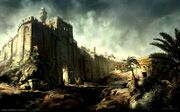 Damascus concept art by Sparth
 A view of Damascus and a Saracen flag
 A map of Damascus


