

Tomb of Alexander the Great: Difference between revisions
imported>Piero.schiavone1994 This is actually given in dialogue by ''Aya: Blade of the Goddess'' |
imported>Lady Kyashira |
||
| Line 22: | Line 22: | ||
==Gallery== | ==Gallery== | ||
<gallery position?"center" widths="200" captionalign="center"> | <gallery position?"center" widths="200" captionalign="center"> | ||
ACO Tomb of Alexander Concept Art.jpg|Concept art of the tomb chamber | |||
ACO Alexander Tomb interior.jpg|The interior of the tomb | ACO Alexander Tomb interior.jpg|The interior of the tomb | ||
ACO Tomb of Alexander 1.jpg|The entrance to the sarcophagus' chamber | ACO Tomb of Alexander 1.jpg|The entrance to the sarcophagus' chamber | ||
Revision as of 18:01, 30 November 2019

The Tomb of Alexander the Great was a tomb located in Alexandria, Egypt, that, during the late 1st century BCE, housed the remains of Alexander the Great and his Staff of Eden.[1]
History
During the reign of pharaoh Ptolemy XII Auletes, an earthquake struck the city, damaging and altering the structure of the tomb. As a result, the entrance was blocked, preventing access to the inner tomb.[1]
Years later, in 47 BCE, Cleopatra enlisted the aid of Aya and her husband Bayek to gain access to the tomb so that she could use it to impress her lover Julius Caesar and gain his support. The two Medjay were able to locate another entrance to the tomb and remove the blockade, allowing Caesar and Cleopatra access into the inner tomb.[2]
Shortly after the Battle of the Nile, when Cleopatra was proclaimed the sole ruler of Egypt, Flavius Metellus, revealed to be a member of the Order of the Ancients, broke into the tomb alongside Lucius Septimius and stole the Staff. In the process, they also stole the Apple of Eden from Apollodorus, who discovered their true purpose in the tomb. Dispatching soldiers to deal with Apollodorus, the two members of the Order left the tomb and made their way to the vault in Siwa. Both Aya and Bayek arrived too late to stop them and save Apollodorus' life, succumbing to the injuries sustained during the fight. [3]
Around the same time, Bayek also found one of the Papyrus Puzzles within the tomb.[4]
Trivia
- The inscriptions on the tomb are:
- ΑΜΩΝ ΕΝ ΑΓΡΩΙ ΔΕΝΔΡΩΝ ΙΣΤΗΣΙΝ ΤΟ ΕΝ ΣΙΒΑΙ ΙΕΡΟΝ ΚΡΑΤΙΣΤΗΝ ΕΞΟΥΣIΑΝ ΚΑΤΕΧΕΙ (Amun stands in a field of trees. The Sanctuary in Siwa holds the highest authority)
- ΑΝΘΡΩΠΟΣ ΠΡΟΣ ΒΑΣΙΛΕΑΝ ΚΑΙ ΒΑΣΙΛΕΥΣ ΠΡΟΣ ΘΕΟΝ ΔΥΝΑΜIΝ ΘΕΩΝ ΕΝ ΧΕΡΣIΝ ΑΝΘΡΩΠΟΥ ΣΤΡΕΦΕΙ (roughly translates to: Man to King and King to God (he) turns the mighty of Gods into the hands of man)
- ΟΦΘΑΛΜΟΣ ΕΗΣ ΚΩΠΗΣ ΤΥΓΧΑΝΕΙ ΕΣΦΡΑΓΙΣΜΕΝΗ ΣΦΑΙΡΑ ΕΠΙ ΤΗΣ ΡΑΒΔΟΥ ΤΕΘΕΙΣΑ (roughly translates to: the eye of its handle has a marked sphere set on the staff)
- ΤΑΞΙΣ ΑΠΑNΤΑ ΑNΑΓKΑZΕI ΚΑΙ ΤIΣ ΠΑNΤOΣ ΔYNΑΤΑI KPΑΤΕIN ΕI KΑΤΩPHΞ ΑNΕΩΙΚΤΑΙ (roughly translates to: the disposition compels everything and one of all is able to have sway)
Gallery
-
 Concept art of the tomb chamber
 -
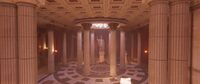 The interior of the tomb
 -
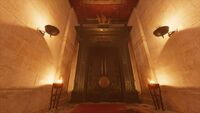 The entrance to the sarcophagus' chamber
 -
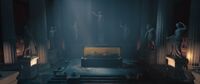 Alexander's sarcophagus
 -
 Close up view of Alexander's sarcophagus
 -
 Top view of Alexander's sarcophagus and his Staff of Eden
 -
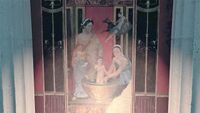 A painting on the northern wall depicting an infant Alexander being washed
 -
 A painting on the northern wall depicting an adolescent Alexander with Aristotle
 -
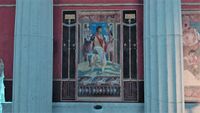 A painting on the southern wall depicting Alexander standing triumphantly with soldiers
 -
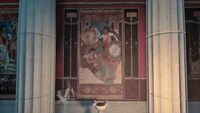 A painting on the southern wall of Ptolemy Lagos kneeling before Alexander


Appearances
References
- ↑ 1.0 1.1 Assassin's Creed: Origins
- ↑ Assassin's Creed: Origins – Aya: Blade of the Goddess
- ↑ Assassin's Creed: Origins – The Aftermath
- ↑ Assassin's Creed: Origins – Ray of Hope