


Rome: Difference between revisions
imported>Alex Keenan |
imported>Slate Vesper mNo edit summary |
||
| Line 26: | Line 26: | ||
The new king ordered that her and the children be killed; however, the daughter of the new king pleaded that her cousin be spared, so the new king ordered that only the twins be executed, while the daughter be spared. The servants feared the river because of high-tide and so, instead of drowning the twins, they simply placed them near the shallow section of the river, thinking they would still die when the tide came in. | The new king ordered that her and the children be killed; however, the daughter of the new king pleaded that her cousin be spared, so the new king ordered that only the twins be executed, while the daughter be spared. The servants feared the river because of high-tide and so, instead of drowning the twins, they simply placed them near the shallow section of the river, thinking they would still die when the tide came in. | ||
The twins floated down the river until they were found and cared for by a wolf and a bird. A shepherd saw the twins and, remembering a rumor about the twins surviving; he took care of them and raised them as his own until the old king heard of the twins. Together they reclaimed the city, and when their grandfather asked them to guard over the city and become | The twins floated down the river until they were found and cared for by a wolf and a bird. A shepherd saw the twins and, remembering a rumor about the twins surviving; he took care of them and raised them as his own until the old king heard of the twins. Together they reclaimed the city, and when their grandfather asked them to guard over the city and become its rulers they refused the offer, as they believed it was their grandfather's kingdom, not theirs; so they decided to build their own city, Rome. | ||
===Roman era=== | ===Roman era=== | ||
| Line 38: | Line 38: | ||
In 1476, [[Rodrigo Borgia]], [[Grand Master of the Templar Order]] and a powerful figure in Vatican politics briefly left the city to discuss his Order's plans, before returning to affirm Papal approval. Assent was given, and the [http://assassinscreed.wikia.com/wiki/Templar Templars] were provided with military support for their endeavors.<ref name="Assassin's Creed: Lineage">''[[Assassin's Creed: Lineage]]''</ref> | In 1476, [[Rodrigo Borgia]], [[Grand Master of the Templar Order]] and a powerful figure in Vatican politics briefly left the city to discuss his Order's plans, before returning to affirm Papal approval. Assent was given, and the [http://assassinscreed.wikia.com/wiki/Templar Templars] were provided with military support for their endeavors.<ref name="Assassin's Creed: Lineage">''[[Assassin's Creed: Lineage]]''</ref> | ||
In 1492, [http://assassinscreed.wikia.com/wiki/Rodrigo_Borgia Rodrigo] became Pope Alexander VI, and head of the Papal State and Catholic Church. Ruling from Rome , he was left alone by the [[Assassins]] for the most part, until 1499, when [[Ezio Auditore da Firenze]] learned that [http://assassinscreed.wikia.com/wiki/Vatican_Vault The Vault] was located in Rome, beneath the [[Capella Sistina|Sistine Chapel]].<ref name="Assassin's Creed II" /> | In 1492, [http://assassinscreed.wikia.com/wiki/Rodrigo_Borgia Rodrigo] became Pope Alexander VI, and head of the Papal State and Catholic Church. Ruling from Rome, he was left alone by the [[Assassins]] for the most part, until 1499, when [[Ezio Auditore da Firenze]] learned that [http://assassinscreed.wikia.com/wiki/Vatican_Vault The Vault] was located in Rome, beneath the [[Capella Sistina|Sistine Chapel]].<ref name="Assassin's Creed II" /> | ||
In 1500, following the [[Siege of Monteriggioni|Siege]] by [[Cesare Borgia]] on the Assassin headquarters of [[Monteriggioni]], Ezio Auditore returned to Rome''' '''to exact his revenge. Rome''' '''at the time, had fallen far behind its fellow cities of [[Florence]] and [[Venice]], and grown stagnant in terms of development | In 1500, following the [[Siege of Monteriggioni|Siege]] by [[Cesare Borgia]] on the Assassin headquarters of [[Monteriggioni]], Ezio Auditore returned to Rome''' '''to exact his revenge. Rome''' '''at the time, had fallen far behind its fellow cities of [[Florence]] and [[Venice]], and grown stagnant in terms of development due to the influence of the [http://assassinscreed.wikia.com/wiki/House_of_Borgia Borgia].<ref name="Assassin's Creed: Brotherhood" /> | ||
The Borgia maintained oppression over the city with [[Borgia Tower]]s located throughout Rome , which prevented shops from opening. In order to free Rome''' '''of the [http://assassinscreed.wikia.com/wiki/House_of_Borgia Borgia] influence, Ezio killed the overlords of the towers and burned the structures themselves to the ground.<ref name="Assassin's Creed: Brotherhood" /> | The Borgia maintained oppression over the city with [[Borgia Tower]]s located throughout Rome, which prevented shops from opening. In order to free Rome''' '''of the [http://assassinscreed.wikia.com/wiki/House_of_Borgia Borgia] influence, Ezio killed the overlords of the towers and burned the structures themselves to the ground.<ref name="Assassin's Creed: Brotherhood" /> | ||
Additionally, due to the loss of Monteriggioni, Ezio established the [[Assassins Guild]] in Rome, and set up its [[Tiber Island headquarters|headquarters]] on [[Tiber Island]]. By recruiting several Roman [http://assassinscreed.wikia.com/wiki/Civilians Civilians] as [http://assassinscreed.wikia.com/wiki/Apprentices Apprentice Assassins], the Assassin Order worked to free Rome''' '''of the [http://assassinscreed.wikia.com/wiki/Templar Templar] control.<ref name="Assassin's Creed: Brotherhood" /> | Additionally, due to the loss of Monteriggioni, Ezio established the [[Assassins Guild]] in Rome, and set up its [[Tiber Island headquarters|headquarters]] on [[Tiber Island]]. By recruiting several Roman [http://assassinscreed.wikia.com/wiki/Civilians Civilians] as [http://assassinscreed.wikia.com/wiki/Apprentices Apprentice Assassins], the Assassin Order worked to free Rome''' '''of the [http://assassinscreed.wikia.com/wiki/Templar Templar] control.<ref name="Assassin's Creed: Brotherhood" /> | ||
| Line 50: | Line 50: | ||
==Structure== | ==Structure== | ||
The city is divided into 4 districts: [[Centro District|Centro]], [[Antico District|Antico]], [[Campagna district|Campagna]], and [[Vaticano District]]. With the exception of the Vaticano district, these | The city is divided into 4 districts: [[Centro District|Centro]], [[Antico District|Antico]], [[Campagna district|Campagna]], and the [[Vaticano District]]. With the exception of the Vaticano district, these were also subdivided into 12 territories, each one controlled by a Borgia Tower.<ref name="Assassin's Creed: Brotherhood" /> | ||
Landmarks in Rome included the [[Pantheon]], the [[Colosseo]], the [[Passetto di Borgo]], the [[Castel Sant'Angelo]] and [[Capella Sistina|Cappella Sistina]].<ref name="Assassin's Creed II" /><ref name="Assassin's Creed: Brotherhood" /> | Landmarks in Rome included the [[Pantheon]], the [[Colosseo]], the [[Passetto di Borgo]], the [[Castel Sant'Angelo]] and [[Capella Sistina|Cappella Sistina]].<ref name="Assassin's Creed II" /><ref name="Assassin's Creed: Brotherhood" /> | ||
| Line 66: | Line 66: | ||
*The city of Rome is the largest city ever seen in an ''Assassin's Creed'' game. It is three times larger than Florence, which is featured in ''[[Assassin's Creed II]]''.<ref>http://www.computerandvideogames.com/article.php?id=260729</ref> | *The city of Rome is the largest city ever seen in an ''Assassin's Creed'' game. It is three times larger than Florence, which is featured in ''[[Assassin's Creed II]]''.<ref>http://www.computerandvideogames.com/article.php?id=260729</ref> | ||
*In the game, the city is tilted roughly 15 degrees to the right from real life. | *In the game, the city is tilted roughly 15 degrees to the right from real life. | ||
*While | *While Rome and Florence's architecture were historically similar during the game's time period, the developers of [[Assassin's Creed: Brotherhood|''Assassin's Creed: Brotherhood'']] designed Rome with its later Baroque style to be more familiar to gamers.<ref>[http://www.livescience.com/culture/assassins-creed-virtual-rome-renaissance-scholar-101112.html A Renaissance Scholar Helps Build Virtual Rome, ''Live Science'' article]</ref> | ||
*The area where Ezio climbed up to the Castello from the river in ''Assassin's Creed II'' seems to be missing in ''Assassin's Creed: Brotherhood''. | *The area where Ezio climbed up to the Castello from the river in ''Assassin's Creed II'' seems to be missing in ''Assassin's Creed: Brotherhood''. | ||
*For unknown reasons, the buildings seen north of the Passetto di Borgo in ''Assassin's Creed II'' are missing in ''Assassin's Creed: Brotherhood''. | *For unknown reasons, the buildings seen north of the Passetto di Borgo in ''Assassin's Creed II'' are missing in ''Assassin's Creed: Brotherhood''. | ||
Revision as of 04:37, 12 August 2011
- "Roma is the pillar that holds our entire enterprise aloft. She cannot waver; which means neither can you."
- ―Cesare Borgia to his allies.[src]
Rome (Italian: Roma) was a major city in Renaissance Italy, capital of the Papal State and headquarters to the Italian sect of the Templar Order. Today, it is the capital of the Italian Republic.
History
The Beginning of an Empire
According to legend, two brothers were given a choice, the money or the kingdom; one chose the kingdom while the other chose the money. Both of the brothers had two fine daughters. One brother used his money to hire mercenaries, and stole the kingdom from his brother, the King, imprisoning the King's daughter in the process. Whilst imprisoned, she gave birth to twin boys (Romulus and Remus).
The new king ordered that her and the children be killed; however, the daughter of the new king pleaded that her cousin be spared, so the new king ordered that only the twins be executed, while the daughter be spared. The servants feared the river because of high-tide and so, instead of drowning the twins, they simply placed them near the shallow section of the river, thinking they would still die when the tide came in.
The twins floated down the river until they were found and cared for by a wolf and a bird. A shepherd saw the twins and, remembering a rumor about the twins surviving; he took care of them and raised them as his own until the old king heard of the twins. Together they reclaimed the city, and when their grandfather asked them to guard over the city and become its rulers they refused the offer, as they believed it was their grandfather's kingdom, not theirs; so they decided to build their own city, Rome.
Roman era
Rome was the capital of the Roman Empire, and was ruled by the Templars under the alias "Senatus Populusque Romanus."[1]
On the 15th March 45 BC, Gaius Julius Caesar was killed by the Assassins, led by Marcus Junius Brutus.
In the year 41, the Assassin Leonius assassinated the Templar Caligula in Rome, whom he stabbed with a dagger.[2]
Renaissance era
In 1476, Rodrigo Borgia, Grand Master of the Templar Order and a powerful figure in Vatican politics briefly left the city to discuss his Order's plans, before returning to affirm Papal approval. Assent was given, and the Templars were provided with military support for their endeavors.[3]
In 1492, Rodrigo became Pope Alexander VI, and head of the Papal State and Catholic Church. Ruling from Rome, he was left alone by the Assassins for the most part, until 1499, when Ezio Auditore da Firenze learned that The Vault was located in Rome, beneath the Sistine Chapel.[2]
In 1500, following the Siege by Cesare Borgia on the Assassin headquarters of Monteriggioni, Ezio Auditore returned to Rome to exact his revenge. Rome at the time, had fallen far behind its fellow cities of Florence and Venice, and grown stagnant in terms of development due to the influence of the Borgia.[1]
The Borgia maintained oppression over the city with Borgia Towers located throughout Rome, which prevented shops from opening. In order to free Rome of the Borgia influence, Ezio killed the overlords of the towers and burned the structures themselves to the ground.[1]
Additionally, due to the loss of Monteriggioni, Ezio established the Assassins Guild in Rome, and set up its headquarters on Tiber Island. By recruiting several Roman Civilians as Apprentice Assassins, the Assassin Order worked to free Rome of the Templar control.[1]

Structure
The city is divided into 4 districts: Centro, Antico, Campagna, and the Vaticano District. With the exception of the Vaticano district, these were also subdivided into 12 territories, each one controlled by a Borgia Tower.[1]
Landmarks in Rome included the Pantheon, the Colosseo, the Passetto di Borgo, the Castel Sant'Angelo and Cappella Sistina.[2][1]
Assassination Targets
Assassin's Creed II
- Rodrigo Borgia (DNA Sequence 14: The Vault)
Assassin's Creed: Brotherhood
- Juan Borgia (DNA Sequence 5: The Banker)
- Octavian de Valois (DNA Sequence 6: The Baron de Valois)
- Micheletto Corella (DNA Sequence 7: The Key to the Castello)
Trivia
- The city of Rome is the largest city ever seen in an Assassin's Creed game. It is three times larger than Florence, which is featured in Assassin's Creed II.[4]
- In the game, the city is tilted roughly 15 degrees to the right from real life.
- While Rome and Florence's architecture were historically similar during the game's time period, the developers of Assassin's Creed: Brotherhood designed Rome with its later Baroque style to be more familiar to gamers.[5]
- The area where Ezio climbed up to the Castello from the river in Assassin's Creed II seems to be missing in Assassin's Creed: Brotherhood.
- For unknown reasons, the buildings seen north of the Passetto di Borgo in Assassin's Creed II are missing in Assassin's Creed: Brotherhood.
References
Gallery
-
Concept art of the Castel Sant'Angelo.
-
Concept art of Rome.
-
A bird's-eye-view of Rome as seen in the E3 trailer.
-
The Pantheon in Rome.
-
Ezio fighting on the Passetto di Borgo.
-
Ezio riding through the city towards the Pantheon.
-
A part of the in-game Rome map.
-
The map of Rome that comes with the Assassin's Creed: Brotherhood Collector's Edition.
-
Map of Rome from Assassin's Creed: Brotherhood multiplayer.
-
Rome in Assassin's Creed: Lineage
-
Panoramic view of Rome from a tower
-
Rome at sunset
-
Ezio and Mario running from the Sistine Capel
-
 Rome as seen at the beginning of Assassin's Creed: Brotherhood
 -
 Bird-eye view of Rome.
 -
The centre of Borgia control, the Castel Sant'Angelo
-
A wide view of the Centro district, seen from the Mercato di Traiano.
-
 Panoramic view of Rome at night
 -
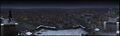 Roman rooftops at night
 -
 Panoramic view of Rome at dusk


External links
| |||||||||||||||||||||||||||||||||||||