

Gaius Julius Caesar: Difference between revisions
imported>DunBanner clarity |
imported>Chaos0vt The update Asked for |
||
| Line 8: | Line 8: | ||
Caesar was feared by other senators for his power as a dictator. His close friend [[Marcus Junius Brutus]] led the conspiracy against Caesar alongside [[Gaius Cassius Longinus]],<ref name="Assassin's Creed: Brotherhood">''[[Assassin's Creed: Brotherhood]]''</ref> who were secretly [[Assassins]].<ref name="Assassin's Creed: Project Legacy">''[[Assassin's Creed: Project Legacy]]''</ref> His murder was planned on the Ides of March (March 15), in which the conspirators were successful, Caesar was stabbed 23 times. However, his death seemed to bring more chaos than before and his heir Octavian (later known as Augustus) became the next emperor of Roman Empire. | Caesar was feared by other senators for his power as a dictator. His close friend [[Marcus Junius Brutus]] led the conspiracy against Caesar alongside [[Gaius Cassius Longinus]],<ref name="Assassin's Creed: Brotherhood">''[[Assassin's Creed: Brotherhood]]''</ref> who were secretly [[Assassins]].<ref name="Assassin's Creed: Project Legacy">''[[Assassin's Creed: Project Legacy]]''</ref> His murder was planned on the Ides of March (March 15), in which the conspirators were successful, Caesar was stabbed 23 times. However, his death seemed to bring more chaos than before and his heir Octavian (later known as Augustus) became the next emperor of Roman Empire. | ||
While sailing to Greece for further study, Caesar was kidnapped by Cilician pirates and held for ransom. When informed that they intended to ask for 20 talents, he is supposed to have insisted that he was worth at least 50. He maintained a friendly, joking relationship with the pirates while the money was being raised, but warned them that he would track them down and have them crucified after he was released. He did just that, with the help of volunteers, as a warning to other pirates, but he first cut their throats to lessen their suffering because they had treated him well. | |||
72 BCE Elected as Military Tribune | |||
59 BCE Was voted as Consul in and used this to further his miltary career which where aimed at gaul where he spent the next 9 years in the course of which he would conquer most of what is now central Europe, opening up these lands to Mediterranean civilization. However, much of the conquest was an act of aggression prompted by personal ambition, As he was obsessed with not simply being better than "Alexander the Great | |||
49BCE became the first General to lead his armies across the '''Rubicon River '''Thus declaring civil war on his political enemy Pompey, who without the strength of his legions (as they where all currently occupied in Spain) fled Rome and abandoned her to Ceasers' Legion. Pompey also took the what members of the Senate that would with him to Spain. Before leaving Rome Pompey also broke the hinges on the doors to the Senate House thus signifiying Romes' Senate has left and wherever the Senate goes so does Rome!! | |||
48BCE Pompey and Ceaser meet in battle Ceaser outnumbered 21,000 to Pompeys 46,000. By brilliant generalship, Caesar was victorious, though the toll was great on both sides; Caesar pardoned all Roman citizens who were captured, including Brutus, but Pompey escaped, fleeing to Egypt. | |||
Note: This was the first betrayel of Brutus the reason being that he felt betrayed and Ceaser leaving Mark Antony behind in Rome to control Her in Ceasers absense. In reality Ceaser did this as Brutus was one of his best fighters and wanted him with on the crossing to to take on Pompey. | |||
47BCE Caesar, with no more than 4,000 legionaries, landed in Alexandria; he was presented, to his professed horror, with the head of Pompey, who had been betrayed by the Egyptians. Caesar demanded that the Egyptians pay him the 40 million sesterces he was owed because of his military support some years earlier for the previous ruler, Ptolemy XII (“The Flute Player”), who had put down a revolt against his rule with Caesar's help. After Ptolemy XII's death, the throne had passed to his oldest children, [http://www.vroma.org/images/mcmanus_images/cleocoin_young.jpg Cleopatra VII] and Ptolemy XIII, as joint heirs. When Caesar landed, the eunuch Pothinus and the Egyptian general Achillas, acting on behalf of Ptolemy XIII (at this time about 12 years old), had recently driven Cleopatra (at this time about 20-21 years old) out of Alexandria. Cleopatra had herself smuggled into the palace in Alexandria wrapped in a rug (purportedly a gift for Caesar) and enlisted his help in her struggle to control the Egyptian throne. Like all the Ptolemies, Cleopatra was of Macedonian Greek descent; she was highly intelligent and well-educated. Caesar saw her as a useful ally as well as a captivating female, and he supported her right to the throne. Through the treachery of Pothinus and the hostility of the Egyptian people to the Romans, Achillas and an army of 20,000 besieged the palace. Caesar managed to hold the palace itself and the harbor; he had Pothinus executed as a traitor but allowed the young Ptolemy to join the army of Achillas. When he ordered the Egyptian fleet burnt, the great Library of Alexandria was accidently consumed in the flames | |||
June 23 47BCE Caesar left Alexandria, having established Cleopatra as a client ruler in alliance with Rome; he left three legions under the command of Rufio, as legate, in support of her rule. Either immediately before or soon after he left Egypt, [http://www.vroma.org/images/mcmanus_images/cleocaesarioncoin_berlin.jpg Cleopatra bore a son], whom she named Caesarion, claiming that he was the son of Caesar. | |||
August 47BCE After leaving Alexandria, Caesar swept through Asia Minor to settle the disturbances there. On August 1, he met and immediately overcame Pharnaces, a rebellious king; he later publicized the rapidity of this victory with the slogan ''veni, vidi, vici'' (“I came, I saw, I overcame”). | |||
Febuary 44 BCE Caesar was named ''dictator perpetuus''. On February 15, at the feast of Lupercalia, Caesar wore his purple garb for the first time in public. At the public festival, Antony offered him a diadem (symbol of the Hellenistic monarchs), but Caesar refused it, saying Jupiter alone is king of the Romans (possibly because he saw the people did not want him to accept the diadem, or possibly because he wanted to end once and for all the speculation that he was trying to become a king). Caesar was preparing to lead a military campaign against the Parthians, who had treacherously killed Crassus and taken the legionary eagles; he was due to leave on March 18. Although Caesar was apparently warned of some personal danger, he nevertheless refused a bodyguard. | |||
March 15 44BCE Caesar attended the last meeting of the Senate before his departure, held at its temporary quarters in the [http://www.vroma.org/images/mcmanus_images/theater_pompey.jpg portico of the theater built by Pompey the Great] (the Curia, located in the Forum and the regular meeting house of the Senate, had been badly burned and was being rebuilt). The sixty [http://www.vroma.org/~bmcmanus/conspirators.html conspirators], led by Marcus Junius Brutus, Gaius Cassius Longinus, Decimus Brutus Albinus, and Gaius Trebonius, came to the meeting with daggers concealed in their togas and struck Caesar at least 23 times as he stood at the base of Pompey's statue. Legend has it that Caesar said in Greek to Brutus, “You, too, my child?” After his death, all the senators fled, and three slaves carried his body home to Calpurnia several hours later. For several days there was a political vacuum, for the conspirators apparently had no long-range plan and, in a major blunder, did not immediately kill Mark Antony (apparently by the decision of Brutus). The conspirators had only a band of gladiators to back them up, while Antony had a whole legion, the keys to Caesar's money boxes, and Caesar's will. | |||
This mistake by Brutus lead to the conspiritors being excuted by Mark Antonys authority. | |||
He was Succeeded by '''Gaius Octavius Thurinus''' who by many will be known as Octavius he later became known as '''Gaius Julius Caesar''', As Ceaser left in his will that Octavian be apoted by him in his death. A few months later the Senate gave him the title "Augustus" thus naming him '''Gaius Julius Caesar Augustus'''. | |||
From that day on the Ides of March Ceaser has become the title for whoever ruled Rome, Making Ceaser the first man to have his name literally mean "KING"!! | |||
==Trivia== | ==Trivia== | ||
| Line 17: | Line 47: | ||
{{DEFAULTSORT:Caesar, Gaius Julius}} | {{DEFAULTSORT:Caesar, Gaius Julius}} | ||
[[es:Cayo Julio César]] | [[es:Cayo Julio César]] | ||
Revision as of 01:42, 22 October 2011


Gaius Julius Caesar (13 July 100 BC - 15 March 44 BC) was the general of the Roman army and a notable politician. He critically transformed the Roman Republic into the seemingly unstoppable Roman Empire.
Julius Caesar gained numerous battle victories in his role as the general of the Roman army, and conquered the Gallic tribes throughout Europe. He was the great nemesis of the Gallic chieftain Vercingetorix, who he defeated at one of his most famous conquests the Battle of Alesia.
Caesar was feared by other senators for his power as a dictator. His close friend Marcus Junius Brutus led the conspiracy against Caesar alongside Gaius Cassius Longinus,[1] who were secretly Assassins.[2] His murder was planned on the Ides of March (March 15), in which the conspirators were successful, Caesar was stabbed 23 times. However, his death seemed to bring more chaos than before and his heir Octavian (later known as Augustus) became the next emperor of Roman Empire.
While sailing to Greece for further study, Caesar was kidnapped by Cilician pirates and held for ransom. When informed that they intended to ask for 20 talents, he is supposed to have insisted that he was worth at least 50. He maintained a friendly, joking relationship with the pirates while the money was being raised, but warned them that he would track them down and have them crucified after he was released. He did just that, with the help of volunteers, as a warning to other pirates, but he first cut their throats to lessen their suffering because they had treated him well.
72 BCE Elected as Military Tribune
59 BCE Was voted as Consul in and used this to further his miltary career which where aimed at gaul where he spent the next 9 years in the course of which he would conquer most of what is now central Europe, opening up these lands to Mediterranean civilization. However, much of the conquest was an act of aggression prompted by personal ambition, As he was obsessed with not simply being better than "Alexander the Great
49BCE became the first General to lead his armies across the Rubicon River Thus declaring civil war on his political enemy Pompey, who without the strength of his legions (as they where all currently occupied in Spain) fled Rome and abandoned her to Ceasers' Legion. Pompey also took the what members of the Senate that would with him to Spain. Before leaving Rome Pompey also broke the hinges on the doors to the Senate House thus signifiying Romes' Senate has left and wherever the Senate goes so does Rome!!
48BCE Pompey and Ceaser meet in battle Ceaser outnumbered 21,000 to Pompeys 46,000. By brilliant generalship, Caesar was victorious, though the toll was great on both sides; Caesar pardoned all Roman citizens who were captured, including Brutus, but Pompey escaped, fleeing to Egypt.
Note: This was the first betrayel of Brutus the reason being that he felt betrayed and Ceaser leaving Mark Antony behind in Rome to control Her in Ceasers absense. In reality Ceaser did this as Brutus was one of his best fighters and wanted him with on the crossing to to take on Pompey.
47BCE Caesar, with no more than 4,000 legionaries, landed in Alexandria; he was presented, to his professed horror, with the head of Pompey, who had been betrayed by the Egyptians. Caesar demanded that the Egyptians pay him the 40 million sesterces he was owed because of his military support some years earlier for the previous ruler, Ptolemy XII (“The Flute Player”), who had put down a revolt against his rule with Caesar's help. After Ptolemy XII's death, the throne had passed to his oldest children, Cleopatra VII and Ptolemy XIII, as joint heirs. When Caesar landed, the eunuch Pothinus and the Egyptian general Achillas, acting on behalf of Ptolemy XIII (at this time about 12 years old), had recently driven Cleopatra (at this time about 20-21 years old) out of Alexandria. Cleopatra had herself smuggled into the palace in Alexandria wrapped in a rug (purportedly a gift for Caesar) and enlisted his help in her struggle to control the Egyptian throne. Like all the Ptolemies, Cleopatra was of Macedonian Greek descent; she was highly intelligent and well-educated. Caesar saw her as a useful ally as well as a captivating female, and he supported her right to the throne. Through the treachery of Pothinus and the hostility of the Egyptian people to the Romans, Achillas and an army of 20,000 besieged the palace. Caesar managed to hold the palace itself and the harbor; he had Pothinus executed as a traitor but allowed the young Ptolemy to join the army of Achillas. When he ordered the Egyptian fleet burnt, the great Library of Alexandria was accidently consumed in the flames
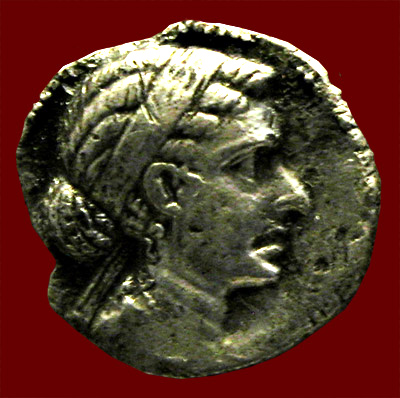
June 23 47BCE Caesar left Alexandria, having established Cleopatra as a client ruler in alliance with Rome; he left three legions under the command of Rufio, as legate, in support of her rule. Either immediately before or soon after he left Egypt, Cleopatra bore a son, whom she named Caesarion, claiming that he was the son of Caesar.
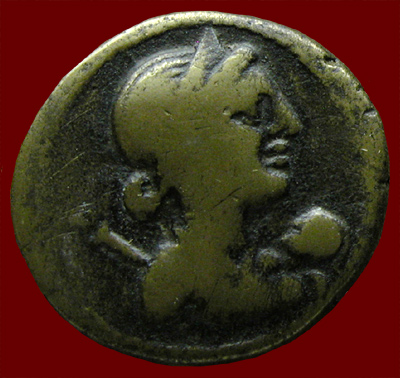
August 47BCE After leaving Alexandria, Caesar swept through Asia Minor to settle the disturbances there. On August 1, he met and immediately overcame Pharnaces, a rebellious king; he later publicized the rapidity of this victory with the slogan veni, vidi, vici (“I came, I saw, I overcame”).
Febuary 44 BCE Caesar was named dictator perpetuus. On February 15, at the feast of Lupercalia, Caesar wore his purple garb for the first time in public. At the public festival, Antony offered him a diadem (symbol of the Hellenistic monarchs), but Caesar refused it, saying Jupiter alone is king of the Romans (possibly because he saw the people did not want him to accept the diadem, or possibly because he wanted to end once and for all the speculation that he was trying to become a king). Caesar was preparing to lead a military campaign against the Parthians, who had treacherously killed Crassus and taken the legionary eagles; he was due to leave on March 18. Although Caesar was apparently warned of some personal danger, he nevertheless refused a bodyguard.
March 15 44BCE Caesar attended the last meeting of the Senate before his departure, held at its temporary quarters in the portico of the theater built by Pompey the Great (the Curia, located in the Forum and the regular meeting house of the Senate, had been badly burned and was being rebuilt). The sixty conspirators, led by Marcus Junius Brutus, Gaius Cassius Longinus, Decimus Brutus Albinus, and Gaius Trebonius, came to the meeting with daggers concealed in their togas and struck Caesar at least 23 times as he stood at the base of Pompey's statue. Legend has it that Caesar said in Greek to Brutus, “You, too, my child?” After his death, all the senators fled, and three slaves carried his body home to Calpurnia several hours later. For several days there was a political vacuum, for the conspirators apparently had no long-range plan and, in a major blunder, did not immediately kill Mark Antony (apparently by the decision of Brutus). The conspirators had only a band of gladiators to back them up, while Antony had a whole legion, the keys to Caesar's money boxes, and Caesar's will.
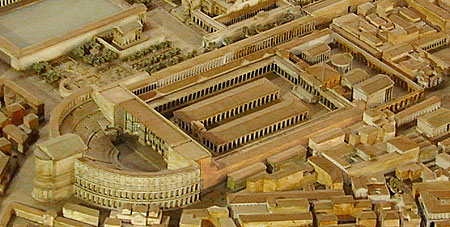
This mistake by Brutus lead to the conspiritors being excuted by Mark Antonys authority.
He was Succeeded by Gaius Octavius Thurinus who by many will be known as Octavius he later became known as Gaius Julius Caesar, As Ceaser left in his will that Octavian be apoted by him in his death. A few months later the Senate gave him the title "Augustus" thus naming him Gaius Julius Caesar Augustus.
From that day on the Ides of March Ceaser has become the title for whoever ruled Rome, Making Ceaser the first man to have his name literally mean "KING"!!
Trivia
- There is a trophy for the PlayStation 3 in Assassin's Creed: Brotherhood named after Julius Caesar. It is earned by gaining all other trophies, 50 in total. Also the Dagger of Brutus, which was used by Marcus Brutus to kill Caesar, can also be obtained.[1]
- Julius Caesar's known murderers were Marcus Junius Brutus, Gaius Cassius Longinus, Servius Sulpcicius Galba, Quintus Ligarias, Lucius Minucius Basilus, Publius Servilius Casca Longus, Gaius Servilius Casca, Decimus Junius Brutus Albinus, Lucius Tillius Cimber, Gaius Trebonius, Lucius Cassius Longinus, Gaius Cassius Parmensis, Caecilius, Bucolianus, Rubrius Ruga, Marcus Spurius, Publius Sextius Naso, Lucius Pontius Aquila, Petronius, Decimus Turullius and Pacuvius Antistius Labeo. The rest of the names are lost to history.
References