

Hippodrome of Constantinople: Difference between revisions
imported>Uditore mNo edit summary |
imported>Andre982d Database image and Database entry |
||
| Line 3: | Line 3: | ||
{{WPlocations}} | {{WPlocations}} | ||
{{Stub}} | {{Stub}} | ||
{{ | |||
|image = | {{Landmarks Infobox | ||
|name = Hippodrome | |||
|image = Hippodrome Database image.png | |||
|description = | |description = | ||
| | |location = [[Imperial District]], [[Constantinople]] | ||
| | |dateconstructed= | ||
| | |functions= | ||
| | |appearance = ''[[Assassin's Creed Revelations]]''}} | ||
The '''Hippodrome of Constantinople''' was a circus, and the sporting and social center of [[Constantinople]], capital of the [[Byzantine Empire]]. | The '''Hippodrome of Constantinople''' was a circus, and the sporting and social center of [[Constantinople]], capital of the [[Byzantine Empire]]. | ||
During [[modern times]], it became a square named Sultanahmet Meydanı, or "Sultan [[Ahmet]] Square", which was sometimes referred to by Turkish residents as the Atmeydanı, or "Horse Square." By the 21<sup>st</sup> century, only a few fragments of the original structure remained. | During [[modern times]], it became a square named Sultanahmet Meydanı, or "Sultan [[Ahmet]] Square", which was sometimes referred to by Turkish residents as the Atmeydanı, or "Horse Square." By the 21<sup>st</sup> century, only a few fragments of the original structure remained. | ||
==Database entry== | |||
''The Hippodrome once stood as one of the purest examples of Constantinople’s classical Greek origins. Though the original structure dates back to pre-Roman times when the city was still called Byzantium, the Hippodrome was enlarged and improved by Constantine the Great, and remained in use for nearly 800 years.'' | |||
''It began to fall into disrepair after 1200, around the time of the Fourth Crusade, when marauding Christian armies from the West, sent forth by Pope Innocent III, sacked the city on their way to the Holy Land.'' | |||
''By the time Byzantine Emperor Michael Palaiologos had recaptured the city in 1261, the Hippodrome was in poor state and he made no effort to restore it to its former glory. When the Ottomans took over in 1453, all hope that it would ever be repaired dwindled to nothing, since chariot racing wasn’t really a Turkish hobby.'' | |||
{{-}} | {{-}} | ||
| Line 21: | Line 28: | ||
<gallery captionalign="left"> | <gallery captionalign="left"> | ||
The Hippodrome of Constantinople.jpg|The Hippodrome. | The Hippodrome of Constantinople.jpg|The Hippodrome. | ||
The Hippodrome of Constantinople ART.jpg|Artwork. | |||
</gallery> | </gallery> | ||
Revision as of 19:42, 3 December 2011

The Hippodrome of Constantinople was a circus, and the sporting and social center of Constantinople, capital of the Byzantine Empire.
During modern times, it became a square named Sultanahmet Meydanı, or "Sultan Ahmet Square", which was sometimes referred to by Turkish residents as the Atmeydanı, or "Horse Square." By the 21st century, only a few fragments of the original structure remained.
Database entry
The Hippodrome once stood as one of the purest examples of Constantinople’s classical Greek origins. Though the original structure dates back to pre-Roman times when the city was still called Byzantium, the Hippodrome was enlarged and improved by Constantine the Great, and remained in use for nearly 800 years.
It began to fall into disrepair after 1200, around the time of the Fourth Crusade, when marauding Christian armies from the West, sent forth by Pope Innocent III, sacked the city on their way to the Holy Land.
By the time Byzantine Emperor Michael Palaiologos had recaptured the city in 1261, the Hippodrome was in poor state and he made no effort to restore it to its former glory. When the Ottomans took over in 1453, all hope that it would ever be repaired dwindled to nothing, since chariot racing wasn’t really a Turkish hobby.
Gallery
-
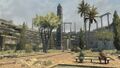 The Hippodrome.
 -
Artwork.

